
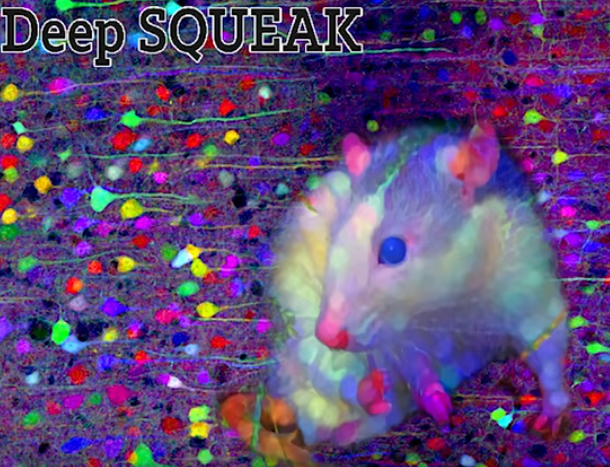
 DeepSqueak captures calls from rats and mice, and analyzes sonograms via machine vision and neural networks. Source: University of WashingtonUniversity of Washington School of Medicine researchers have developed technology to record and analyze the audible social communication used by rats and mice. Animal behaviorists have recognized that these species have distinct verbal communication, but have previously struggled recording and analyzing the rodents’ squeaks.
Scientists at the university created the software DeepSqueak to promote rodent socialization and communication research. A primary challenge was isolating rodent squeaks from ambient noise. DeepSqueak turns recorded noise into sonograms, which a biomimetic algorithm identifies and isolates based on previous examples. With the sonograms, researchers are able to filter and analyze the squeaks via machine vision and neural networks.
DeepSqueak has already yielded insights into how mice and rats communicate in different scenarios and has identified 20 different kinds of calls. Notably, the rodents express both positive and negative calls under the influence of addictive narcotics.
The rodents expressed the most joyful calls when expecting a reward, such as food, or when playing with peers. Paired male mice expressed the same squeak repeatedly. When a male and female pair are recorded and analyzed, the male mouse arranges a complex sequence of squeaks, which researchers likened to a mating song. The song is more intense when the male can only smell the female.
University of Washington scientists are hopeful that DeepSqueak can help make headway into drug and alcohol addiction treatment research.
"If scientists can understand better how drugs change brain activity to cause pleasure or unpleasant feelings, we could devise better treatments for addiction,” said John Neumaier, professor of psychiatry and behavioral sciences at the school of medicine.
