
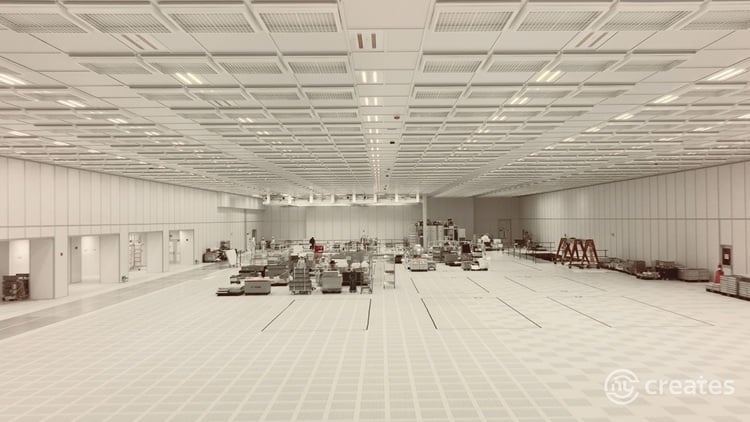
In December 2023, research hub NY Creates and the state of New York brought together leading-edge semiconductor vendors IBM, Micron Technology, Applied Materials, Tokyo Electron and ASML to create what was billed as the first high numerical aperture (NA) extreme ultraviolet (EUV) lithography R&D center in North America.
The $10 billion collaboration allowed NY Creates to acquire and install an ASML high NA EUV lithography tool to be used to position the state as a leader in R&D for leading-edge semiconductor technologies.
About three years later, NY Creates said the ASML high NA EUV lithography tool is being installed, and it expects the tool to be ready for development in early 2027, with first wafers in 2026. Additionally, NY Creates now has more than 200,000 square feet of cleanroom space at its Albany NanoTech Complex, including the most recent building of an additional 50,000 square feet of cleanroom space at the research hub.
During Semicon West 2026 in San Francisco, Electronics360 sat down with Stephen Ference, director of communications at NY Creates, to discuss what’s ahead for the nonprofit organization; why regional semiconductor ecosystems are thriving; and potential semiconductor manufacturing innovations the R&D hub is working on.
Electronics360: Intel has adopted the ASML tool and others are looking into it like TSMC and Samsung. NY Creates has the same tool as these huge companies: Will you invite companies that might want to buy one themselves to try it out, or is it more for people to design chips around it?
Stephen Ference: Both. It's public knowledge that IBM has a stake in it, as does Micron, as do we. IBM will use it to advance its logic technology, and maybe quantum technology to drive below the 1-nm node. Micron is coming to Clay, New York, and will need to buy the equipment they need for their fabs, including high NA EUV. Partner companies can also access the tool for research and development.
Electronics360: These companies get in, play with it, see what works and report back to the developer. And the hope is that because you gave them access, they'll invest in the New York economy, build their next fab here, buy their tool here and create jobs.
Ference: There's a whole ecosystem supported around this tool. For example, we announced we're part of an effort on a larger mask format, going from 6 inch x 6 inch to 6 inch x 12 inch. You get process development you can move toward, and then you build capabilities around it, bring people in, and build the supply chain and materials. That gets the flywheel started.
Electronics360: That's the same idea behind the push for larger wafers, right? 450 mm wafers?
Ference: Yes, 450 mm. It was a successful program and it hit its milestones, and led to a notchless wafer as part of that process, for example, but the industry wasn't ready to move to that wafer size. At some point it may make sense, and when it does, some of the groundwork will have been laid.
Electronics360: Do you think ecosystems like NY Creates will be at the forefront of developing those innovations, hand in hand with the larger chipmakers?
Ference: In general, yes, that's the whole idea: Work closely with the top companies, but also startups to bring these innovations forward — to test them, iterate and bring them to manufacturability. It's not just chip scale. It's also the tools and the fab processes themselves. There are multiple ways that, by using NY Creates’ facilities, expertise and the workforce, we are providing operating models for the industry.
 An aerial view of the NY Creates facility that houses more than 200,000 square feet of cleanroom space and its High NA EUV lithography tool. Source: NY Creates
Electronics360: Does the organization also work to get companies to invest in the state and build facilities there, or is that handled elsewhere?
Ference: NY Creates is often part of those conversations because of the services and capabilities we offer, but it depends on each case. Often others such as Empire State Development are helping to drive it. A lot of companies reach out and say they want to grow, or want to see what we offer, or come on site or partner, and then we figure out what works best.
Electronics360: There are a lot of these ecosystems cropping up. We've really seen it in the last couple of years: Ireland, Texas, California, Arizona and elsewhere. Beyond the revenue and economic angle, what's the idea behind all this regionalism?
Ference: I think it makes sense. I don't think one company can do it alone. We have widespread capabilities and expertise, and not just in R&D but in related workforce development, for example. There are numerous ways to get to the answer depending on the company and the goal. I think we're fairly unique, though others may be trying to replicate what we do.
And while there's regionalism, the truth is that NY Creates, while supporting the Northeast, is really working with U.S. industry as a whole. Take workforce development. We're bringing students up through the pipeline to jobs. That has to be national, because you can't just solve it with local classrooms or even just regionally. So, there are multiple approaches. It makes sense for a company to site itself in New York for specific reasons, like water and power, and access to NY Creates and this ecosystem.
Electronics360: That was my next question: Are these regions competing against each other for a finite pool of resources?
Ference: Sometimes, yes. But from a U.S. strategic standpoint, some people have pointed out it doesn't make sense to have all your high-tech resources in one place.
Electronics360: Right, and that's the idea behind the regionality. When COVID hit, everything was aggregated in Asia and that caused an enormous amount of supply chain problems. Since then, everybody's eyes have widened to the need to distribute the supply chain more. These regional ecosystems seem to be the next evolution of that.
Ference: Each area will try to do what it does best. For us, that's being the backbone of R&D, with capabilities like an accessible high NA EUV lithography system. You can't just walk in and do that anywhere else in North America. We also bring a long-term view, sustainability for the industry in multiple ways, and using the cleanroom itself as a test bed for efficient processes. Those are things we can do that your average commercial-scale manufacturer can't.
Electronics360: Has NY Creates received CHIPS Act funding?
Ference: We have received CHIPS Act funding, including funding for a Microelectronics Commons program, and there's been other CHIPS funding for companies that work with us on site. The good thing is New York State invested a billion dollars to enable this capability and draw these companies here. So, we're moving forward, full speed ahead.
