
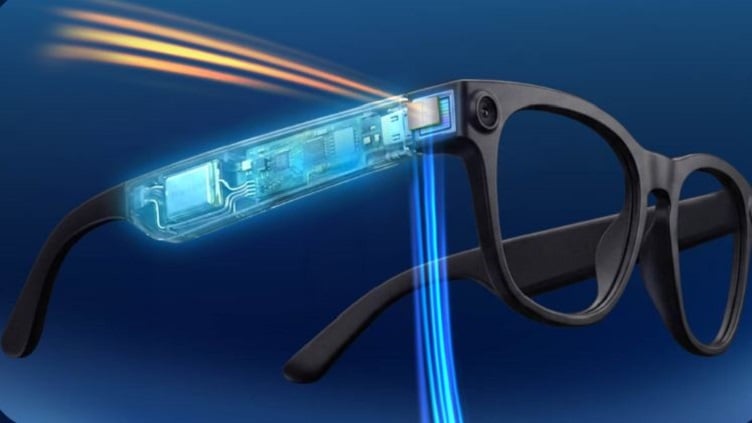
Santa Clara, California-based xMEMS Labs has started mass production of its μCooling technology, what it calls a "fan-on-a-chip," which is billed as targeted thermal management in a form factor small enough to fit into XR glasses, AI smartphones and other edge AI systems.
The company said it expects first commercial products featuring the μCooling technology to reach the market in early 2027.
xMEMS said the XMC-2400 and XMC-4800 chips are the first large-scale commercialization of solid-state active cooling devices.
The XMC-2400 is designed for edge AI products like extended reality (XR) glasses and personal solid-state drives (SSDs). The XMC-4800, meanwhile, is targeted at more thermally demanding systems like AI smartphones and data center applications like enterprise SSDs and lasers.
Why targeted thermal devices matter
Rising power density in these AI applications is making thermal management critical to sustained performance, xMEMS said. With more AI running on edge devices, computer vision and multimodal processing in mobile form factors, thermal management will continue to be a vital part of engineers’ design architecture.
In data centers, while liquid cooling is increasingly being used around CPUs and GPUs, other components like SSDs, laser modules, memory and retimers need more targeted active airflow, xMEMS said.
The solid-state, piezoMEMS architecture of the μCooling devices contains no motors, bearings or mechanical wear for vibration-free, silent operation without any need for maintenance. These can be targeted at AI devices through narrow micro-channels and positioned close to processors, memory, storage and other thermal hotspots, the company said.
xMEMS said that in testing, the μCooling technology achieved chip- and system-level temperature reductions between 10° C and 25° C in XR glasses, smartphones and SSDs.
