
Key takeaways:
- Ford extends bidirectional power to its 2027 Ford Fathom EV.
- The Ford Home Power Station would use the EV to power a home in the event of a power outage.
- It could help reduce home energy costs.
Ford Motor Co. has been working on bidirectional power for its electric vehicles (EVs) since 2022, when it forged a partnership with utility Pacific Gas and Electric Co. (PG&E) in California for a pilot project.
Under the project, PG&E and Ford would use Ford's F-150 Lightning EV to power a home in the event of an energy outage due to an overloaded grid or natural disaster. Bidirectional power allows energy to flow both ways in a system, making it possible to turn EVs into mobile energy storage.
Ford ended production of the all-electric F-150 Lightning in December 2025, shifting its EV focus to smaller, more affordable models. Now, Ford is expanding its bidirectional power capabilities to its 2027 Fathom EV, which could deliver power to a home without a separate wall-mounted inverter. Instead, the inverter is built into the vehicle’s E-box, one of Fathom’s five main modules. The EV could supply over a projected 10 kilowatts of AC power to a home.
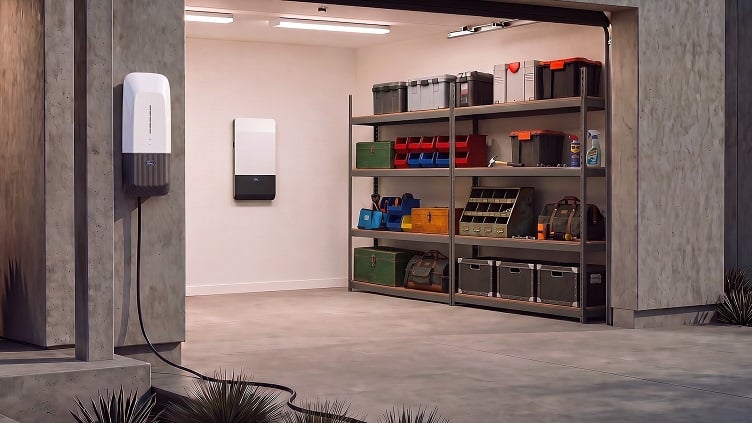
Ford said this has two benefits. First, it lowers the cost of home energy storage: the Home Power Station is expected to cost about half as much as Ford’s first-generation bidirectional charger. Second, it simplifies installation. For managing home energy use, the only added hardware is Ford’s Home Power Station — the company’s bidirectional charger to charge the vehicle or supply power to the home. Powering a home during an outage also requires Ford’s Home Backup Power Panel.
Additionally, the American carmaker said homeowners can charge Fathom’s battery when electricity is off-peak and then use that energy when it is more expensive to help lower monthly bills. Ford also said the system is a cleaner, quieter alternative to traditional backup power generators that run on natural gas or diesel.
