
Key takeaways:
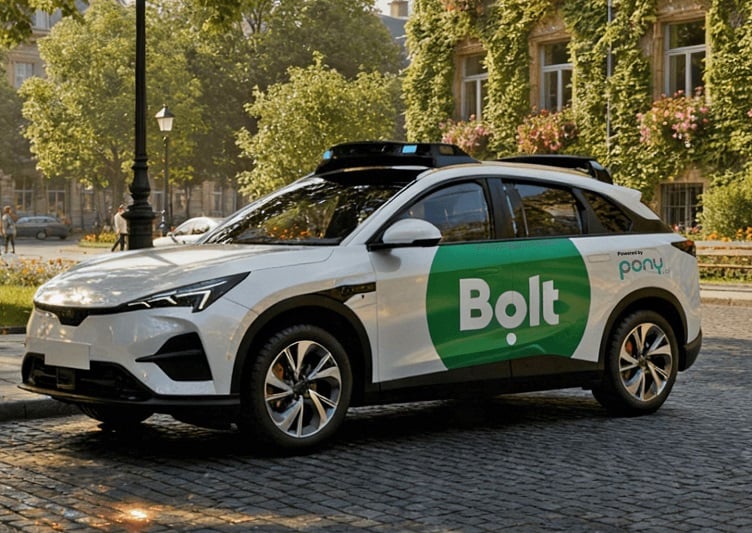
- Bolt picked Alpamayo Stack with a planned rollout of at least 25,000 Level 4 autonomous robotaxis.
- Volvo is adopting both Hyperion and Alpamayo Stack for safe automated driving.
- Mercedes-Benz and Porsche also have plans for autonomous use cases using Nvidia Hyperion.
During Nvidia’s Berlin GTC event, European ride-hailing fleet management vendor Bolt and Swedish carmaker Volvo have adopted Nvidia’s automotive technology for planned European rollout of robotaxis and future autonomous vehicles.
Bolt is using Nvidia’s Alpamayo Stack for its European robotaxi program using future Lucid vehicles built on Nvidia’s Drive Hyperion technology. The companies will adapt software for European roads and integrate it into vehicles from multiple manufacturers. This will include Nvidia driving and safety technologies along with Bolt’s fleet-management systems and operations.
“Robotaxis are the first mass-market application of robotics and physical AI, reinventing how people and goods move,” said Jensen Huang, founder and CEO of Nvidia.
Bolt will gather real-world driving data to support the development of the robotaxis for deployment in Madrid by 2027 with Germany slated for future deployment. This is part of Bolt’s planned European rollout of at least 25,000 Level 4-capable robotaxis built on Nvidia’s Drive Hyperion technology.
(Learn more about the six levels of automotive autonomy on Globalspec.com)
Nvidia’s Drive Hyperion technology is a development platform for robotaxis and Level 4 autonomous vehicles that combines a sensor suite, Drive AGX compute processor and full-stack Drive autonomous vehicle software. Nvidia’s Alpamayo Stack is an open platform of AI models, simulation frameworks and datasets for autonomous vehicles built for Level 4 autonomy.
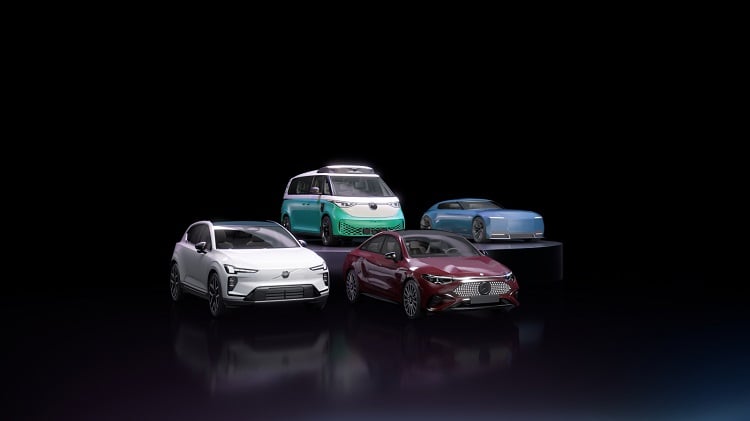 Some of the cars from the automotive OEMs that are participating in Nvidia’s autonomous driving platform for Europe. Source: Nvidia
Volvo and others
Volvo Cars is adopting the Drive Hyperion, Halos OS and Alpamayo Stack for future Volvo cars to navigate real-world environments from door to door, Nvidia said. Volvo will use the technology for safe automated driving to build, validate and deploy autonomous vehicles at scale, Nvidia said.
Meanwhile, Mercedes-Benz is extending its Nvidia partnership to adopt the Hyperion and Alpamayo Stack to support Level 3 and Level 4 autonomy. Additionally, Mercedes-Benz said its MB.Drive Assist Pro will soon get approval for point-to-point urban driver assistance in Germany. This is designed to help drivers navigate through city traffic, the company said.
Developed with Nvidia, MB.Drive Assist Pro is a Level 2 advanced driver assistance system (ADAS) that uses around 30 sensors including 10 cameras, five radar and 12 ultrasonic sensors.
Finally, Porsche is developing a data flywheel workflow across VW Group using Nvidia’s Cosmos Data Factory and Omniverse NuRec to turn fleet data into datasets and simulations to evaluate autonomous-driving models. It is expected to reduce repeated physical test drives by up to 90% and shorten development cycle by up to 85%, Nvidia said.
