
CES 2026 is likely to be the beginning of the Micro RGB era when it comes to new televisions.
While mini-LED TVs have made strides in recent years, advances in artificial intelligence (AI) have allowed micro RGB technology to emerge as the next big thing in televisions.
At CES 2026, taking place January 6 to January 9, 2026, in Las Vegas, Nevada, there will be a slew of new TVs that will feature this technology that will likely be released in 2026. The price point will probably be out of reach for most consumers. But like many consumer technologies, it will drop in price in the coming years as it becomes mainstream and production becomes mature.
What is micro RGB?
The term micro RGB refers to a new type of backlighting technology for televisions that uses microscopic red, green and blue LEDs that offer a more vibrant color than current LED backlighting.
It is considered a significant step forward from MiniLED technology.
The technology uses AI for enhanced processing to bridge the gap between high-end OLEDs and standard LED backlighting televisions. It also is billed as an evolution of LCD technology, not a self-emissive display like OLED or true micro-LED but more of a hybrid of the two.
The technology will initially be found in very high-end TVs but will likely evolve to standard TVs over time as the technology matures.
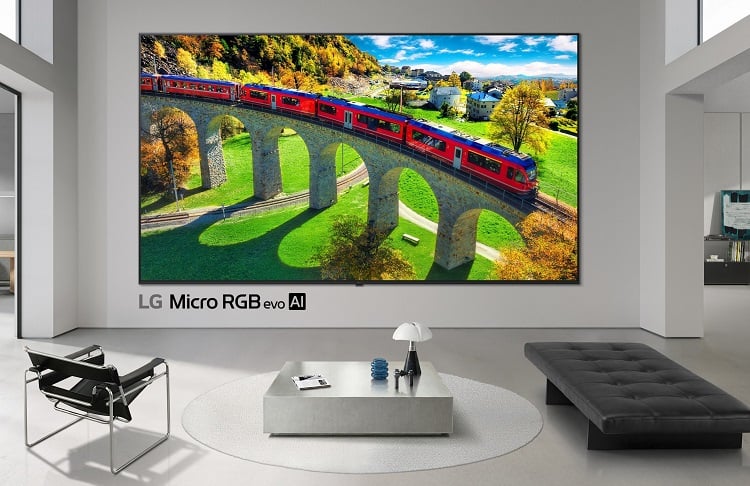 The LG micro RGB TV will debut at CES 2026 powered by LG’s dual AI engine-based Alpha 11 AI processors. Source: LG
LG Electronics
One of the largest consumer electronics vendors in the TV space, LG Electronics, will unveil its first flagship micro RGB TV that uses OLED precision to control each of the RGB LED backlights.
The TV will be powered by LG’s dual AI engine-based Alpha 11 AI processors that include dual super upscaling to simultaneously process two types of AI upscaling. LG said the TV will achieve 100% color gamut coverage in BT.2020, DCI-P3 and Adobe RGB.
In addition to its micro RGB TV, LG will be debuting a transparent OLED display and wireless box solution that will allow the TV to “disappear” into a space due to its elimination of traditional black screen and allowing the environment to remain visible when the display is not in use.
Samsung Electronics
The other major Korean consumer vendor, Samsung Electronics, will expand its micro RGB TV lineup with 55-inch, 65-inch, 75-inch, 85-inch, 100-inch and 115-inch models.
“With Samsung’s latest technology, our Micro RGB portfolio delivers vivid color and clarity that make movies, sports and TV shows feel more expressive and engaging,” said Hun Lee, executive VP of the Visual Display (VD) Business at Samsung Electronics. “By expanding the lineup for 2026, we’re establishing a new premium category with sizes that span the full range of modern living spaces while maintaining our highest picture standards.”
Samsung’s micro RGB technology uses sub-100μm RGB LEDs that emit light independently. This allows for precise light control and accuracy as the AI engine is equipped with an AI chipset that allows frame-by-frame clarity and realism, Samsung said.
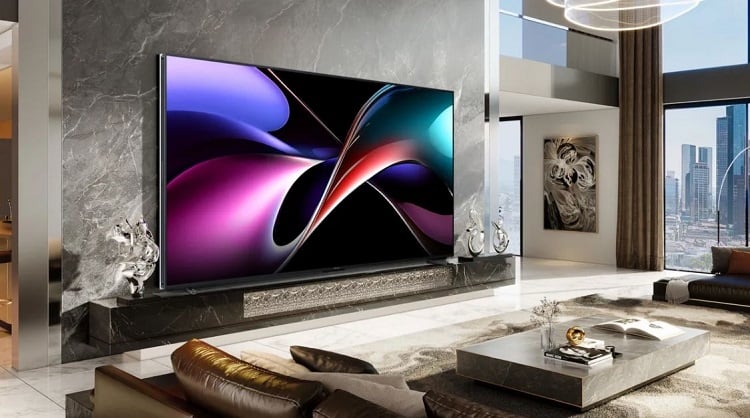 The Hisense micro RGB TV will expand its lineup beyond its large 135-inch that was launched at CES last year. Source: Hisense
Hisense
Hisense already launched its first micro RGB at CES last year, a whopping 135-inch monster wall TV, but now at CES 2026, the company will unveil the 116UX micro RGB television that will offer better precision than OLED and QLED TVs, the company said.
The micro RGB will be a smaller TV than the 135-inch but will still be very large as the technology is still not mature enough to be scaled down economically to smaller televisions. But that will no doubt come.
The TV will feature:
- Up to 8,000 nit peaks brightness
- 3D color master pro
- 95% BT.2020 color gamut
- 20,000+ color control units
- AI that will control the picture and sound
Sony
There is nothing official that has been unveiled from Sony, but the company already revealed it was working on micro RGB TVs and technology and is expected to launch the first models in 2026.
Sony already trademarked the phrase “True RGB” in Canada and Japan.
Some of the rumors regarding Sony’s micro RGB TV include the model names — Bravia 7 II, Brava 9 II, Brava 10 — and it will be powered by MediaTek’s MT9131 chipset. The televisions are said to range from 50-inches to 115-inches and will run on the Google TV operating system.
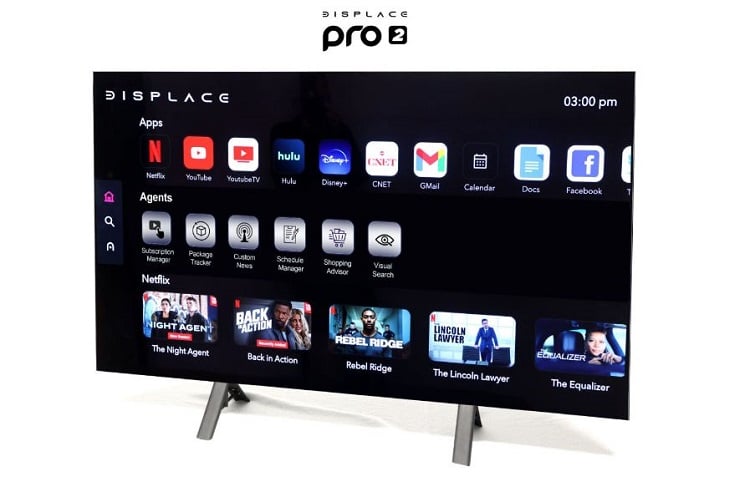 Displace will unveil its true wireless 4K OLD TV that is billed as the first AI-native TV on the market. Source: Displace
Displace Pro TV 2
Displace said it will debut what it claims to be the first wireless AI-native TV at CES 2026 called the Pro TV 2.
According to the company, the dedicated native NPUs and TPUs enable local AI processing for voice and gesture control, personalized content using computer vision and fine-tuned local models. Some of the features of the AI-native TV include:
- When a video is paused, products are shown based on user preferences.
- Personalized video news agent to allow users to see media based on their preferences.
- Live conversational search with the AI.
- Gesture control and face recognition without a controller.
- Syncing of other screens in real time.
The Pro TV 2 will be a 65-inch 4K OLED with double luminance of the Pro TV 1.
