
For many of us, the Internet has become second-nature, a regular part of our daily lives. We surf the web effortlessly, scroll through Internet-connected social media worlds, and engage with apps daily. But still, there are almost five billion people worldwide that don’t have access to computers and 60% of the world still remains without Internet access.
When Matt Dalio was attending Stanford Business School, he took a trip to India and had a Eureka moment – recognizing that the cellphone in his hand could serve as a computer and an ordinary television screen as its accompanying monitor. It dawned on him that he might be able to provide affordable desktop computers to those without.
 Dalio conducting research across Asia. (Source: Endless)
After travelling through Asia conducting research, he was confident that his idea was in high demand and set out to develop Endless, an affordable handheld computer and OS for the developing world. With the device it wouldn’t matter if someone lived in an area where Internet was non-existent because they would still be able to connect.
At CES 2016, which took place in January, Endless Mobile unveiled a mini version of first-of-its kind device – the Endless Mini that costs $79.
How is this possible?
The Endless computer comes pre-loaded with hundreds of apps that range from health and wellness, to parenting, to personal finance.
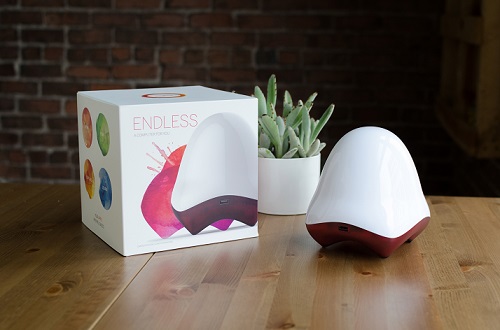 The Endless PC. (Source: Endless)
“We designed the apps to work offline and to only need updates occasionally, so your Endless computer is always available to use and access content,” says Dalio, CEO, Founder and Chief of Product at Endless, in an interview.
The product works similarly to that of a mobile device. Just like with a smartphone, the apps are native to the device and users don’t necessarily need to be connected to the Internet to access them. When update need to be run, they do so when it’s convenient for the user.
“People who are not online or don’t have access to the information available online are at a disadvantage from day one. With so much free content and information available, it’s just not fair to the global populous to not have the same access as people that are,” says Dalio
The computer comes equipped with AMLogic quad-core ARM Cortex A5 and a 1.50GHz Mali-450 GPU, with two options for RAM that indicate a price difference (either a 24GB solid state drive and 1GB of RAM for $79 or a 32GB SSD and 2GB of RAM for $99).
Admittedly, Endless is a little slower than a typical computer, though. Since it uses an ARM processor and still has some differences when it comes to computing power, but can be used in the same way as any ordinary desktop computer.
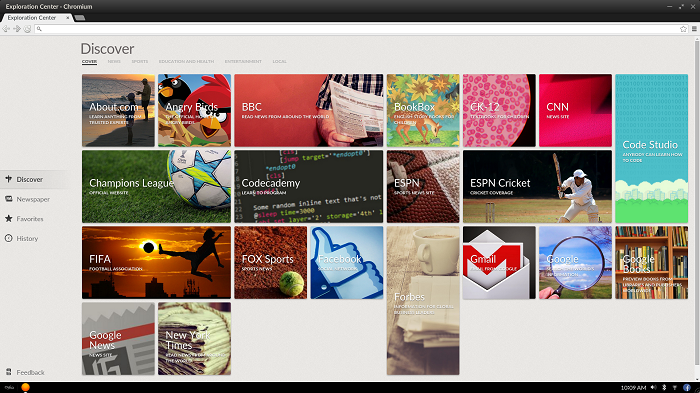 The Endless computer looks similar to a regular desktop computer during use. (Source: Endless)
“People using an Endless can perform the same tasks you can on your PC. The interface is vastly different, as our OS was designed to mimic that of a mobile device, so it’s simple to use from the moment you turn it on,” adds Dalio.
And with cybersecurity a major concern these days, Endless is a safe computing device. The device is built on a Linux operating system, which powers 80% of the world’s servers, which makes it pretty secure. According to its creators, no one has built a virus for the Endless OS as of now.
The Endless computer has already launched in Mexico and Guatemala, and the company plans to expand to South America, Central America, and MENA over the next few years.
The Endless Mini is already available for purchase on the company’s website, but will not begin shipping until February. Its original flagship product, the Endless, is a larger version available for $190 to $230 and can be purchased immediately. The company had initially launched a Kickstarter campaign for the Endless back in April where it raised over $176,000 to bring the project to life.
This isn’t the end of Endless, either. Dalio revealed that the company has a number of other projects in the works that will build on its constant mission: bring technology to those in the developing world.
