
A new highly integrated global navigation satellite system (GNSS) platform from positioning and wireless communication solutions provider U-blox is designed for ultra-low power high-performance positioning applications. The U‑blox M10 delivers precise positioning performance in a wide range of applications such as sport watches or asset and livestock trackers, all in an extremely compact format and with very long battery life.
The M10 positioning platform can track up to four GNSS constellations at once to deliver positioning data even in challenging environments such as deep urban canyons. The receiver’s Super-S technology helps distinguish positioning signals from background noise to capture positioning data even when satellite signals are weak. Its high radio frequency (RF) sensitivity also enables it to work well with small antennas, making it ideal for compact product designs. In sport watches, for instance, U‑blox M10 guarantees highly dynamic positioning 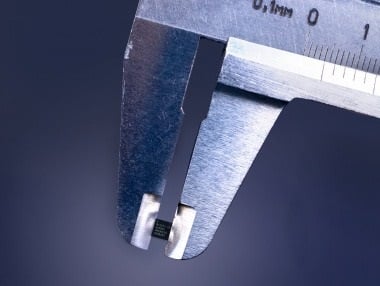 Source: U-bloxaccuracy during a run in cities, woods or under an open sky while preserving battery life.
The platform is designed to consume 12 mW in continuous tracking mode, five times less than the power consumed by previous U‑blox meter-level GNSS technology, making it ideal for battery-powered applications. Enhanced RF sensitivity also cuts the time it takes for the platform to achieve a first position fix when initialized, further reducing systemic power consumption. Switching to the improved Super-E mode can extend battery life even more.
This new GNSS platform will be supported by AssistNow, the company's assisted GNSS service, to accelerate positioning and improve accuracy. Depending on the required level of assistance, the service is available free of charge or for a recurring fee.
The U‑blox M10 platform benefits from U‑blox’s experience in building robust GNSS receivers, incorporating proven techniques for detecting spoofed signals through the analysis of raw GNSS data, jamming-detection strategies, and embedded filters to mitigate the effects of in-band RF interference.
