
Researchers from University of Luxembourg, Physics and Materials Science Research Unit (PHYMS), have proven that liquid crystal shell has a huge potential for many uses, like autonomous cars, sensors, anti-counterfeiting devices and more.
The research team from PHYMS has been studying the mechanical and optical properties of liquid crystal in order to develop shells that could be useful in many technologies.
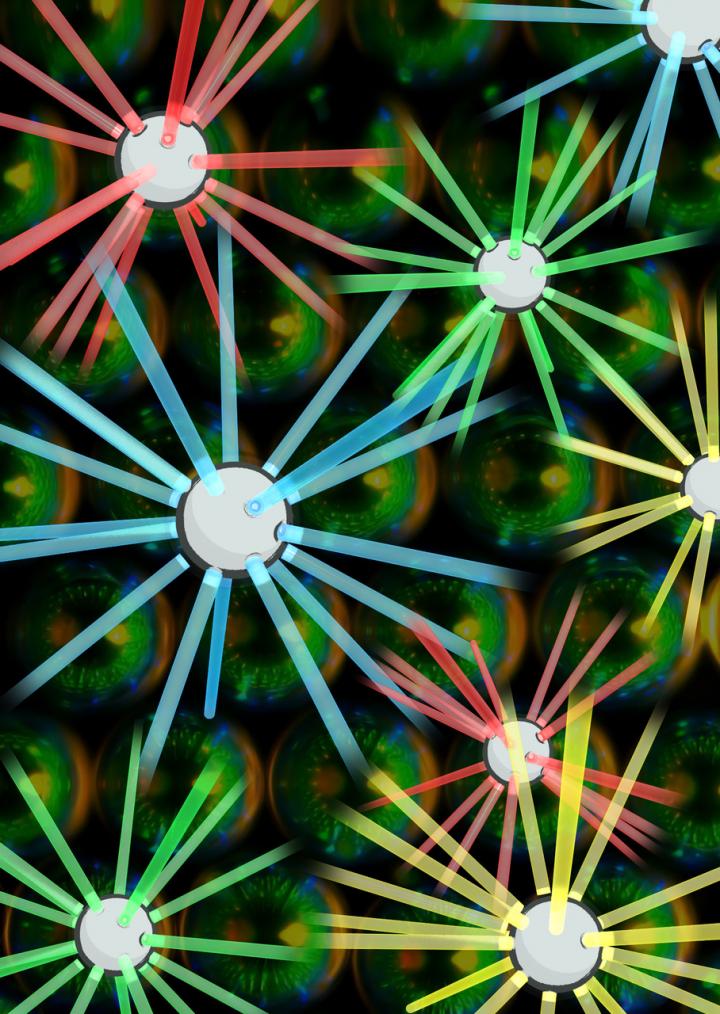 "Smart" material enables novel applications in autonomous driving, robotics, and sensor technology. (Source: University of Luxembourg)
Liquid crystal is a material that hovers between a solid and a liquid state. Liquid crystal shells are only a millimeter in size. They can be easily applied to any device or item. The shells reflect light highly selectively and can be arranged into patterns that machines can read, similar to a QR code. These shells can be manufactured in order to reflect a specific light wavelength that humans cannot see. The light is reflected off of the shells “omnidirectionally,” which means that the same pattern can be seen at any position or angle and can also be read by a moving object.
Researchers say the shell's primary use is for sensors. There are many situations where the shells could be used as a sensor. Liquid crystal shells could be placed on the fingertips of robots and used as pressure sensors to allow the robots to have the tactile feeling, which is currently difficult to achieve. The liquid crystal shells could be placed on fire exit signs on walls which are triggered when an area reaches a certain temperature, like when a room is on fire. In this use, the sensors react passively and they don’t need batteries or electricity to operate. The liquid crystal shells could also be used to prevent counterfeiting. The micropatterns that the shells display can be combined to create a unique pattern that cannot be copied. These patterns could be used to create security devices that cannot be copied and can be attached to one-of-a-kind and valuable items. The patterns could be a way for both buyers and sellers to guarantee that an item is not counterfeit.
While the liquid crystal shells are very promising in a wide number of fields, there is still a lot more research and development that needs to be done before they become commercially available. The paper on the shells was published in Advanced Materials.
