
Bigelow Aerospace (BA) and United Launch Alliance (ULA) have just announced that they will develop and deploy inflatable habitats in Low Earth Orbit in 2020. The expandable modules will be based on the Bigelow Aerospace B330 which just made its way to the International Space Station over the weekend, delivered by SpaceX.
The B330 will contain 12,000 cubic feet of internal space and will support zero-gravity research like scientific missions and manufacturing processes. Aside from the potential it has to further scientific research, the future inflatable habitats may even become a destination for space tourism and a craft for missions on their way to the Moon and Mars.
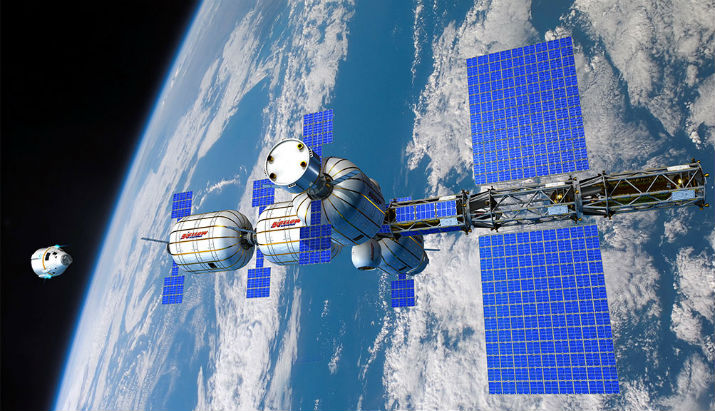 The B330 can be deployed by multiple launch vehicles and features an architecture designed with modular expansion in mind."We are exploring options for the location of the initial B330 including discussions with NASA on the possibility of attaching it to the International Space Station (ISS)," said Robert Bigelow, founder and president of Bigelow Aerospace. "In that configuration, the B330 will enlarge the station's volume by 30% and function as a multipurpose testbed in support of NASA's exploration goals as well as provide significant commercial opportunities. The working name for this module is XBASE or Expandable Bigelow Advanced Station Enhancement."
Transportation to the B330 will be provided by NASA's commercial crew providers, whether the station is free flying or attached to the ISS. The traffic to just one module will more than double the number of crew flights per year.
"This innovative and game-changing advance will dramatically increase opportunities for space research in fields like materials, medicine and biology. And it enables destinations in space for countries, corporations and even individuals far beyond what is available today, effectively democratizing space. We can't begin to imagine the future potential of affordable real estate in space,” said Tory Bruno, ULA president and CEO.
Development of Bigelow's B330 is currently underway, along with the integration of the B330 to the Atlas V. Once the habitat is proven and markets are established, additional B330's will be deployed to other locations, possibly even the moon and Mars, to meet future demands for habitable volumes in space.
