
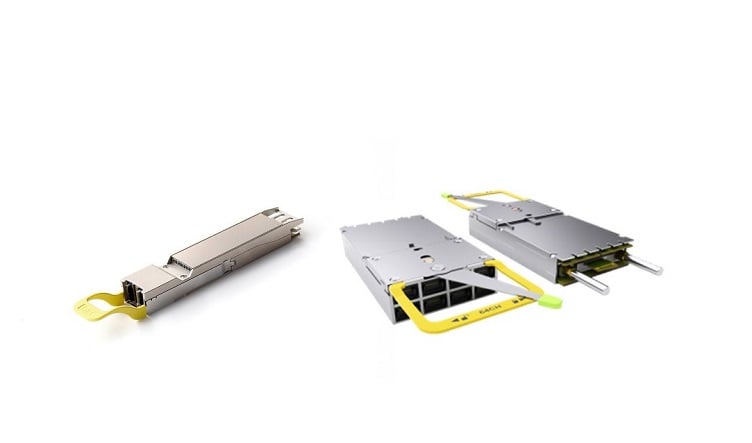
In a move that is said to prevent Chinese firms from stealing data, installing malware or disrupting services in the U.S., the Federal Communications Commission (FCC) is drafting a rule that would bar imports of new models of Chinese optical transceivers.
According to a report from Reuters, the officials would publish the new rules sometime in 2026 when it would take effect.
Optical transceivers are devices used in optical communications to transfer data over long distances via fiber optic cables with little signal loss. These small modules are an important part of telecommunication infrastructure, enterprise networks and data centers.
Because they are used to transfer large amounts of data quickly, the FCC believes the devices could be compromised, leading to disruptions in telecom networks or how data is moved through data centers.
Chinese transceiver vendor Zhongji Innolight may be one of the companies that takes a hit if the rule is drafted, according to the report. Zhongji holds about a 27% market share of data center optical transceivers. It was added to the U.S. list of alleged Chinese military-backed companies in June 2026, the report added. Zhongji denied the designation.
Why it matters
If Chinese optical transfer vendors are prohibited from supplying the U.S. in the future, it could be a boon for American transceiver makers like Coherent, Lumentum and Broadcom. They could be the beneficiaries of new business.
The Trump Administration may have already been planning ahead as Coherent was recently one of the recipients of the renewed CHIPS Act funding after signing a letter of intent with the Department of Commerce for up to $50 million in direct funding to expand its 150 mm indium phosphide chip manufacturing facility in Texas.
Market research firm TrendForce said in May 2026 that Lumentum and Coherent were moving to accelerate capacity expansion due to supply chain risks and geopolitical pressure from the U.S. These companies that produce their transceiver modules in-house were looking to secure new equipment to expand their manufacturing capabilities.
Previously, Chinese vendors, with their high-volume and cost advantages, were formidable to other global suppliers and the U.S. had ceded much of the optical transceiver market instead to focus on dense wavelength division multiplexing and coherent optics.
If the FCC rule is put in place, these companies could be in the driver’s seat to supply both technologies for the U.S. market.
