
Sponsored Content
Wired Connectivity
Deploying Tunable Transceivers: Advantages, Challenges and Solutions
03 August 2018
Sponsored content
Tunable transceivers represent a new technology that allows on-site wavelength adjustment, transcending the fixed-wavelength limitation of traditional static transceivers. The need for tunable devices has become increasingly important as networking technology continues to develop. Dense wavelength division multiplexing (DWDM), which is expected to serve as the central technology in the future of optical networking, allows data of different wavelengths originating from different sources to share a single optical fiber.
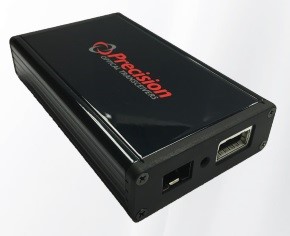 Figure 1: The TN100-XS is a tuning box solution designed to overcome the challenges of using tunable transceivers with legacy networking equipment. Source: Precision Optical TransceiversOne drawback of static transceivers is that multiple backups are needed to minimize network downtime in a DWDM environment, given the range of wavelengths present. This can greatly increase operating cost. While it’s true that individual tunable transceivers tend to cost between two to four times more than their static counterparts, they can both minimize cost and maximize flexibility when considered in the context of the system overall.
The flexibility afforded by tunable transceivers is also key to adapting to the needs of a growing network. This aspect will only become more important as transmission rates increase and flexible channel spacing becomes crucial to networking success.
That said, the newness of tunable transceiver technology can lead to challenges for operators attempting to interface with legacy equipment. One of the most significant challenges is an inability to tune over the command line interface (CLI); it’s a problem that presents itself for some switches and routers interfacing with tunable XFP transceivers, and is even more common among devices interfacing with tunable SFP+ transceivers.
Fortunately there is a solution: a transceiver management module, also known as a tuning box, which features ports designed for hosting tunable transceivers and that works in conjunction with tuning software.
Precision Optical Transceivers offers the TN100-XS, a USB-powered compact device capable of hosting both SFP+ and XFP devices and tuning to any of the standard ITU C-band 50 GHz- or 100 GHz-spaced channels. Tuning software is included with the device and offers the advantage of being web-driven, meaning that the device will stay up-to-date without the need for manual installations of new firmware, or the inherent security compromises that accompany manual network interaction.
To learn more, contact the experts at Precision Optical Transceivers.
Powered by CR4, the Engineering Community
Discussion – 0 comments
By posting a comment you confirm that you have read and accept our Posting Rules and Terms of Use.
Advertisement
Advertisement
Popular News
Find Free Electronics Datasheets

Advertisement