
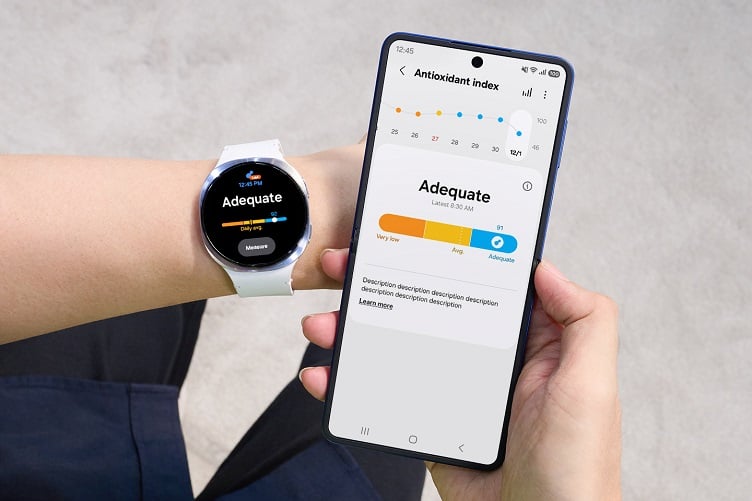
Samsung has launched a new feature on its Galaxy Watch 8 that will allow users to monitor their antioxidant index via thumb scan and return carotenoid levels in about five seconds.
Samsung claims it is the industry’s first measurable nutrition index.
A miniaturized lab-grade sensor inside the watch allows users to turn a diet into an actionable metric. Samsung said that as the population lives longer, focus is shifting from simply increasing lifespan to improving quality in those additional years.
"In this context, antioxidation naturally gains attention as a method to slow down aging,” said Hyojee Joung, a Seoul National University public health nutrition expert who guided parts of the feature on the Galaxy Watch. “If antioxidant management is neglected, reactive oxygen species (ROS) accumulate in the body, increasing the risk of chronic diseases such as cardiovascular disease, diabetes and cancer."
How it works
Samsung said carotenoids are natural red, yellow and green pigments found in fruits and vegetables. Humans cannot produce carotenoids on their own and the levels stored in the body offer a look into how much of these foods someone has been eating.
The Samsung Watch 8 antioxidant index score tells users their carotenoid levels based on three categories:
- Very low: Less than 50% of the daily WHO recommendation of 400g per day.
- Low: Between 50%–100%.
- Optimal: 100% or more.
“Skin carotenoids metabolize and accumulate in tissues gradually, so short-term changes in fruit and vegetable intake won’t immediately appear in the score,” Joung said. “Our research shows that increased carotenoid intake leads to a meaningful rise in skin carotenoid levels after about one to two weeks, making the Index a valuable tool for tracking consistent, long-term dietary habits.”
The sensor was under testing for about seven years. The miniaturized device combines multi-wavelength light emitting diodes (LEDs) with a custom photodetector array for carotenoid readings.
Samsung said LEDs emit a broader wavelength range compared to laser. By analyzing how much light is absorbed by the skin at multiple wavelengths through photodiodes, the Samsung Watch 8 estimates carotenoid levels with accuracy. The algorithms continuously calibrate in real-time also support precision insights to the user.
Additional factors such as sleep quality, stress levels and physical activity also influence the antioxidant index.
"New wearable sensors can play a role in helping people build healthy eating habits by tracking and encouraging sufficient daily intake of fruits and vegetables," said Yoonho Choi, a professor in the Samsung Medical Center. "Over time, this simple practice can help prevent some cancers and other age-related diseases, making it a very effective way to support long-term health."
