
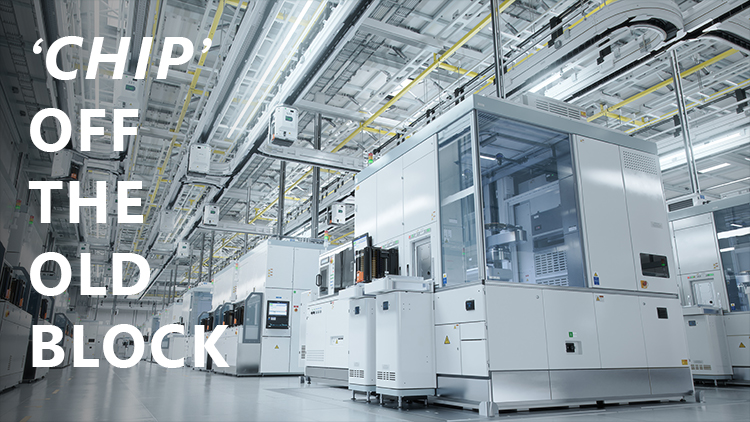
The semiconductor industry is almost unrecognizable from five years ago, testimony to the pace of technological change and also the trade landscape the industry shapes and is shaped by.
These changes have occurred due to the ongoing need for smaller, faster and more efficiency chips and its relationship to Moore's law. They've also been driven by a supply chain that has experienced massive swings. Geopolitical tensions and trade conflicts play an important part. And of course, a need for all industries to reduce environmental and social burdens.
Manufacturers are embracing new ideas and techniques in response. And through this bold innovation and adaptation, one of the world's most exciting, inventive and magical industries continues to redefine itself.
Upcoming featured content
- Nvidia CEO Jensen Huang has been called the ‘AI Oppenheimer’ – but he dismisses concerns: AI is just ‘processing data’
- Fine-tuning fabrication: The impact of pH on semiconductor etching and cleaning processes
- The rapid evolution of biosensor tech
- Why China still can’t make advanced chips without U.S. help
- These chipmakers stand to gain from TSMC’s GaN exit
From the GlobalSpec archives
- NPN vs. PNP transistors: What's the difference (August 2024)
- Common challenges in semiconductor lithography (August 2024)
- IRA and Chips Act drive reshoring up 53% (July 2023)
- Quantum computing meets semiconductor manufacturing (July 2023)
- SiC semiconductors finally soaring in demand (June 2023)
- 5 ways the US and EU can boost chip production (April 2023)
- 94% of the DRAM market is controlled by three companies (May 2022)
- An overview of the Chips for America Act (March 2022)
