

Despite years of investing in domestic chipmaking, China remains reliant on U.S. technology to design cutting-edge semiconductors — a dependency laid bare by a recent deal that lifts restrictions on American electronic design automation (EDA) exports in exchange for Chinese rare Earth materials.
The agreement highlights a critical gap in China’s semiconductor ambitions: Without access to advanced U.S. software tools, its ability to produce next-gen chips remains out of reach.
“Today, China does not have the ability to develop finished electronics entirely on their own,” said Chris Mitchell, VP of global government relations at the Global Electronic Association. “However, in theory, they could do so over time. It is a mixed impact — the exchange accelerates some Chinese capabilities in EDA tools but grows dependency on the U.S. at the same time.”
Because of this, Mitchell expects more deals to come for technology like:
- Advanced packaging equipment
- Design software for semiconductors
- Interposers
This will likely be in exchange for more rare Earth elements like gallium, tantalum, palladium and more.
China has a long history of infrastructure-for-resources deals to secure what the country needs for its technological development.
“In this context, the current U.S.–China agreement fits into a well-established global pattern,” said Rob Picken, senior VP of digital transformation at Sourceability. “Given the dynamic nature of trade and export controls, especially under the current administration, it’s likely we’ll see more of these reciprocal exchanges in the future, particularly involving rare earths and semiconductor equipment.”
That said, Picken warned that deals and relationships can change quickly and many companies should prepare to adjust sourcing and supply chain strategies accordingly.
Mitchell agreed that companies should be wary of any future deals and the U.S. needs to be sure the deals return commensurate value.
“We must be sure that we don’t become more vulnerable to China withholding rare earths at some point in the future,” Mitchell said. “If other countries can expand the electronics industry supply chain to other countries, this will have global benefits.”
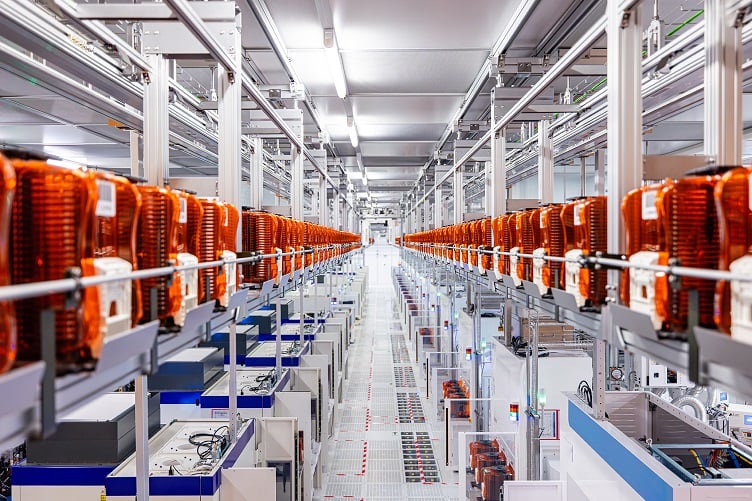 A semiconductor assembly and design center at Hua Hong Semiconductor’s fab in Wuxi, China. While China continues to plot a path toward developing its own chips and equipment, in the near-term it must rely on the U.S. Source: Hua Hong Semiconductor
Why China needs EDA
When the first export restrictions were established by the U.S. government in President Trump’s first term, it set off a need for China to look elsewhere for technology.
Not finding many takers, the Chinese government instead turned to developing its own technology — microprocessors, fab processes and equipment, software, AI and more. The strategic focus would allow the country to rely on its own sources rather than any outside partners that could potentially cut off access at any time.
While this continues as a part of the country’s overall strategic focus, to develop home-grown chips today, the country needs technologies not found domestically.
While numerous semiconductor vendors are active in China, HiSilicon is the biggest one. HiSilicon is a smartphone chipmaker for mostly domestic Chinese smartphone giants like Huawei.
According to Phil Solis, research director for client processors and connectivity at market research firm International Data Corp. (IDC), HiSilicon needs cutting edge EDA tools to keep improving semiconductors.
“Without these EDA tools, Chinese firms will keep using the same old software without support and without upgrading to new software which will limit them in terms of developing more powerful chips,” Solis said. “This will help the path toward China creating their own high-end chips and not having to rely on semiconductors from the U.S., Europe or Korea and instead grow them in-house.”
Lacking in equipment
Solis said that China is also lacking in semiconductor manufacturing equipment and tools. While the largest Chinese foundry, Semiconductor Manufacturing International Corporation (SMIC), has been able to push their old equipment to the limit, yields are getting worse as SMIC pushes to quadruple patterning.
While semiconductor equipment has been one of the main export restrictions coming from the U.S. and has been expanded to Dutch toolmaker ASML and others, this potentially could be where another deal is struck for more rare Earth materials.
“I expect more deals going forward,” Solis said. “You could look at this myopically as this is what U.S. is doing to China for whatever reasons but it also hurts other companies. It hurts U.S. companies that want to sell products to China, it hurts European companies that want to sell equipment to China. It is more than just what is happening between the U.S. and China.”
The deal
In early July 2025, the U.S. government struck a deal with China that eliminated restrictions on U.S.-based electronic design automation (EDA) firms — like Synopsys, Siemens EDA and Cadence — sending technology to the country.
In exchange, China curbed some export controls on rare Earth materials like antimony, gallium and germanium.
Under the deal, EDA firms no longer need government approval to offer EDA software to Chinese entities and the companies immediately reinstated access to tools to Chinese chipmakers.
Synopsys issued a statement that the export restrictions related to China were rescinded and Synopsys was working to restore access to restricted products in China.
