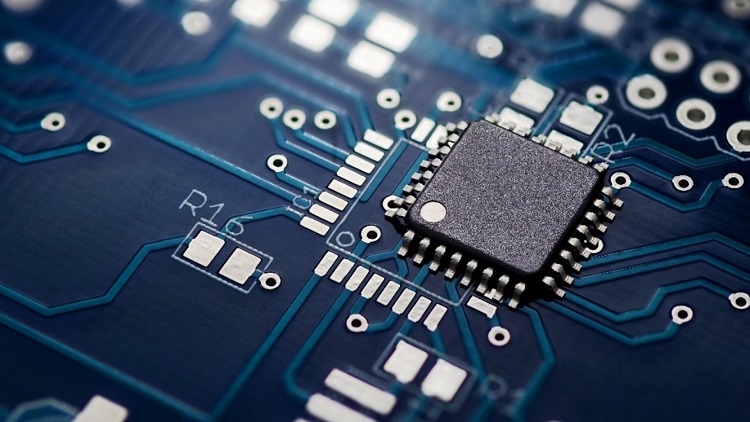
In the intricate world of semiconductor fabrication, precision and control over chemical processes are important. Among the critical parameters that influence the quality and reliability of semiconductor devices, pH measurement holds a central role. Accurate monitoring and control of pH levels during processes such as etching and cleaning are essential to ensure optimal chemical conditions, which directly impact the performance and yield of semiconductor wafers.
Understanding pH in semiconductor fabrication
pH, a measure of the hydrogen ion concentration in a solution, dictates the acidity or alkalinity of chemical baths used in semiconductor fabrication. The semiconductor industry uses a variety of chemical solutions throughout its manufacturing steps, many of which require strict pH control to prevent damage to delicate wafer surfaces and to achieve desired etching or cleaning outcomes.
Importance of pH in etching processes
Etching is a fundamental step in semiconductor fabrication, involving the selective removal of material from the wafer surface to create intricate patterns necessary for device functionality. Two main types of etching — wet chemical etching and dry (plasma) etching — are used, but wet etching heavily depends on the chemical composition and pH of the etchant solutions.
- Controlling etch rate and selectivity: The etching rate is directly influenced by the pH of the etchant. For example, acidic solutions typically contain hydrofluoric acid (HF) or hydrochloric acid (HCl), which aggressively remove silicon dioxide or metal films. Precise pH control ensures consistent etch rates, enabling uniform feature dimensions across the wafer.
- Preventing undesirable reactions: Deviations from the optimal pH range can lead to unintended chemical reactions, such as excessive corrosion or undercutting, which degrade device performance. Monitoring pH helps maintain solution stability and prevents the formation of by-products that could contaminate the wafer.
- Enhancing safety and process stability: Maintaining the correct pH reduces the risk of hazardous conditions, as many etchants are highly reactive. Stable pH levels contribute to safer handling and prolonged solution life, reducing downtime and costs.
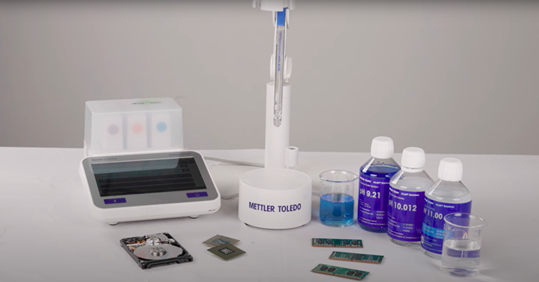 pH measurement is a cornerstone of maintaining optimal chemical conditions in semiconductor fabrication. Source: Mettler ToledoRole of pH in cleaning processes
Cleaning is crucial to remove contaminants such as particles, organic residues and metallic impurities from wafer surfaces. The cleanliness of wafers directly affects device reliability and yield.
- Optimizing chemical activity: Cleaning solutions often include acids, bases or surfactants whose effectiveness depends on their pH. For example, alkaline solutions with high pH values are used to remove organic materials, while acidic solutions target metallic contaminants.
- Protecting the wafer surface: Incorrect pH can damage sensitive wafer layers or cause surface roughness. Continuous pH monitoring ensures that cleaning solutions maintain the desired chemical aggressiveness without compromising wafer integrity.
- Extending solution usability: Over time, cleaning baths can become contaminated or depleted, changing their pH and effectiveness. Regular pH measurement allows timely adjustments or replacement of cleaning solutions, ensuring consistent cleaning performance.
Techniques for pH measurement in semiconductor processes
Given the criticality of pH control, semiconductor fabrication employs advanced pH measurement techniques:
- High-precision laboratory instruments: Periodic sampling and analysis confirm the accuracy and characterize solution quality.
- In-line pH sensors: Integrated sensors provide real-time monitoring of chemical baths, enabling immediate corrective actions.
- Automated control systems: Coupling pH sensors with automated dosing systems allows for continuous pH adjustments, maintaining optimal conditions without manual intervention.
Challenges and considerations
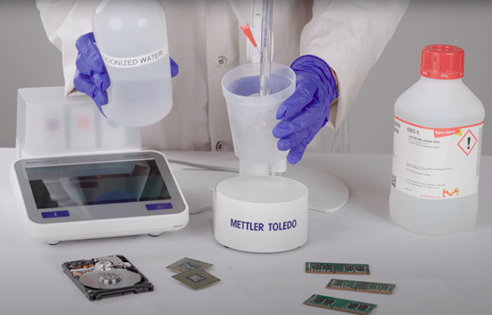 As semiconductor technologies continue to advance toward smaller scales and higher complexities, the importance of reliable pH monitoring and control will only grow. Source: Mettler Toledo The semiconductor fabrication poses unique challenges for pH measurement:
- Chemical compatibility: Sensors need to endure exposure to harsh chemicals and aggressive etchants without compromising performance or longevity. Mettler Toledo offers specialized sensors engineered to withstand demanding chemical environments, ensuring reliable operation tailored to specific semiconductor fabrication applications.
- Calibration and maintenance: Frequent calibration using the correct buffer solution ensures accuracy, but it requires downtime and skilled personnel.
- Miniaturization and integration: Compact and highly durable sensor designs are essential to seamlessly fit within intricate semiconductor process equipment without disrupting operations.
Conclusion
In summary, pH measurement is a cornerstone of maintaining optimal chemical conditions in semiconductor fabrication, especially during etching and cleaning steps. Precise control of pH ensures consistent etch rates, protects wafer surfaces, maximizes cleaning efficiency and enhances overall process stability and safety. As semiconductor technologies continue to advance toward smaller scales and higher complexities, the importance of reliable pH monitoring and control will only grow, underscoring its vital role in the industry's pursuit of excellence and innovation.
About Mettler Toledo
METTLER TOLEDO provides expert guidance to help users select the ideal sensor for their specific application, along with valuable insights into semiconductor pH measurement. For more detailed information, download the application note, pH and Conductivity of CMP Slurry | Mettler Toledo.
Watch the latest YouTube video, pH and Conductivity Measurement of CMP Slurry l Application Video to see these solutions in action.
To contact the author of this article, email pHmatters@mt.com
