

Editor’s note: Information from this teardown is supplied courtesy of TechInsights. Click here to request full access. To view a complimentary report of the Deep Dive Teardown of the HTC Vive Elite XR 2QBB-100 VR Headset, click here.
The Meta Quest 3S is one of the main leaders in the virtual reality space. It is a so-called standalone VR and mixed reality headset, meaning it does not require a PC or console to operate. Instead, you use your smartphone as the main application to run content.
While VR and other mixed reality content has taken a while to get off the ground, there is finally enough content that makes the investment worthwhile. That is, potentially for some consumers. Others may wait for further development or content to emerge before jumping into the mixed reality craze.
There are many mobile games that can connect to the Quest 3S much like other VR headsets. It can also be connected to a PC via cable or wirelessly via Wi-Fi allowing consumers to use SteamVR or Meta PC VR games.
The following is a partial deep dive into the Meta Quest 3S conducted by TechInsights.

Summary
- 5.46-inch, TFT w/chip-in-glass
- 8 GB mobile LPDDR5 SDRAM
- 2-inch MP front camera
- 4-inch MP front camera
Availability: Worldwide
Released: October 2024
Price: $399.99
Target market: Consumer electronics
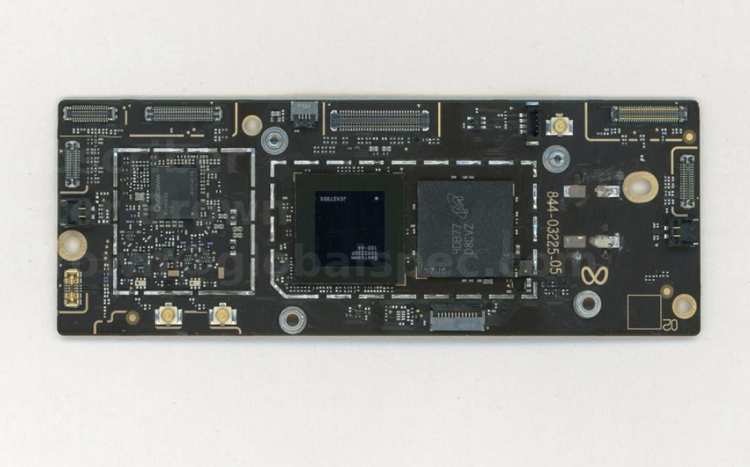
Main board
The main board on the Meta Quest 3S contains the main processor and memory to work with the virtual reality headset. This includes the Micron LPDDR5 SDRAM and Qualcomm’s Snapdragon processor. Other electronic components include:
- Nexperia’s single supply translating buffer, configurable multi-function gate and non-inverting buffer
- Qualcomm’s camera power management, clock buffer and Wi-Fi 6e/Bluetooth 5.3
- SGMicro’s 300 mA/3.3 V LDO regulator
- Maxscend’s SPDT and SP3T RF switches
- Microgate’s SAW filter
- Analog Devices’ Class-D audio amplifier
- Nordic Semiconductor’s Bluetooth 5.4 LE/Thread/Zigbee SoC
- TDK-InvenSense’s six-axis MEMS Gyroscope and accelerometer
- Monolithic Power Systems’ DC-DC converter
(Learn more about Bluetooth chips on Globalspec.com)
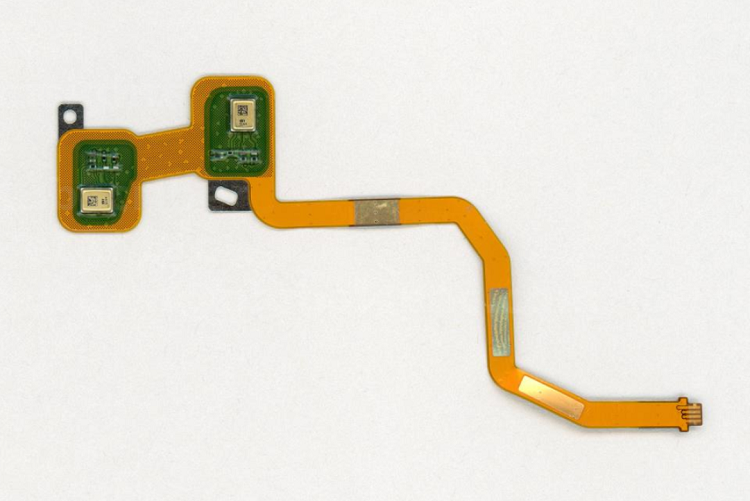 The microphone flex board found inside the Meta Quest 3S. Source: TechInsights
Microphone flex board
Inside the microphone flex board of the Meta Quest 3S VR headset is the MEMS microphone chip from Knowles.
(Learn more about MEMS devices on Globalspec.com)
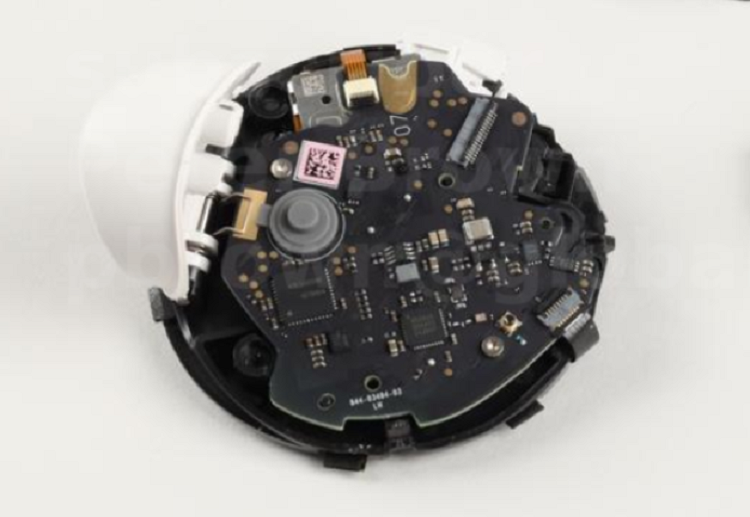
Controller main board
There are two controllers to the Meta Quest 3S and they have similar main boards on the inside. The electronic components found inside these devices include:
- Renesas’ Arm Cortex-M23 MCU with memory
- Allegro Microsystems’ hall effect sensors
- Nordic Semiconductors’ Bluetooth 5.4 LE/Thread/Zigbee SoC
- TDK-InvenSense’s six-axis MEMS gyroscope and accelerometer
- Onsemi’s temperature senso
- SGMicro’s 5 V step-up DC-DC converter
- Monolithic Power Systems’ 1.8 A step-up DC-DC converter
- Texas Instruments’ 250 mA/3.0 LDO regulator
- Analog Devices’ audio amplifier
(Learn more about sensors on Globalspec.com)
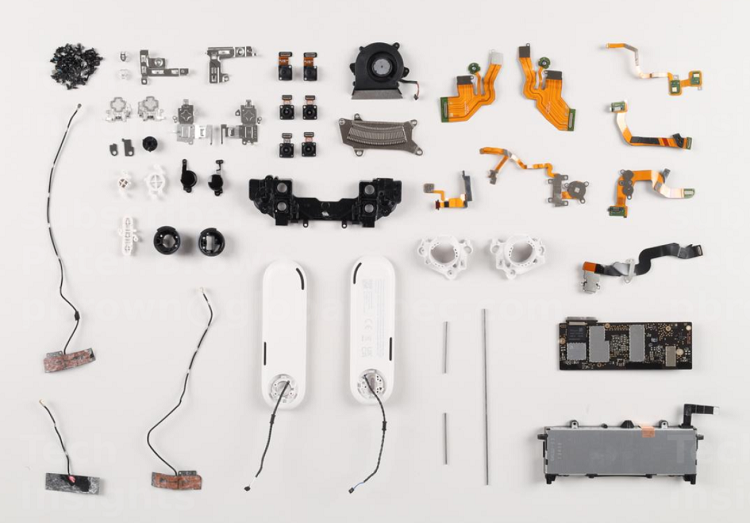 Some of the electronic components found inside the Meta Quest 3S. Source: TechInsights
Major components
- $94.60 — Hex-core Snapdragon XR2 Gen 2 applications processor — Qualcomm (Qty: 1)
- $27.19 — Left touch plus controller subsystem — Meta (Qty: 1)
- $26.97 — Right touch plus controller subsystem — Meta (Qty: 1)
- $24.01 — 12-Hz display subsystem JDI (Qty: 1)
- $22.29 — 256 GB 4D NAND flash — SK Hynix (Qty: 1)
- $21.57 — 8 GB mobile LPDDR5 SDRAM — Micron (Qty: 1)
- $9.51 — 4 MP front left camera subsystem (Qty: 1)
- $9.51 — 4 MP front right camera subsystem (Qty: 1)
- $8.09 – Wi-Fi 6e/Bluetooth – Qualcomm (Qty: 1)
- $5.53 – Battery Subsystem – Huizhou Desay Battery (Qty: 1)
