
Many of history's electrical innovations had literally painful beginnings, capacitors included.
In 1745, Ewald von Kleist, a deacon and scientist in Germany, worked under the idea that electricity was a fluid, which could be captured in a glass jar filled with alcohol. He delivered static electricity charge to a nail in the cork of a jar filled alcohol and held the jar in his hand. Upon touching the nail, he received a large shock, although the reason why eluded him and inspired the work of others.
This would serve as the basis for electrical experiments by Pieter van Musschenbroek, Jean-Nicolas-Sébastien Allamand, Daniel Gralath, Benjamin Franklin and others - each of whom received a painful electric shock during their experiments, or if smart, delivered it to willing volunteers.
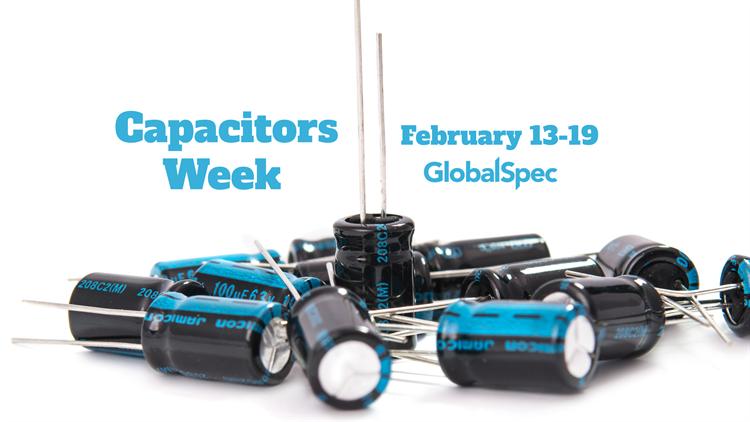
Today we have a firm understanding that these individuals were working with rudimentary capacitors. These essential devices provide capacitance when circuits require intervals of increased or supplemental power, such as for memory storage, amplifiers or power switching.
And as critical passive components, here's our look at capacitors in a modern sense.
