
A new sensor system promises to reduce the time-intensive, hazardous nature and false alarms associated with landmine detection operations. The Vibration-ENhanced Underground Sensing system (VENUS) uses a pulsed magnetic field to stimulate the metal parts inside a landmine to vibrate. Currently deployed systems instead detect the electromagnetic signature of a mine, which can be confused with other buried metal objects or with wet or magnetic patches of soil.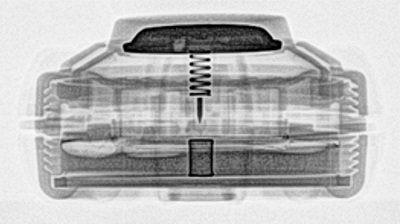 X-ray image of an antipersonnel landmine shows the unique metal features inside VENUS that discriminate between explosives and clutter. Source: U.S. Army Research Office
VENUS uses a vibrometer with a high dynamic range to enable detection of closely spaced low-frequency vibrations. Non-metallic objects do not respond to the magnetic pulse and those that do have very different vibrational characteristics.
“Because conventional metal detectors and ground penetrating radar rely on similar same fields, it should eventually be possible to upgrade conventional systems with VENUS technology to maximize detection capability,” said Dr. Josh Wetherington, principal Vadum researcher.
Researchers from the U.S. Army Research Office, North Carolina State University, Georgia Institute of Technology and defense tech company Vadum Inc. plan to miniaturize and ruggedize the system and to use VENUS to collect data from real landmines in a variety of soil conditions.
