
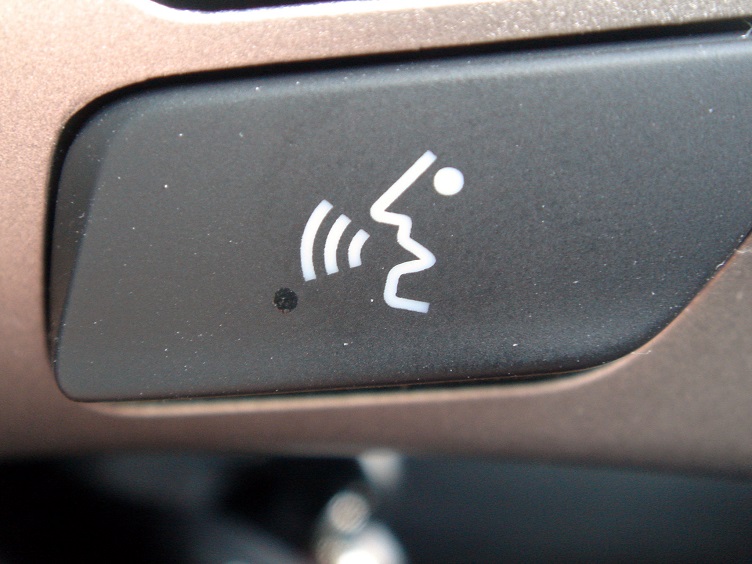
Voice recognition can be defined as the software program of computer or hardware devices that can interpret human voices. Its usual function is to run the equipment, fulfill the instructions and perform writing tasks without engaging the mouse or keyboard.
How to add voice recognition to a product
Two options can be used to make a product work on voice: on-device and cloud-based.
The on-device option enables the device to do all voice interpretation on the device itself, whereas the cloud-based alternative performs all of the heavy processing on super-fast computer servers over the cloud.
How does voice recognition work?
Interpretation of speech includes recognition of each word individually, as they are spoken. This first step is generally performed in a hardware device where incoming analog sound is converted into a digital signal through an analog-to-digital converter (ADC). Furthermore, this generated signal eliminates any background noise and amplitude change is adjusted. The rate at which the speaker speaks is then adjusted in the sample.
Phonetic analysis
A word is a blend of phonemes and fricatives. A phoneme is defined as a basic unit component of speech (the sound of b in bird and p in plug, for instance), whereas a fricative is another dissimilar component of speech. For instance, the letter "s" sounds different in the words "shut" and "yes." By individual assessment of various segments of speech, sequencing, combining the words and obtaining help from a dictionary, a determination of spoken words can be made, although errors may be encountered.
If the application includes finding identical words or fulfilling one-word instructions, the previously mentioned mechanism of speech recognition is sufficient. It can be completed with the help of a microcontroller locally on the device.
Syntactic analysis
Word recognition accuracy can improve with this analysis. For instance, consider the following phrases: “The man is a lion” and “The man his a lion.” For phonetic analysis, it becomes nearly impossible to finalize if the third word is “is” or “his.” In such situations, syntactic analysis is brought to action and it quickly clarifies that the third word has to be “is” because the second sentence uses no verb.]wer
Semantic analysis
Considering the sentence in the previous paragraph, it is easily interpreted that the sentence "The man is a lion" is accurate for syntactic analysis, however it is logically incorrect. The method of determining the logical meaning of a sentence is known as semantic analysis. It aids in finding the exact meaning of speech or request.
On-device voice commands
For devices with basic voice activation properties or products without an internet connection, on-device voice recognition works best. For example, if a device has to follow simple one-word instructions, such as move, halt or reset, using voice recognition on the device itself is the most appropriate option.
Implementation of easy voice control abilities may be accomplished through a cheap microcontroller, which does not need a faster and more complicated microprocessor. While talking about designing hardware for voice recognition, one-word instructions are easy to add and improvements are usually to be done on the software.
A software program development comes from a firm called Sensory that manufactures a voice recognition engine known as Truly Handsfree, which includes a small collection of words. It runs on the ARM Cortex-M4 microcontroller. ARM also has an unrestricted library for all keyword spotting programs, which operates on Cortex-M microcontrollers.
An alternative program is available from a firm called Snips, which offers a complete voice recognition setup called Snips Flow that operates on Linux or Android operating systems. Snips Flow enables the use of artificial intelligence (AI) on minute products. A user-friendly interface offered by Snips Flow helps to customize the voice program.
The essential benefits of on-device voice recognition versus cloud-based include the ability to work without an internet connection with rapid results and the data remains secure and private while on the device itself. For devices needing to fulfill simple instructions, it becomes trouble-free and uncomplicated to perform voice recognition on the device.
Cloud-based voice recognition
The most renowned cloud-based recognition programs are Google Assistant and Amazon Alexa, each of which has specific benefits. Alexa is commonly available in many products whereas Google is better for asking questions and conducing web searches. Likewise, Alexa is favored by product firms as it proves best at handling common personal data digital collections.
Google claims that 1,600 home-automation devices and 10,000 other devices now work with Google Assistant while Amazon is adding Alexa to products via a simple chip called the Alexa Connect Kit. A similar chip called Google Assistant Connect was also announced by Google. But a product using this chip has to have a wireless connection to a Google smart device for the processing of voice data.
Conclusion
The most suitable option for simple and basic devices or devices without internet is the implementation of one-word voice instructions where all the voice signal interpretation is done on the device itself. High yielding microcontrollers are capable of performing speech assessment at stages more than just phonetic analysis.
Complicated items that need complete voice recognition should have cloud-based recognition. Such a voice recognition program is capable of doing syntactic and semantic analysis, which is mandatory for complicated voice recognition features.
