
Researchers from the Max Planck Institute of Science Human History used artificial intelligence (AI) to differentiate between ancient human and dog feces. Feces holds information about ancient health and diet, parasite evolution and the ecology and evolution of the microbiome.
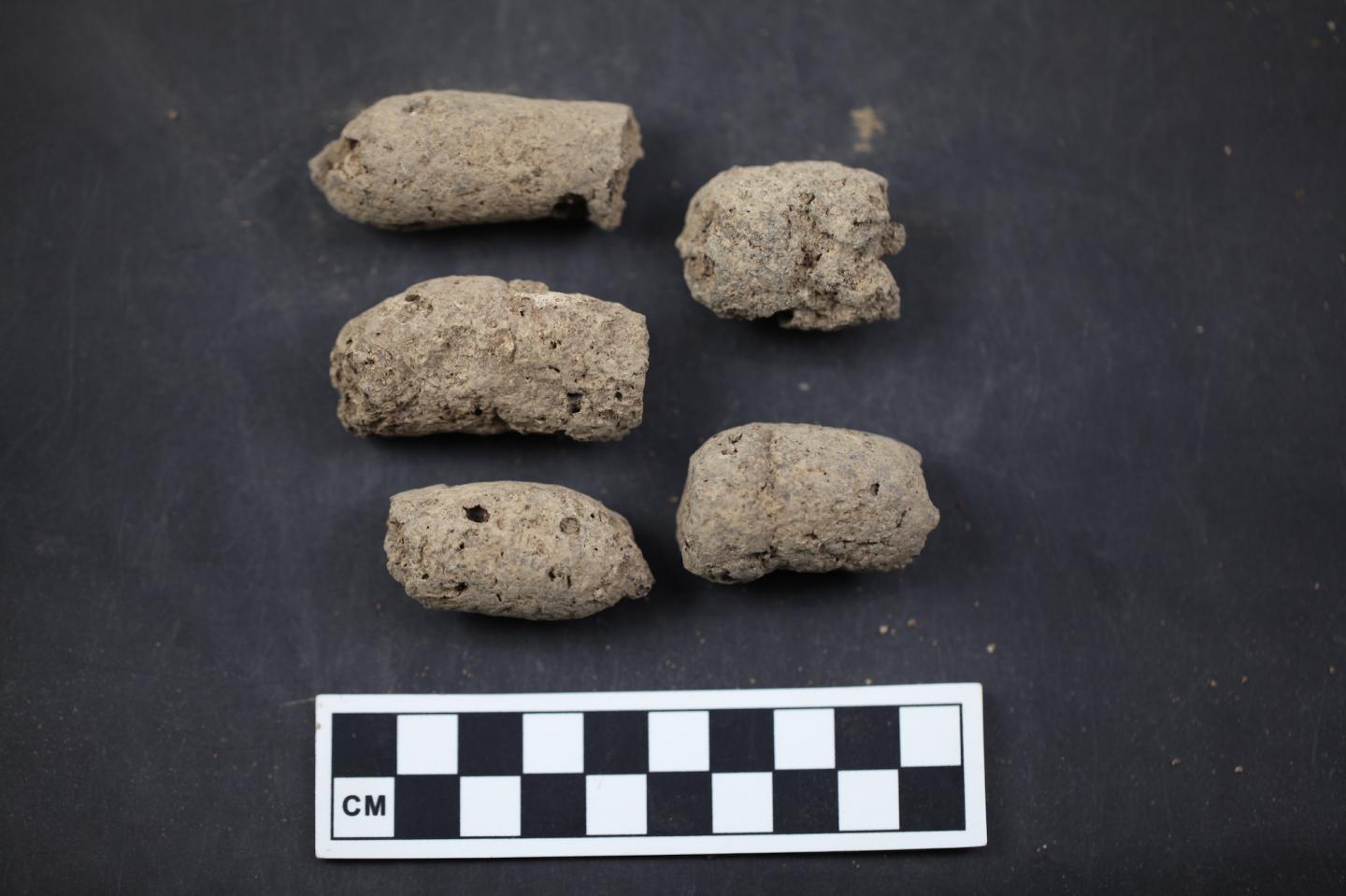 H35 (Ash pit number 35) coprolites from Xiaosungang archaeological site, Anhui Province, China. Source: Jada Ko, courtesy of the Anhui Provincial Institute of Cultural Relics and Archaeology
Scientists have been studying feces for years, but it has been difficult to determine the source of the feces. Distinguishing between human and dog feces has been difficult due to the similar shape and size, same archeological location and similar compositions. Ancient dogs scavenged on human feces, which can make simple genetic tests ineffective. A simple DNA test can return DNA from both species.
The team created coprolite identification (coproID) algorithm that combines the analysis of ancient host DNA with machine learning software that was trained on microbiomes with modern feces. Researchers applied coproID to newly sequenced and previously published datasets. The algorithm allowed the team to reliably predict sources of ancient feces, show a combination of host DNA and distinct microcolonies of microbes that live in humans and dogs to distinguish feces source. They also found that archaeological records are full of dog feces, not human feces.
Accurate identification of the source of archeological feces allows scientists to directly investigate changes in the structure and function of the human gut microbiome through time. This could give researchers insights into food intolerances and a host of other human health issues. This would be the first step in ancient human microbiome analysis.
Researchers could use additional data about gut metagenomes of non-westernized rural dogs to classify more ancient dog feces. As microbiome data grows, coproID continues to improve classifications and aid researchers that encounter feces in a range of geographic and historical contexts.
Researchers expect that coproID could have broader applications in forensics, ecology and microbiome science.
A paper on this research was published in Peer J.
