
Key takeaways:
- RadianX's perovskite solar modules are moving from lab to factory.
- These thin modules are aimed at sensors, wearables, connected devices and agrivoltaics.
- RadianX said it has answered perovskite’s three big problems.
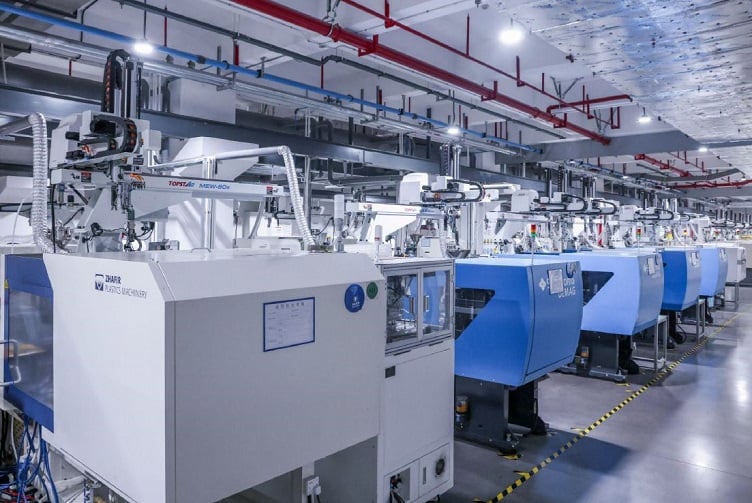
Redwood City, California-based RadianX, formerly California Perovskite Technology, is partnering with Pacific Union Technology Precision Manufacturing (PUT), a publicly listed precision components manufacturer, which will fund a dedicated production line to support commercial-volume production of RadianX’s perovskite solar modules.
The collaboration will build an automated 6-megawatt production line that will be used as a blueprint to replicate at a larger scale, the company said.
RadianX’s perovskite solar modules are targeted at edge energy applications such as sensors, wearables, connected devices and Physical AI.
These solar modules generate power in low and indoor light. Additionally, this allows devices to run longer, use smaller batteries and in some cases eliminate routine battery replacement altogether, RadianX said.
“Most connected devices still depend on a battery that someone has to replace,” said Josh Douglas, co-founder and COO of RadianX. “Our job is to turn that light those devices already receive into power, to drive increased uptime and even reduce or eliminate the battery.”
The perovskite modules are as thin as 0.7 millimeters and can be integrated directly into the surfaces of existing products. RadianX said it will focus first on hardware and is already integrating its modules with device makers.
Tackling issues with perovskite solar modules
Perovskite is a nanomaterial that does not depend on the silicon supply chain, requires no rare materials and can be manufactured from start to finish in a single facility, RadianX said.
However, three problems have slowed its commercial reach, the company said.
First, the material degrades well before the end of a product’s life. Second, its efficiency has not scaled from small cells into full-size modules. Third, its lead content is a safety concern.
RadianX said it is addressing these issues. Its modules were certified by TÜV in all three categories of IEC TS 63163, a specification for photovoltaic modules used in consumer products, including Category 3 for products with high outdoor exposure. Additionally, the company holds certified efficiency results at cell, panel and full-module scale including 22.33% on a 1.2 m x 0.6 m module. Finally, the modules have passed lead-release testing.
The production line is part of $9 million in combined venture and project financing RadianX announced to scale production of its perovskite solar modules. The seed round was co-led by SOSV and Twynam.
