
Key takeaways:
- SiTime has introduced two clock families, FemtoClock 4 and VersaClock 8.
- FemtoClock 4 targets Ethernet networking with ultra-low jitter and high clock density in one device.
- VersaClock 8 serves PCIe in a low-power design for hot, dense compute trays.
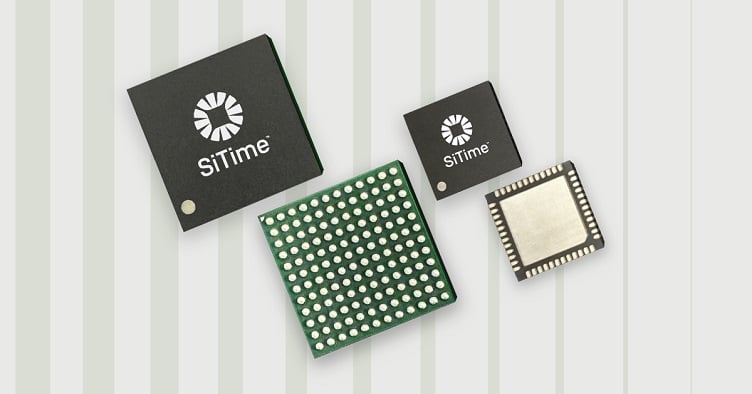
SiTime Corp. has introduced two clock families targeted at networking and computing applications in data center racks, where new links offer double the bandwidth of previous generations.
Called FemtoClock 4 and VersaClock 8, the two clock families are designed for faster, denser systems to tighten timing margins between central processing units, AI processors, memory, storage and smart network interface cards.
SiTime said the need for this rise in link bandwidth is due to the increasing performance requirements of AI for greater density and speed.
The FemtoClock 4 provides clock signals for Ethernet networking with ultra-low jitter and high clock density in a single device, the company said. The VersaClock 8 serves PCIe interconnectivity in a low-power design targeted at hot and dense compute trays, SiTime said.
Why faster clocks are needed in data centers
According to market research firm Dell’Oro Group, 1.6 terabits per second (Tbps) ports in AI back-end switches are expected to ramp at least five times faster than 800 gigabits per second (Gbps) switches. Dell’Oro said more bandwidth in switching is needed to help unblock bottlenecks.
“The AI infrastructure build-out is exposing bottlenecks that go well beyond GPU compute performance,” said Dave Altavilla, president and principal analyst at market research firm HotTech Vision and Analysis. “Moving data efficiently across increasingly complex systems is becoming a critical design challenge, particularly as Ethernet and PCIe bandwidth requirements continue to climb.”
Altavilla added that precision timing devices are important here as higher signaling speeds leave less margin for jitter and signal degradation. The SiTime clock families are a reflection of the changing needs in AI data center architectures, he said.
