As end-of-life robotic systems are emerging as a new source of next-generation e-waste, a team from Seoul National University (SNU), Sogang University and Johannes Kepler University Linz has built a fully biodegradable and compostable soft robotic electronic system that can return to nature after use.
To create such a system, the team used a water-free biodegradable elastomer, poly(glycerol sebacate) (PGS), to construct the robotic frame, which paved the way for soft actuators with low hysteresis as well as excellent elastic recovery.
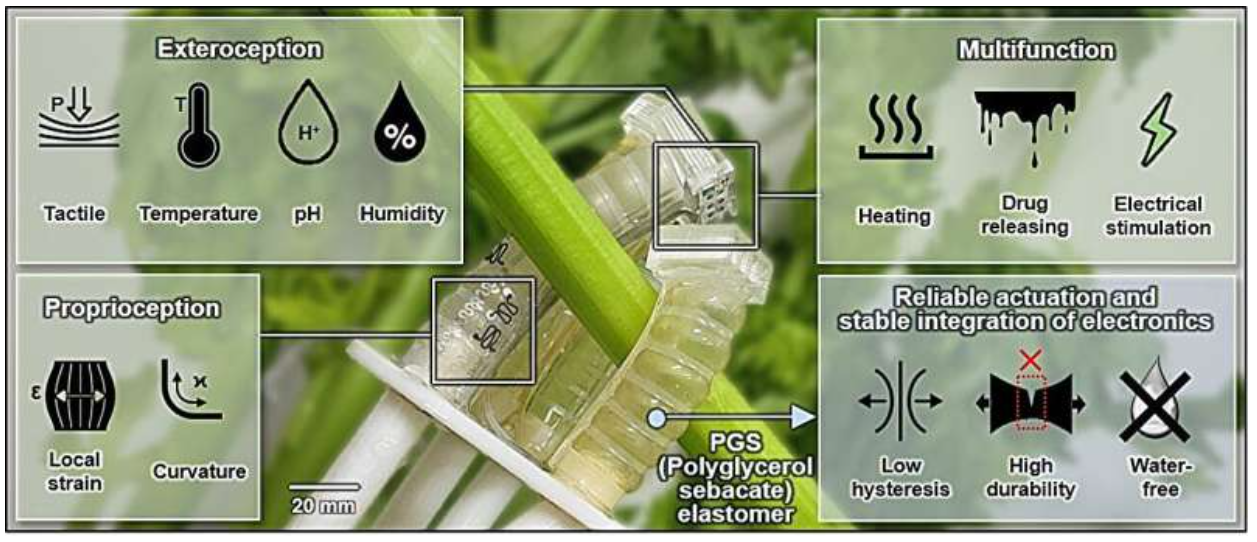 Source: Nature Sustainability (2026). DOI: 10.1038/s41893-026-01780-4
According to its developers, the PGS-based bending actuator demonstrated high durability, retaining its performance even after one million cycles and long-term storage. It also integrated biodegradable electronics — using magnesium, molybdenum and silicon — that combined several sensors, therapeutic functions and drug delivery into a single soft robotic finger, thereby creating a highly integrated multifunctional platform.
In the lab, when the entire robotic system underwent industrial composting conditions, the structural framework as well as the electronic components decomposed within just a few months. Meanwhile, plant growth tests performed using the resulting compost verified the absence of environmental toxicity.
"This research overcomes the limitations traditionally associated with biodegradable materials and demonstrates soft robotic and electronic systems with practical levels of durability and performance, setting a new benchmark for sustainable robotics," the researchers explained, "By simultaneously achieving high performance, complete biodegradability, and ecological safety, this platform is expected to serve as a foundational technology for the transition toward environmentally responsible robotics and electronics."
An article detailing the findings, “Biodegradable yet hyperdurable robotic fingers for zero-waste soft electronics,” appears in the journal Nature Sustainability.
For more on the system, watch the accompanying video that appears courtesy of SNU.
