
Sponsored Content
Discrete and Process Automation
Drive your next advantage with Fuji Electric
10 November 2026
Every motor-driven application starts with a job to do. Move a product. Circulate water. Deliver airflow. Keep a machine responding as production requirements change. The drive selected helps determine how effectively that job gets done — and how much flexibility users have when the next challenge arrives.
For machine builders, system integrators and facility teams, choosing a variable frequency drive means looking beyond horsepower. Motor compatibility, control functions, communications and installation requirements all influence the final design. A compact machine and a complex pumping system may need very different solutions.
 Figure 1: Drive your next advantage. Source: Fuji Electric
Fuji Electric offers three compelling places to start: FRENIC-MEGA (G2), FRENIC-Ace (E2) and FRENIC-Mini (C2). Each brings a distinct combination of capabilities to the selection process, helping users match their investment to the work their equipment needs to perform.
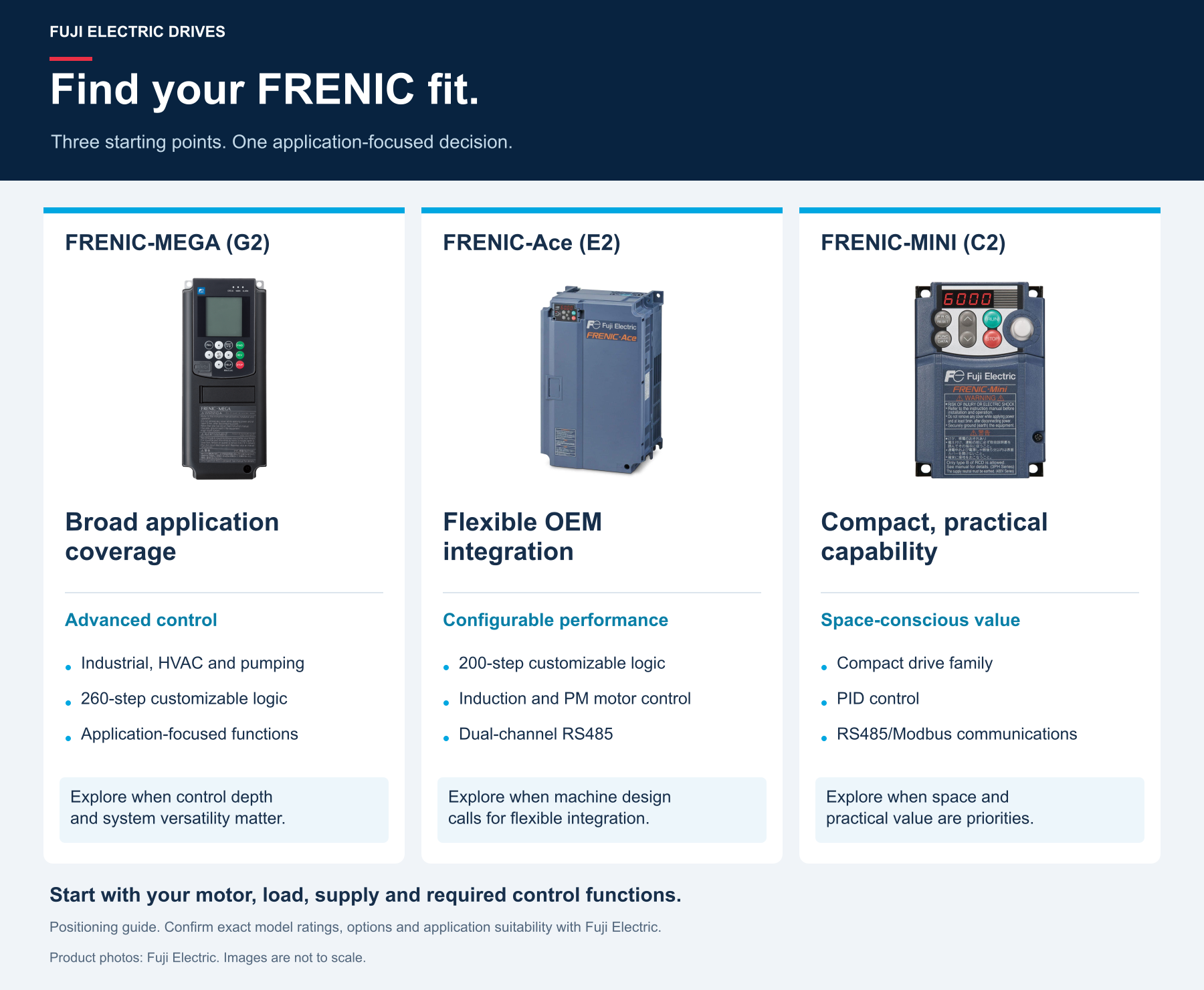 Figure 2: Find your Frenic fit. Source: Fuji Electric
FRENIC-MEGA (G2): Broader possibilities for demanding applications
When a project calls for advanced control and flexibility across different applications, start with FRENIC-MEGA (G2). Fuji Electric positions this multifunctional drive for industrial, HVAC and water applications, with support for induction and synchronous motors. It offers both speed sensorless vector control and vector control with a speed sensor, giving designers options for different motor-control requirements.
Its customizable logic is especially valuable when users want to simplify a control system. Depending on the application, functions that would otherwise require external relays, timers, temperature controllers or a small PLC can be programmed into the drive. That creates opportunities to reduce component count and streamline the design.
The FRENIC-MEGA (G2) also brings application-focused capabilities to the foreground. Fuji Electric’s 3-in-1 flyer lists HVAC functions such as real-time-clock scheduling and broken-belt detection, alongside pumping functions including pipe-fill mode, broken-pipe detection and cascade pump control. Its 260-step customizable logic gives engineers room to develop application-specific sequences.
Connectivity supports that versatility. The same flyer identifies BACnet MS/TP, Metasys N2 and Modbus RTU as standard, with other industrial network connections available through option cards. For organizations managing several types of motor-driven systems, that breadth makes the FRENIC-MEGA (G2) a strong candidate when evaluating opportunities to standardize on a drive family.
Put FRENIC-MEGA (G2) on the shortlist when advanced control, application functions and broad system coverage lead the specification.
FRENIC-Ace (E2): Flexibility that works for machine builders
OEMs often need a drive that can adapt as machine designs evolve. Different motors, customer control architectures and equipment configurations all place demands on the same platform. FRENIC-Ace (E2) answers with a full-featured package that Fuji Electric specifically identifies as ideal for OEMs.
Ace combines V/f and vector control modes with induction and permanent-magnet motor control, PID control and RS485/Modbus communications. It also provides variable-torque and constant-torque ratings, allowing selection to reflect the application’s load requirements.
Customization is central to its appeal. With up to 200 steps of customizable logic, FRENIC-Ace (E2) lets designers implement control functions within the drive. Dual-channel RS485 connections provide integration flexibility, while the operator keypad offers access to operating information and alarms.
Communication, I/O and encoder options, plus optional keypads, let designers tailor the configuration to the machine. Standard safe torque off can be incorporated into an appropriately designed machine safety system. Model applicability should be checked during selection.
For a machine builder, this combination creates useful design choices. Evaluate the core motor and control requirements, then identify which interfaces and options the machine needs. Whether users are developing a new equipment platform or refining an established design, Ace deserves consideration when integration flexibility is a priority.
Put FRENIC-Ace (E2) on the shortlist when configurable control and OEM integration lead the specification.
FRENIC-MINI (C2): Compact dimensions, practical capability
Space and budget matter in machine design. FRENIC-MINI (C2) brings a useful balance of compact construction and control functionality to projects where both deserve close attention.
The FRENIC-MINI (C2) family spans 1/8 to 20 HP across its available configurations, with single-phase and three-phase input models. The applicable horsepower range depends on the voltage and model selected. Fuji Electric positions the series around a balance between price and performance.
Its feature set includes V/f and dynamic torque vector control, PID control, induction and permanent-magnet motor control, and RS485/Modbus communications. Constant-torque ratings further support its role in a range of equipment designs.
Fuji Electric’s brochure identifies applications including conveyors, fans, pumps, centrifugal separators and food-processing machines. It also describes PID control with sleep mode, PC programming software and maintenance information such as trip history and cumulative motor running time. These are useful capabilities to consider when evaluating how a compact drive will fit into day-to-day equipment operation.
For equipment using the earlier FRENIC-Mini C1, the brochure also identifies compatibility in areas including mounting dimensions and function codes. That makes FRENIC-MINI (C2) worth evaluating for an upgrade, with the existing installation and exact replacement model checked during selection.
Put FRENIC-MINI (C2) on the shortlist when compact packaging and practical value lead the specification.
Start with the application. Build toward the result.
The best starting point is a clear picture of the work a drive must perform. Define the motor, supply voltage, load profile, overload needs, operating environment and required communications. Then consider which control functions belong in the drive and which options the wider system needs.
That process turns a product comparison into a purposeful equipment decision. The FRENIC-MEGA (G2) brings breadth and advanced application functions. The FRENIC-Ace (E2) emphasizes flexible machine integration. The FRENIC-Mini (C2) offers compact capability with a focus on value.
Whether users are developing a new machine, reviewing a facility system or planning an equipment upgrade, Fuji Electric’s FRENIC range gives them options worth exploring.
Drive your next advantage. Explore FRENIC-MEGA (G2), FRENIC-Ace (E2) and FRENIC-Mini (C2), then connect with Fuji Electric to match the drive and options to an application. Find a distributor or sales contact.
Powered by CR4, the Engineering Community
Discussion – 0 comments
By posting a comment you confirm that you have read and accept our Posting Rules and Terms of Use.
Advertisement
Advertisement
Popular News
Find Free Electronics Datasheets

Advertisement