
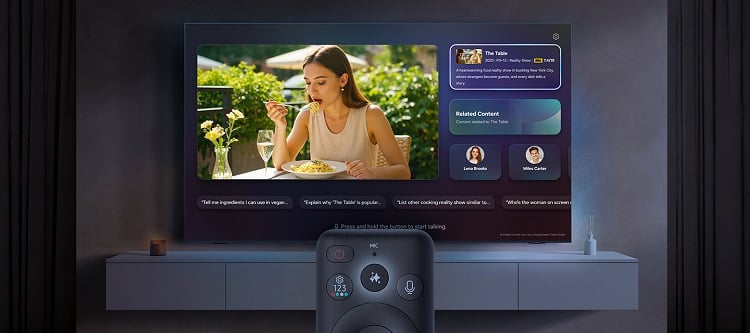
Samsung Electronics has struck a deal with Perplexity AI to put the generative AI platform on all 2025 Samsung TVs. The move is what could be the first salvo in a consumer electronic battleground to include generative AI into the smart home.
Samsung said it will also port the Perplexity AI app — which is the first time it has been available as a TV app — to 2023 and 2024 televisions later this year.
Generative AI is becoming a ubiquitous tool whether consumers are interested in it or not. It is already being ported to smartphones and desktop and laptop computers. Consumer electronics seems to be gearing up to be the next battleground for generative AI.
Perplexity is an AI-powered answer engine that uses the internet in real-time to find solutions to questions. The technology, according to Samsung, performs deep research and then suggests additional questions to engage the user more if needed. If you have ever used a generative AI you are familiar with this model that is common among these technologies.
“Curiosity can strike at any time. Perplexity’s mission is to serve the world’s curiosity by bridging the gap between traditional search and innovative AI-driven interfaces,” said Ryan Foutty, VP of Business at Perplexity.
What it does
The Perplexity TV app will be part of Samsung’s Vision AI companion, an AI-powered part of Samsung televisions designed to be more interactive with users by learning viewing habits and answering questions from your TV.
Perplexity will serve as a standalone AI agent that allows users to navigate to the app from the home screen and then help with anything that a user wants. Finding movies, creating fantasy football lineups or asking about something you just saw on the TV. Really, anything that other generative AI can do.
Battleground: Living room
Unlike smartphones and desktop or laptop computers, consumer electronics in the living room are generally used to help users get away from life: Sit down to watch a movie, or a football game or view your favorite show.
The living room is a different animal entirely from other devices that are used for work, for communication or just for quickly doing an internet search.
Consumer vendors are looking at any opportunity to differentiate from the competition and offering many new technologies to gain interest — and purchase — from consumers. And much like PCs and smartphones, it looks as if generative AI will be coming to the living room as well.
Will we see other deals on the horizon? More than likely. ChatGPT, Anthropic, Grok and others are similar AI technologies that could be included in future televisions from other vendors.
And the living room may just be the beginning as vendors look at other aspect of the smart home to drum up interest.
Will it work?
Do consumers want more AI in their lives? That is the basic question that Samsung seems to be weighing in its decision to include the generative AI app on its television. With generative AI being integrated into, well, everything, that question remains unanswered.
Regardless, consumers will get the opportunity to use the technology in their living rooms. However, this does not mean it will be used.
Many other consumer electronics technology innovations have come and gone with a lack of consumer interest. Anyone remember the huge push to bring 3D technology to televisions? Anyone still have a 3D TV? What about all those smart speakers, refrigerators and hubs that included a smart display? Yeah, those didn’t go over too well either.
And this doesn’t include the multitude of “skills” that were developed for smart speakers or hubs, the vast majority of which have failed to gain any traction.
It could also be argued that AI assistants are a dime a dozen these days. Siri, Bixby, Google Assistant, Alexa and more are all established and have various degrees of use, depending on the individual user.
While this doesn’t mean that the Perplexity and Samsung deal will not be successful — it could very well be the next great thing in consumer electronics — but history has traditionally not been kind to many of these types of innovations.
