
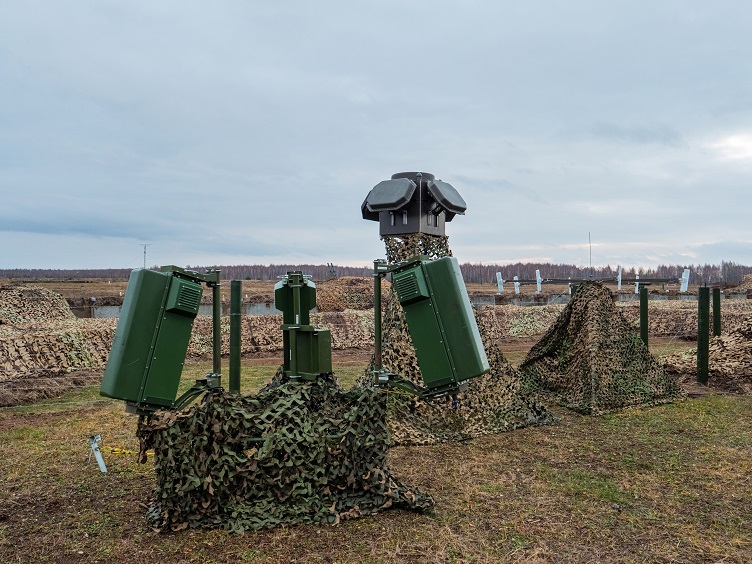
Electronic warfare (EW) is becoming increasingly important in a variety of war theaters. Everything from satellites to submarines has sensors these days, and the more advanced systems still need to talk to the humans commanding them. Blocking an enemy's ability to provide data or receive commands would be critical in any future war scenario.
However, one particular use case has been under development for years: disrupting radar. A new paper from Reeshen Reddy and Saurabh Sinha of the University of Johannesburg in South Africa provides an overview of the current state of the art, both in terms of research papers and patents, as well as lays out a framework for how development could progress in the future.
Publishing wars
Dominance in EW, especially regarding attacking radar, is inarguably a goal of most great powers, thereby spurring significant research into it. Unsurprisingly, China comes out on top in the sheer number of research papers released annually related to developing EW hardware or algorithms. However, the U.S. is dominant in patents filed for technologies associated with EW systems. This might reflect a difference between the top-down executive approach of China's economy and the bottom-up capitalist approach in the U.S., which would reward individual companies for their innovations, which are therefore worth patenting.
The single top school for researching EW against radar systems is the National University of Defense Technology in China, with 329 publications associated with EW against radar systems. But it is just leading a trend — the overall number of publications and patents has been rising for decades. That trend will not stop soon due to the increasing omnipresence of electronic signals on a battlefield.
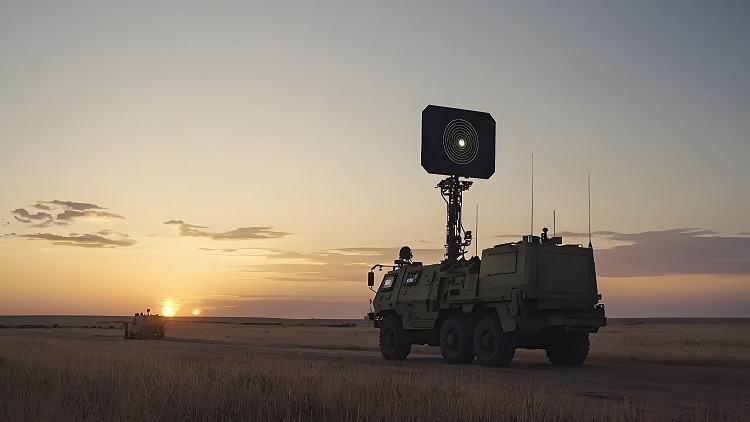 Multi-domain jamming strategies driven by sensors are increasingly becoming a necessity in warfare. Source: Ratchadaporn/Adobe Stock
Clustering
The paper breaks the domain of EW attacks on radar into five "clusters", each with its own set of terms for specializations that could impact its future development. The first is the “Battlespace", which includes the platforms on which the hardware for the EW system is attached, as well as the sensors used to collect data on those platforms. "Components" are next and include the antennas, radios and other hardware used directly in EW systems.
Algorithms dominate the next two spots. First are sorting algorithms, which would allow a potential attacker to figure out what radar system an adversary uses. Next are jamming algorithms that use techniques like multi-false targets and range gate pulloff, which distract a radar by mimicking a real target but with a stronger signal. A final algorithm cluster involves integrating artificial intelligence (AI) into the "intelligent jamming" process, though this development has a long way to go.
A further breakdown of the different domains in which EW radar attacks can operate involves everything from directed energy weapons (e.g., giant lasers) to adapting the system to unmanned aerial vehicles.
System architectures
One of the most significant changes in radar-defeating EW is the movement from single, "pipeline" systems to "multifunctional" architectures that can adapt on the fly based on feedback from their environment, vs. the static pipeline method, which must be changed manually if its adversary tries to adapt. Some features of these architectures include simultaneous transmit and receive (STAR) systems, which allow a system to jam a radar simultaneously while listening to it, allowing it to update the jamming frequency as necessary.
Another upgrade to the architecture is the use of direct radiofrequency (RF) sampling, which increases a system's bandwidth while decreasing its cost and, most importantly, its weight, making it easier to integrate onto platforms that rely on batteries to power themselves. Another potential feature is the Tightly Coupled Array Antenna (TCAA), which couples the two sides of its antenna intentionally to achieve a higher bandwidth of the signal.
Algorithms are the other key component of the architecture. These can range from traditional methods, such as parameter estimation and sorting, to those specific for radar attack systems. Jamming Decision Making (RJDM) is a technique that attempts to optimize how to jam a particular radar while minimizing the resources required. It relies on AI techniques like Q-learning or reinforcement learning in more advanced implementations.
Future roadmap
In the paper, the authors lay out a technology roadmap and a generalized architecture to decide where to focus on developing the next best thing in anti-radar EW technology. They also suggest improvements in more general areas that could be implemented in the EW warfare space, including multi-domain jamming strategies and developing real-world implementations of AIs that could be implemented on improved hardware designed especially for it.
Given the increase in great power competition that seems on the horizon, further development of secret military systems as well as unclassified or open-source solutions will be forthcoming. In the arms race between the hunter and the hunted, any technological advantage is only temporary. As various nations continue to research and improve upon EW capabilities, there will be a need for more research papers like this one.
Author bio
Andy Tomaswick is an engineer and freelance writer who is passionate about education, space exploration and making the world better through technology. When not engineering or writing something, he spends time with his family or running in circles to stay in shape.
