
You need a solution that works smarter, not harder. Autonomous Mobile Robots (AMRs) are changing how factories like yours operate. Unlike Automated Guided Vehicles (AGVs), AMRs use advanced sensors and AI to move on their own. They don’t need fixed paths, making them more flexible and easier to integrate into your workflow.
With manufacturing becoming more complex, you face growing challenges like inefficiencies, labor shortages, and safety risks. AMRs can help you tackle these issues. They improve efficiency, adapt to changes, and make real-time decisions. As factories adopt IIoT and digital tools, AMRs are quickly becoming a must-have for staying competitive.
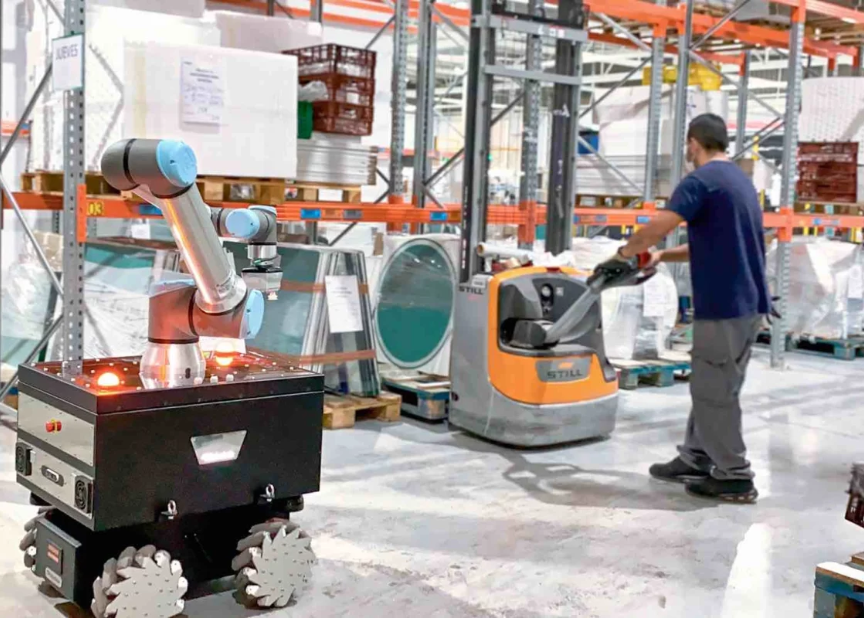 Source: Qviro
What are AMRs?
Definition of AMRs
Autonomous mobile robots (AMRs) are robots designed to help you with tasks like moving materials, monitoring your facility, and managing logistics. They don’t need fixed routes or guides to operate. Instead, they use sensors, cameras, and AI to navigate through your workspace independently and adapt to changes as they happen.
How AMRs are better than AGVs
Unlike Automated Guided Vehicles (AGVs), AMRs don’t rely on fixed pathways like magnetic strips or tracks. This makes them more flexible for your operations, especially if your factory layout changes often. AMRs adjust to new environments and continue working without disruptions.
Why you need AMRs
AMRs are smarter and more adaptable. They fit right into your workflow and help you save time and effort. If you’re aiming for a more efficient and responsive factory, AMRs are a tool you can’t overlook.
Why AMRs in modern manufacturing?
Built for Industry 4.0
Manufacturing is more complex than ever. You need tools that can keep up with smarter, faster production processes. AMRs are built to fit into your smart factory setup and handle changing workflows without slowing you down.
Flexibility and real-time action
Your production line must adapt quickly to changes. AMRs help by working flexibly and making decisions in real-time. They collect data as they move, allowing you to optimize material handling, avoid delays, and improve overall efficiency.
Solving manual workflow problems
Manual tasks can slow you down, especially with today’s labor shortages and safety concerns. AMRs take over repetitive and physically demanding jobs, reducing risks to your team. They allow you to focus your resources on more critical tasks, ensuring your factory stays productive and safe.
Industry trends driving AMR adoption
Digital transformation and IIoT
Your manufacturing processes are more connected than ever. With the Industrial Internet of Things (IIoT), you can gather real-time data to make faster decisions. AMRs integrate into these systems to improve your workflow. They collect and share data while optimizing material movement, helping you stay on top of production.
Labor shortages and rising costs
Finding skilled workers is becoming harder, and labor costs are rising. You need a solution to keep your operations running smoothly. AMRs reduce your reliance on manual labor by automating repetitive jobs. They work consistently, helping you save on costs and avoid disruptions.
Demand for operational efficiency
You’re under constant pressure to produce more without sacrificing quality. AMRs help by improving how materials and products move through your facility. They minimize delays, cut downtime, and make your operations more efficient, so you can focus on maintaining quality and meeting deadlines.
Benefits of AMRs in smart factories
Enhanced operational efficiency
AMRs help you move materials quickly and accurately across your facility. They navigate in real time, adjust to obstacles, and reduce delays. If your process involves both moving and handling items, a mobile manipulator like RB-KAIROS+ can transport materials and perform tasks such as picking and placing parts directly into assembly lines. This keeps your operations efficient and productive.
Improved scalability
Your production demands can change, and AMRs are ready to adjust. They can scale up when you need more output or adapt to a reconfigured layout without major disruptions. Their flexibility ensures your factory can handle seasonal peaks or unexpected changes without slowing down.
Worker safety and ergonomics
AMRs take over repetitive or heavy tasks, keeping your workers safe and reducing physical strain. For jobs that combine movement with precision, mobile manipulators can handle the workload, minimizing risks in environments that could be unsafe for your team.
Minimized downtime
AMRs are designed to operate reliably. They monitor their own performance and alert you to maintenance needs before problems occur. This ensures fewer breakdowns and keeps your production line running smoothly, even during peak demand.
Cost savings
Automating tasks with AMRs helps you streamline your operations and use energy more efficiently. They improve how materials are handled and transported, reducing delays and cutting unnecessary costs. A mobile manipulator is especially useful for complex or precise tasks, allowing you to enhance productivity while supporting your team’s work.
“With AMRs, you can streamline your operations, protect your team, and reduce costs—all while staying ahead of production demands.”
Applications of AMRs in modern manufacturing
Material handling and transport
AMRs help you move raw materials and finished goods across your facility efficiently. Mobile manipulators like RB-KAIROS+ can transport materials and handle tasks like loading or placing items directly into assembly lines. This reduces bottlenecks and keeps your production running smoothly.
Intra-logistics operations
You can rely on AMRs to manage real-time coordination between your production lines and warehouses. They improve the flow of materials and ensure just-in-time inventory management. While RB-VOGUI is more suited for outdoor tasks, its adaptability can support specialized logistics needs in mixed environments.
Assembly line automation
AMRs like RB-KAIROS+ can work alongside your team on the assembly line. They handle repetitive tasks, allowing for flexible retooling between different manufacturing processes. This helps you quickly adapt to changing production requirements.
Facility monitoring and surveillance
AMRs can monitor your equipment, security, and workflows. Although RB-WATCHER focuses on surveillance, other AMRs can provide useful insights into your operations, helping you optimize efficiency.
Anomaly detection and troubleshooting
With AI-driven insights, AMRs detect inefficiencies and issues in real time. They help you identify and fix problems early, keeping your operations on track and minimizing downtime.
Key challenges and how AMRs overcome them
Challenge: Integration into existing workflows
You might be concerned about how new robots will fit into your current setup. Robotnik’s AMRs are built with modular and flexible software, making them easy to integrate with your existing systems. This reduces setup time and ensures a smooth transition without disrupting your operations.
Challenge: Resistance to automation
Your team may feel hesitant about using robots in their daily tasks. Collaborative robots like RB-KAIROS+ are designed to work safely alongside people. They handle repetitive or physically demanding jobs, letting your team focus on more important responsibilities while easing concerns about automation.
Challenge: Navigating complex or changing layouts
If your factory layout changes often, or if space is tight, AMRs can adapt. With SLAM (Simultaneous Localization and Mapping) and advanced pathfinding, robots like RB-KAIROS+ navigate unpredictable environments with precision, ensuring continuous and reliable operation.
These solutions make it easier for you to adopt automation without disrupting your workflow or team.
Case studies and examples
Improving efficiency in the metallurgy sector
In the metallurgy sector, AMRs were used to move heavy raw materials across the facility. By automating this process, you can reduce manual effort, prevent handling errors, and speed up workflows. The robots ensured precise material placement, which helped cut lead times and improve overall efficiency.
Streamlining connectivity systems manufacturing
In a connectivity systems manufacturing plant, AMRs handled the transport of parts between assembly lines. This eliminated delays and bottlenecks, keeping production on schedule. By automating these tasks, you can ensure smooth operations and free up your team to focus on quality and other essential tasks.
Optimizing gear manufacturing logistics
In a gear manufacturing plant, AMRs were used to transport parts between machining centers. This ensured consistent material flow and reduced downtime. If your processes rely on smooth intra-logistics, AMRs can help you maintain efficiency, even with changing layouts.
These examples show how AMRs can solve specific challenges in industries like yours. Explore the links to learn how you can apply these solutions to improve efficiency, security, and workflows.
Conclusion
AMRs are changing how you manage your manufacturing processes. They make it easier for you to handle materials, improve workflows, and reduce downtime. These robots adapt to your needs and fit into your existing operations without causing disruptions. By addressing challenges like labor shortages and complex layouts, AMRs help you run your factory more efficiently. They are a reliable solution for keeping up with the demands of modern production while maintaining safety and flexibility. With AMRs, you can take your operations to the next level and meet your goals with greater ease.
