
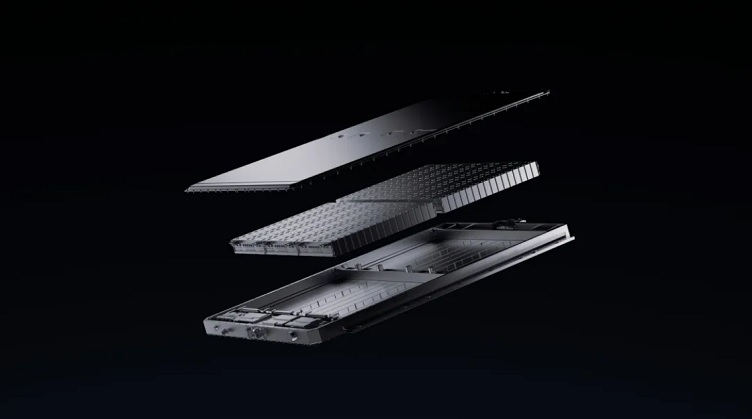
Chinese battery vendor CATL has introduced what it claims is the world’s first 4C superfast charging lithium iron phosphate (LFP) battery, capable of charging 250 miles of range in about 10 minutes.
Called Shenxing, the battery could also expand the range of EVs to about 430 miles.
CATL said the 4C LFP battery could help the automotive industry overcome long driving range anxiety as it shifts to all electrified models in the next 10 to 15 years. Mass production of the battery is expected to begin by the end of the year and the company anticipates new car models equipped with the Shenxing battery will hit the market as early as 2025.
The 4C battery achieves long driving range, a wide range of temperatures and a high level of safety through intelligent algorithms. The integration of internal crossbeam and end plates technology allows for high integration and high grouping efficiency to reach the range of more than 430 miles, CATL said.
The battery can charge normally at low temperatures. At room temperature, the Shenxing battery can charge 80% in about 10 minutes. At lower temperatures even as low as -10° C, it can achieve a 0 to 80% charge in about 30 minutes, the company said.
How it works
Shenxing used an electronic network cathode technology and fully nano-crystallized LFP cathode material, which facilitates the extraction of lithium ions and the rapid response to charging signals, CATL said.
For graphite innovation, the ion ring technology modifies the properties of graphite surface increasing intercalation channels and shortens the intercalation distance for lithium ions. CATL said it created an expressway for current conduction. Additionally, a multi-gradient layered electrode allows for the balance of fast charging and long range.
CATL developed a superconducting electrolyte formula for the 4C LFP battery that reduces the viscosity of the electrolyte to improve conductivity. The ultra-thin SEI film reduces resistance of lithium-ion movement, lowering the transmission resistance of lithium ions with high porosity and average transmission distance.
