
Researchers from the Korea Institute of Science and Technology (KIST) created a method to manage microbial populations in recirculating hydroponic cultivation systems and reduce hydrofarming pollution.
In the last few years, the world has seen an acceleration of urban agriculture technology, including hydroponic cultivation farms. Up to 30% of nutrient solutions from hydroponic farming are discharged without being absorbed by the crops. Most farmers in South Korea do not treat the discharged solutions and just dispose of it, which contributes to pollution.
This problem could be reduced with a recirculating hydroponic cultivation method that reuses the nutrient solutions after it is sterilized with UV light. Currently, there are two issues with this method. First, there is potential for diseases and nutrient imbalances to develop because of microbial growth in the nutrient solutions. Second, the initial investment required to set up recirculating hydroponic cultivation system costs millions per hectare, which restricts its implementation. The team’s new method addresses and overcomes these challenges.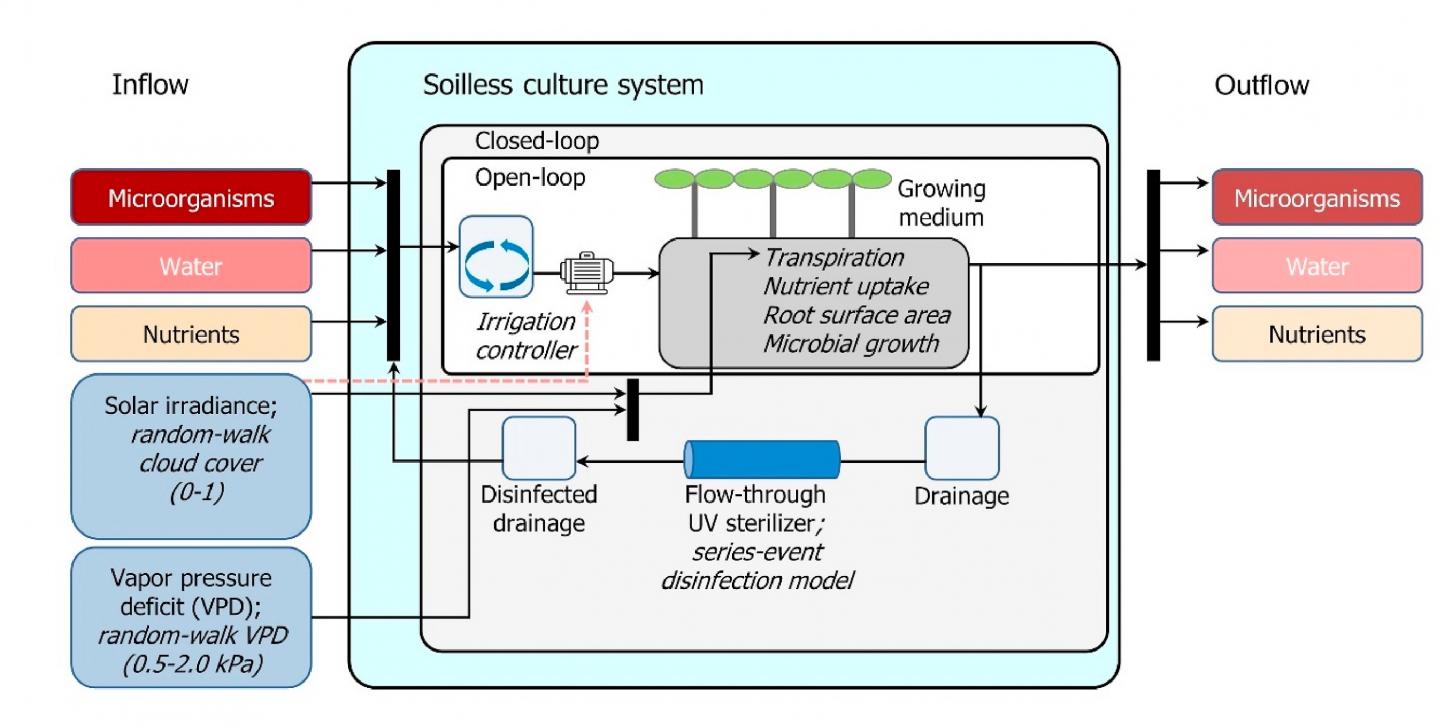 The integrated model description. Source: KIST
An analysis of microbial growth characteristics was conducted with a model developed to simulate the flow of water and nutrients and the inflow of growth and discharge of microorganisms in hydroponic cultivation farms.
Researchers performed simulations of non-circulating and re-circulating hydroponic cultivation systems. The simulations showed that microbial populations in recirculating hydroponic systems can be controlled by adjusting UV output and water supply. In non-circulating systems, the microbial population fluctuates depending on the amount of water used and increases with too little water.
A UV sterilization system that is cheaper to operate than available options was engineered. The researchers are currently conducting studies with the goal of commercializing the system as an economic alternative to the expensive UV systems.
The study was published in the Journal of Cleaner Production.
