
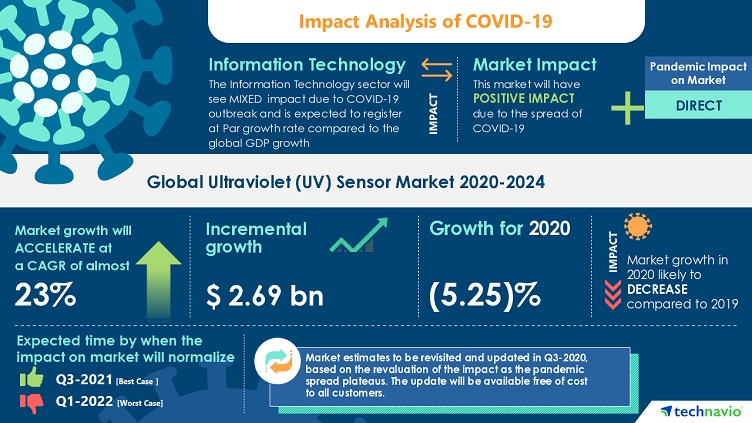
The market for ultraviolet sensors is expected to grow over the next five years to $2.69 billion as the use of these sensors in wearables and the internet of things (IoT) accelerates, according to a new report from Technavio.
The UV sensor market is expected to maintain a compound annual growth rate (CAGR) of almost 23% during the forecast period.
UV sensors integrated into wearables is accelerating as consumers adopt these devices to monitor daily activities and health, and to enable connected communication. UV sensors in wearable devices can perform functions such as preventing sunburns and skin blemishes by alerting the wearer when UV levels become dangerous. When used in a smartphone, the sensors measure UV radiation and prevent users from damaging skin, which could help fight against skin cancer and other skin problems.
Meanwhile, the IoT industry will be another driving factor of UV sensor growth as these devices promote automation, reducing the need for human intervention. The demand for sensors in smart homes, industrial automation and automated cars related to the IoT will significantly increase the use and growth of the UV sensor market.
Technavio said the largest UV sensor market was Asia Pacific in 2019 and 38% of the market’s future growth will come from this region. China and Japan are two other significant markets for UV sensors and are expected to grow faster than other regions during the forecasted period.
Factors for growth in the Asia Pacific region include expansion of manufacturing facilities and the investment in process automation and smart production techniques such as productivity and product tracking.
For the complete research, see Technavio’s Ultraviolet (UV) Sensor Market report.
