
Sponsored Content
Machinery
Lasers in business: Problems solved
05 November 2019
Sponsored content
Light amplification by simulated emission of radiation: the acronym for this phrase is the origin of the term “laser,” an invention that has been a source of both growing fascination and increasing utility over the past six decades.
Theodore Maiman, the scientist who demonstrated the first working laser in 1960, described it as “a solution seeking a problem.” This was an aptly prescient phrase for a device that would lead to innovations so fundamental that the many problems solved seem little more than distant memories today. Imagine, for instance, a supermarket without barcode scanners, or an office without laser printers. From compact discs to fiber-optic communications, the laser has played an ongoing role in the evolution of today’s modern, high-tech society.
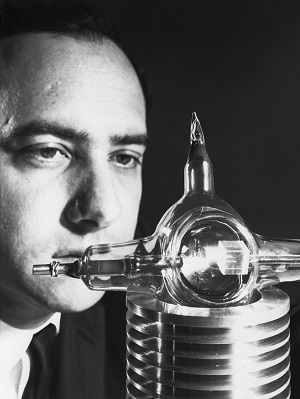 Figure 1: Dr. Theodore Maiman with his laser in 1960.
No surprise, then, that lasers have found their way into so many industries. What is perhaps less widely known is their affordability and rapid return on investment to industries both large and small. Companies like Epilog Laser, headquartered in Golden, Colorado, have worked with manufacturers, makerspaces and medical device makers — just to name a few — to help them find the ideal integration into their business models. And Epilog has followed that individualized approach with ongoing support and readily available resources.
As this article series has illustrated, there is a strong case that can be made for bringing lasers into a range of diverse business areas. This is underscored by a wider look at the laser-marking market overall. A recent report from research provider Markets and Markets offered a growth forecast from $2.1 billion in 2018 to $3.0 billion by 2024, at a compound annual growth rate of 6.0%. The report cites increasing adoption across end-user verticals as well as the enhanced performance of laser markers over traditional material-marking techniques as key factors driving market growth.
Epilog’s work with various industry sectors, moreover, dovetails with the list of major end users of laser-marking technology in the report; these include machine tools, medical and healthcare, packaging, and semiconductor and electronics. Machine tools hold the largest share, which the report attributes to the laser’s ability to permanently mark objects with details such as bar codes, batch numbers, brand names, dates of manufacture and other details.
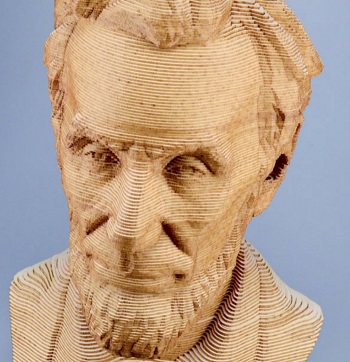 Figure 2: A laser-cut, three-dimensional bust of Abraham Lincoln. Source: Epilog LaserMaking the business case for purchasing a laser can be a combination of researching options, reviewing case studies and reaching out to others who have success stories to tell. This is likely to be an easy task for those considering an Epilog model: in addition to the industries named above, the company’s products are found throughout a wide variety of business types producing a vast range of products.
· Awards, trophies and promotional items
· Fashion items, which can be made from laser-cut sewing patterns, or with laser-cut materials such as leather or lace
· Hobby items, including customized woodworking projects, scrapbooking, stamps and crafts
· Jewelry and accessories, including earrings, pendants and engraved charms
· Models, such as railroads, airplanes, architectural and 3D
· Personalized gifts, including holiday ornaments, cutting boards, mugs and travel cups, wine glass sets, humidors, decanter sets and other specialty items
· Photography items, such as engraved vacation photos, wedding photos and memorials
· Restaurant and brewery/distillery items, such as engraved growlers, bottles, glasses and coasters
· Signage, including indoor/outdoor, directional, point of sale and decorative
· Wedding and event planning items, including cake toppers, champagne flutes, favors, invitations and thank-you cards
Dr. Maiman may never have anticipated so many uses for his invention, but it seems clear that he understood its potential as a device that could replace problems with possibilities. Epilog, with customers around the globe and a product line ranging from entry-level CO2 models to robust fiber systems to the new dual-source powerhouses, has been doing just that for more than 30 years.
Contact Epilog Laser to learn more.
Powered by CR4, the Engineering Community
Discussion – 0 comments
By posting a comment you confirm that you have read and accept our Posting Rules and Terms of Use.
Advertisement
Advertisement
Popular News
Find Free Electronics Datasheets

Advertisement