
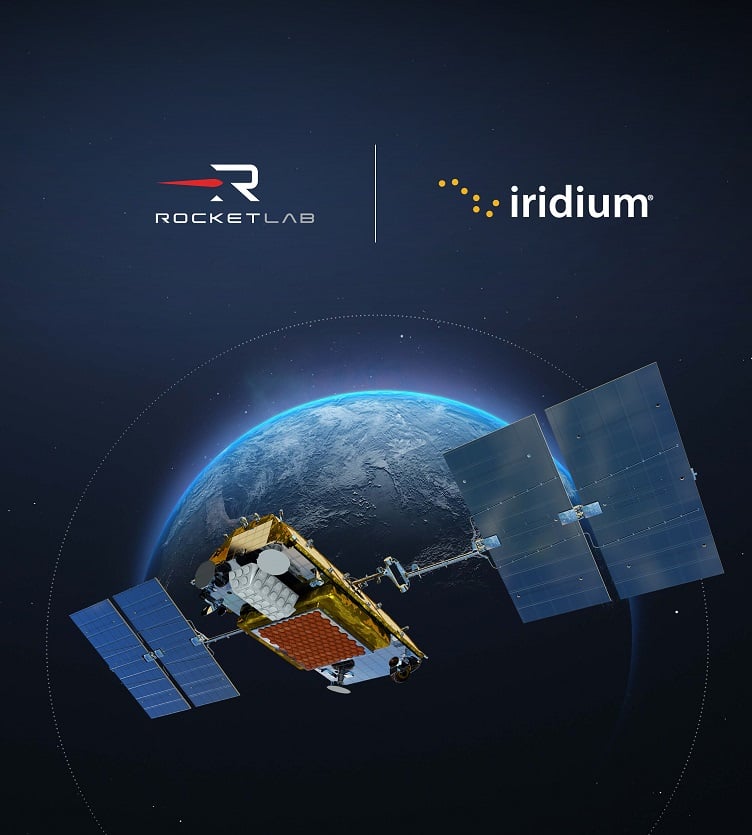
In a move that will likely expand the reach of satellite communications (SATCOM) services globally, Rocket Lab Corp. has entered into an agreement to acquire Iridium, a market of voice, data and positioning, navigation and timing (PNT) satellite services.
The deal follows a similar acquisition that took place in April of 2026 where Amazon bought Globalstar Inc. for $11.6 billion transaction to add direct-to-device (D2D) services to its low Earth orbit (LEO) satellite network and extend cellular coverage.
The Rocket Lab deal, valued at about $8.0 billion, will join two American companies that will plan a role in the future of space SATCOM services by merging Rocket Labs’ launch capabilities and satellite manufacturing with Iridium’s SATCOM network, spectrum and 500-plus partner ecosystem.
"As the worlds of space and terrestrial communications continue to converge, more critical services will depend on space-based capabilities," said Matt Desch, CEO of Iridium. "Success will come from those who can bring new innovations to space quickly and sustain them over time as efficiently as possible."
The goal will be a company that designs, builds, launches and operates its own constellations for communications to millions of users worldwide.
Rocket Labs said the deal will give it a position in applications like:
- Satellite internet of things
- Direct-to-device (D2D)
- PNT
- Safety-of-life services
Rocket Labs said it will build on Iridium’s network and scale it to new markets as well as create new space-based services for users.
Rocket Labs is not alone in looking to build out its SATCOM services. Starlink, a SpaceX company, in March of 2026 signed a deal with Deutsche Telekom to expand its SATCOM collaboration and Blue Origins in January of 2026 launched its first SATCOM network for similar goals. SpaceX also bought EchoStar’s AWS-4 and H-block spectrum licenses for about $17 billion in 2025 in a move that will likely help it develop its second generation direct to cell technology with 5G protocols. Additionally, AST SpaceMobile has a planned roll out of SATCOM D2C technology in the U.S. and Japan for messaging, video and voice in 2026.
Why it matters
SATCOM and direct-to-cell are heating up in the communications sector for two reasons: a revenue stream for telecoms and for satellite vendors to potentially change traditional cellular markets.
Telecoms are reaching a point where they are faced with diminishing returns, so they are turning to outside technologies like fixed wireless access (FWA) broadband and SATCOM through direct-to-cell to entice more customers to come on board or stay and continue to pay for services.
Meanwhile, while SATCOM is being billed as a complementary feature for smartphones, there is a real chance that these same providers as Starlink, Amazon, Rocket Labs and more could develop their own plans for smartphone connectivity.
These companies are looking to jump on to a D2D sector that is projected to grow to 133 million users by 2031, up from just 17.4 million users in 2026, according to market research firm Juniper Research. That’s a compound annual growth rate (CAGR) of 50% during this forecast period.
Regardless of what wins out, there is enough momentum in the SATCOM market for these companies to spend billions of dollars to expand their options in orbit and in the market.
Combined company
Iridium has a global L-band spectrum and LEO satellite network for SATCOM and PNT services for use in government, defense, aviation, maritime and commercial markets. Iridium has more than 2.55 million active subscribers that includes connectivity and alternate PNT architecture for applications where GPS and other global navigation satellite systems (DNSS) are degraded or unavailable.
These services will be combined with Rocket Labs’ launch, spacecraft manufacturing and space systems know-how to support the development and deployment of next-generation constellations for D2D services, which the company said will grow into new capabilities for U.S. national security and emergency response.
