
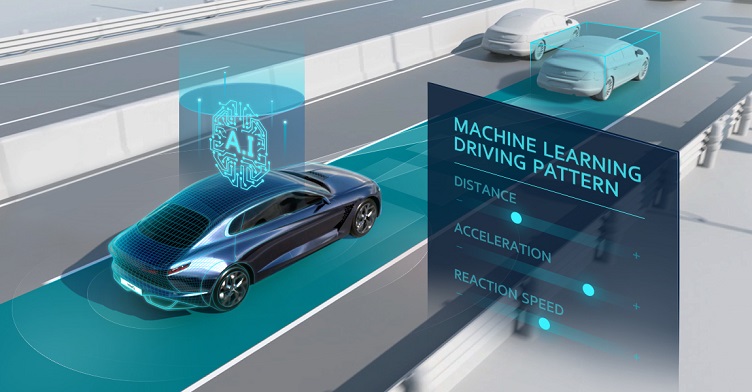
Hyundai Motor Group has developed what it claims is the world’s first machine learning based smart cruise control.
Using both artificial intelligence and cruise control, the technology learns the driving patterns and habits of each individual driver on its own. It then autonomously drives in an identical pattern as that of the driver.
The technology is considered to be an essential step toward self-driving and is a core technology for advanced driver assistance systems (ADAS), maintaining distance from the vehicle ahead while traveling at a set speed. Fully autonomous vehicles will not only have to know their surroundings and adapt to rapidly changing situations on the road, but they will also need to know what is expected from the driver.
With previous smart cruise control, the driver manually had to adjust driving patterns such as the distance from the vehicle in front of it and acceleration. This makes it very difficult to fine tune settings to each driver’s preferences.
Sensors, such as the front camera and radar, acquire the driving information via machine learning and send it to the centralized computer. Then the computer extracts the details to identify the driver’s patterns using an artificial intelligence algorithm. This driving pattern is segmented into three parts: distance from the vehicle in front, acceleration and responsiveness. Driving conditions and speeds are also factored into the machine learning algorithm.
The driving pattern is regularly updated with sensors to reflect the latest driving patterns and unsafe patterns are ignored by the machine learning algorithm to increase safety in the system, Hyundai said.
