
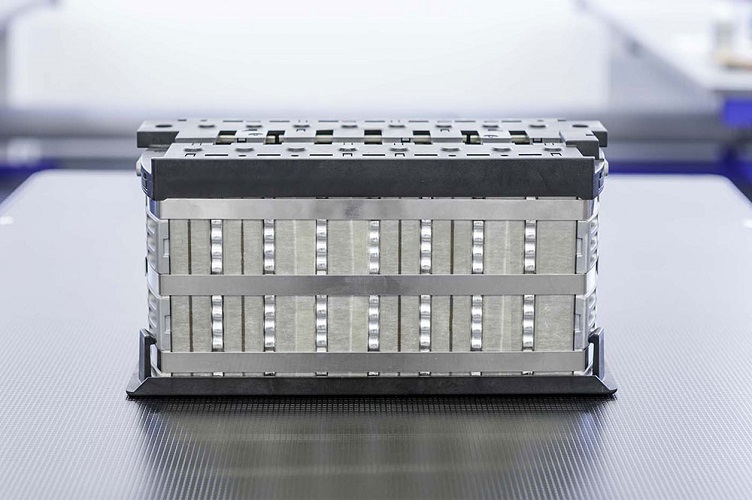
Innolith AG, a rechargeable battery technology startup based in Switzerland, is developing what it claims is the world’s first 1,000 Wh/kg rechargeable battery for electric vehicles (EVs).
The Innolith Energy Battery, which is under development in the company’s German lab, would be capable of powering an electric vehicle for more than 600 miles on a single charge. Current electric vehicles have about a 200 to 300 mile single charge capability, which in past years has led to so-called “range anxiety” where people fear running out of power before reaching a recharging station. However, with the rise of electric vehicles, recharging stations have cropped up globally leading to this becoming less of an issue and an extended vehicle range would go even further to reduce this concern.
Innolith said that the battery would reduce costs as it is being developed by avoiding exotic and expensive materials.
Innolith claimed the energy battery would be the first non-flammable lithium-based battery for use in EVs as it uses non-flammable inorganic electrolyte, unlike conventional EV batteries that use a flammable organic electrolyte. This removes the primary cause of battery fires that have plagued the lithium-ion battery market over the years, including the high profile Samsung Galaxy Note 7 a few years back and other portable devices such as electric scooters and skateboards.
While still under development, once the pilot production is completed the company plans to seek out licensing partnerships with major battery and automotive OEMs, which the company hopes will happen in the next three to five years.
The technology uses a conversional approach in the chemistry to generate high energy density in each cell. This technology has already been proven in non-flammable, inorganic rechargeable batteries for grid-scale power battery storage used today in the PJM grid in the U.S. that syncs the movement of electricity through parts of Delaware, Illinois, Indiana, Kentucky, Maryland, Michigan, New Jersey, North Carolina, Ohio, Pennsylvania, Tennessee, Virginia, West Virginia and the District of Columbia.
The chemistry has been tested for more than 55,000 full depth of discharge cycles and could be key to unlocking the higher performance for lithium-based batteries in EVs, the company said.
