
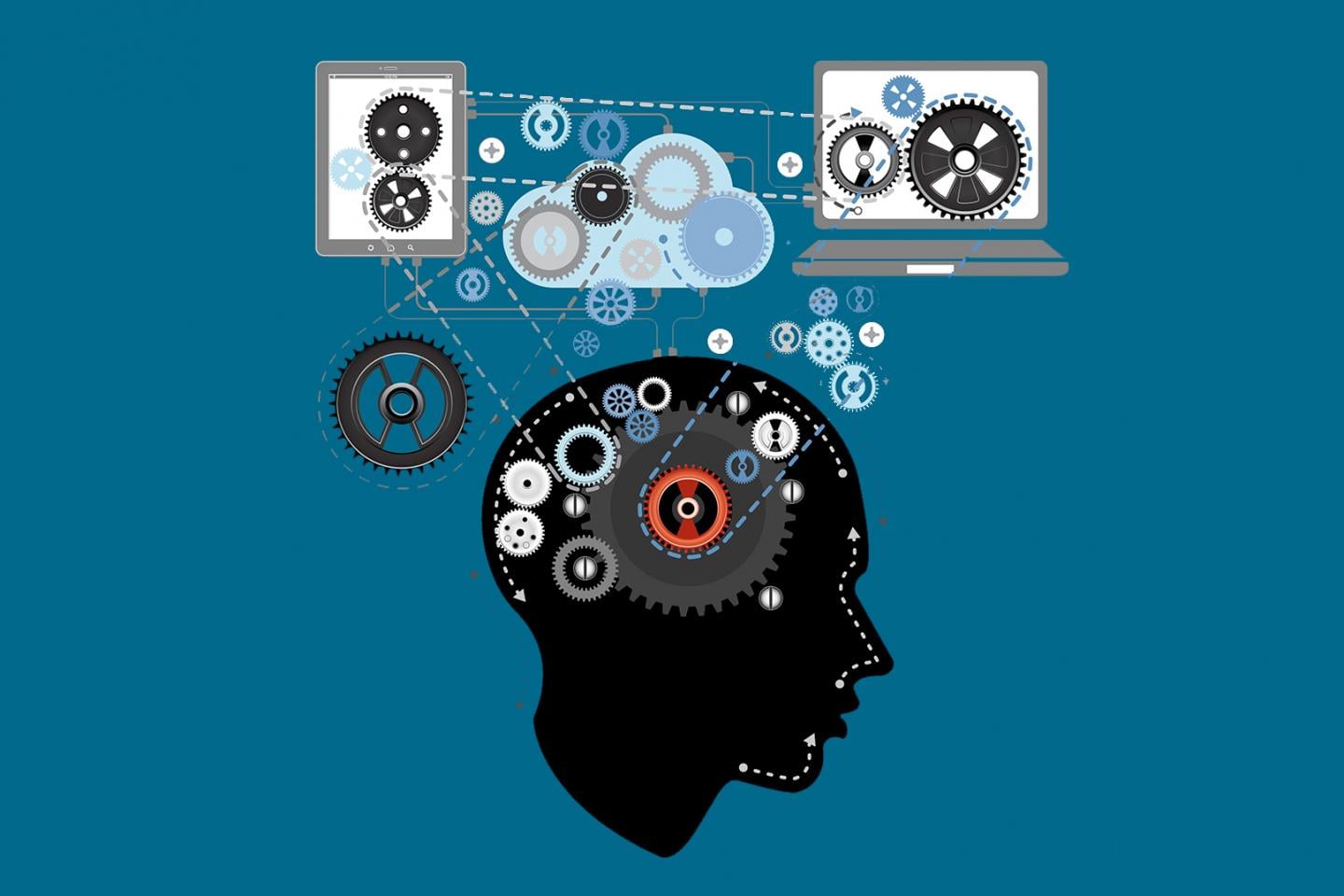
 Your brain is structured to make the best possible decision given its limited resources, according to new research that unites cognitive science and information theory — the branch of mathematics that underlies modern communications technology. Source: RPI
Rensselaer Polytechnic Institute (RPI) researchers have studied how brains communicate and compared it to mobile communication systems. The human brain is structured to make the best possible decision when trying to figure out what it is seeing when it has limited context or resources. The research unites this idea with the way that modern cell phone technology operates to make new discoveries.
"Take for example geology, where students have to learn to differentiate between rocks or geologic formations that may have a highly similar appearance," said Chris Sims, a Rensselaer Polytechnic Institute assistant professor of cognitive science. "The way it's typically done is through repetition — you look at lots of rocks until it sinks in. But understanding how the brain works can help us build better classroom training exercises that teach those abilities more efficiently."
The Universal Law of Generalization is a canonical law of cognitive science. The law states that the brain makes perceptual decisions based on how a new stimulus is similar to past known stimuli. The brain is more likely to compare two stimuli when there are many similarities rather than just one or two.
"This is a fundamental equation that is universal in nature, and it's held up very well," said Sims. "But while the law describes the empirical pattern, it doesn't adequately explain why this pattern should appear in nature. And that's what I set out to do."
The team used the information theory, making it possible for them to predict the best voice accuracy a phone could transmit at one noise signal level. The information theory helped the team understand the biological communication system of perception and memory.
"The idea is that visual perception is a communication channel: there is information in the world, and you need to transmit that information from your eyes to your brain," said Sims.
The information theory also helped researchers work through the limits of biological and mechanical systems. The theory describes and predicts the most optimal performance that can be achieved in the human system.
The connection between the Universal Law of Generalization, cognitive science and the information theory were all the basis for this research.
This research has revealed the similarities between mobile phones and the human brain that may have never been linked together before.
The research was published in the journal Science.
