
New research at the University of Waterloo could lead to the development of batteries that triple the range of electric vehicles.
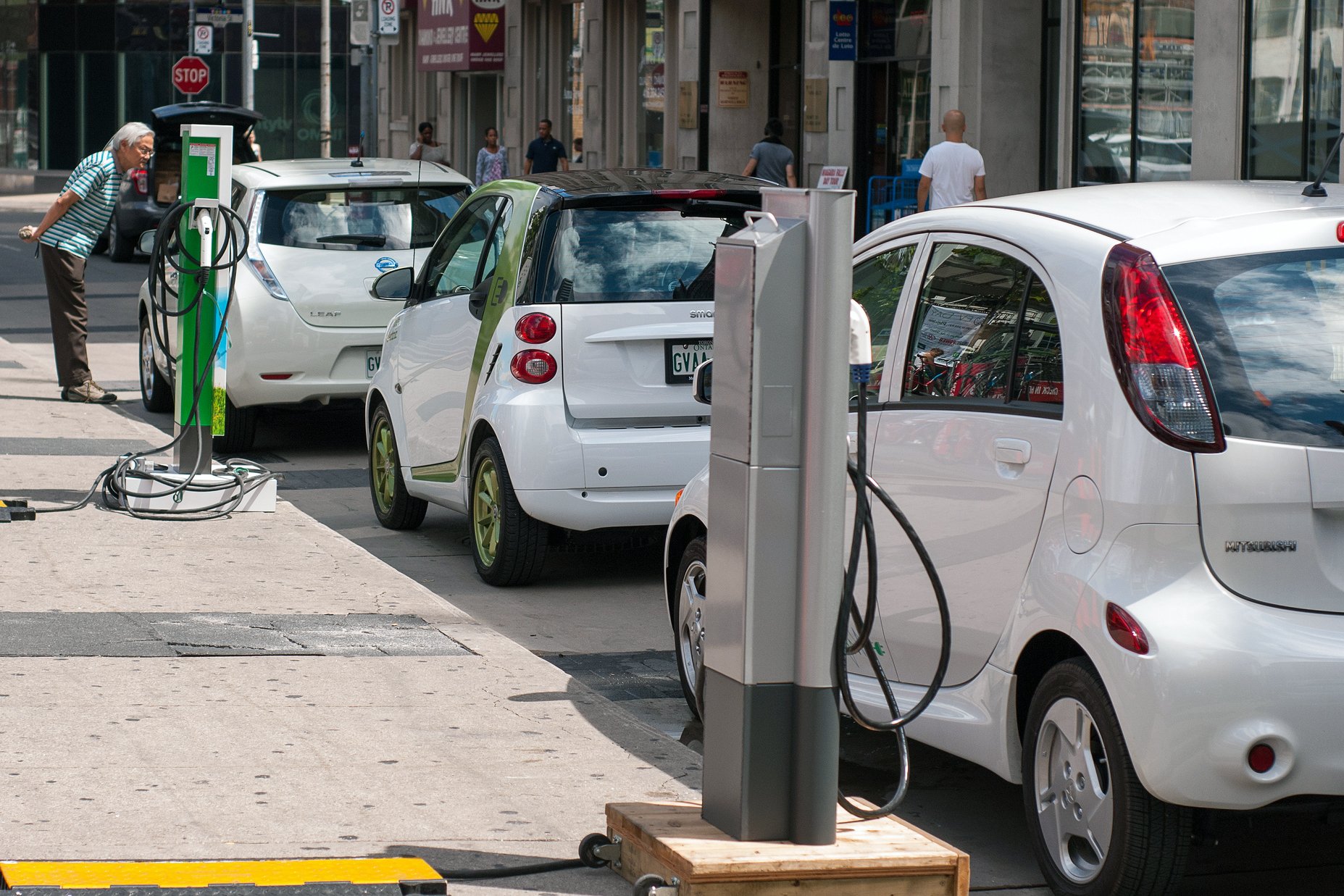 Electric cars that would be improved with this research (Wikicommon/ Mariordo)
The breakthrough uses negative electrodes made of lithium metal, a material with the potential to dramatically increase battery storage capacity.
"This will mean cheap, safe, long-lasting batteries that give people much more range in their electric vehicles," said Quanquan Pang, who led the research while he was a Ph.D. candidate at Waterloo.
Increased storage capacity, or energy density, could boost the distance electric vehicles can travel within a single charge. Potentially, an electric vehicle could go from 200 kilometers in a single charge to 600 kilometers in a single charge.
The first challenge involved a risk of fires and explosions caused by microscopic structural changes to the lithium metal during repeated charge-discharge cycles.
The second challenge involved a reaction that creates corrosion and limits how well the electrodes work as well as how long they last.
Researchers solved both problems by adding a chemical compound made of phosphorous and sulfur elements to the electrolyte liquid that carries electrical charges within batteries.
The compound reacts with the lithium metal electrode in an already assembled battery to spontaneously coat it with an extremely thin protective layer.
"We wanted a simple, scalable way to protect the lithium metal," said Pang, now a post-doctoral fellow at the Massachusetts Institute of Technology. "With this solution, we just add the compound and it works by itself."
The novel approach paves the way for electric vehicle batteries that have the benefits of lithium metal electrodes. This allows greater storage capacity and driving range, without compromising safety or reducing lifespan.
A paper on this research was recently published in the journal Joule.
