
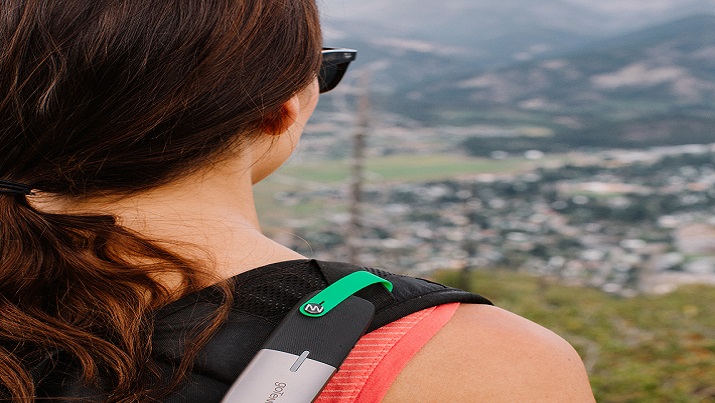
In 2012, Hurricane Sandy, a deadly and costly Atlantic hurricane, resulted in non-functional cell towers and Internet providers throughout the Northeast. The destructive events inspired a brother and sister pair to create a resilient network so that people could communicate without the need for connectivity. The company launched the goTenna device in 2014 in an attempt to create a resilient network that wouldn't rely on connectivity.
Now, Daniela Perdomo, CEO and Co-Founder of goTenna, tells Electronics 360 about her company's most recent reveal: goTenna Mesh, an advancement of the company's first product. Mesh is a 100% off-grid, long-range, entirely mobile consumer-ready mesh network.
Learn about the company's trials in tribulations, as well as how the technology can be useful not only in the absence of service, but also to offload certain kinds of communication on-grid.
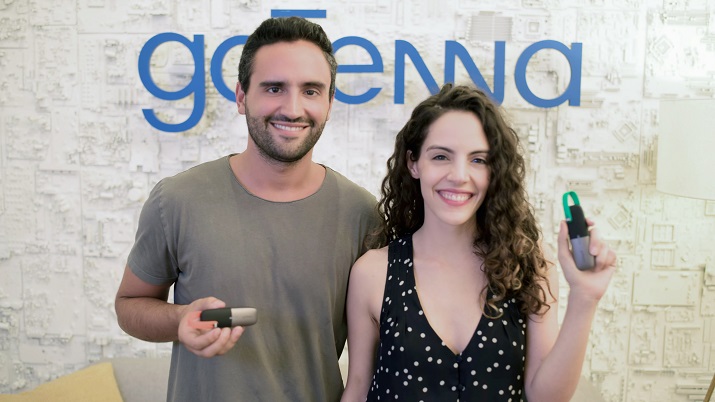 Daniela Perdomo and her brother Jorge founded goTenna.
1. Daniela, tell us a little bit about yourself and the inspiration to launch goTenna.
I’m goTenna’s co-founder and CEO. My brother Jorge and I started goTenna in 2014, aiming to create a resilient, people-powered network using the smartphones everyone already has. Before goTenna, I spent five years working at tech startups on teams ranging from user growth to product to marketing.
We came up with goTenna in part during Hurricane Sandy, when up to a third of all cell towers and internet providers went down throughout the Northeast. In a 10-state area, people lost power, lost their homes, and lost essential communication when they needed it most. When this was happening we thought, there needs to be a way to let people communicate without relying on centralized connectivity, and it should work using the phones everyone already has on them. How many times have you been frustrated because you see the “No Service” indicator on your phone? It’s not just during emergencies - it happens when you’re outdoors, at crowded events, traveling. Communication should be based on need, not access, and that’s why goTenna was born.
2. What goes into the development of a product like this?
We spent three frustratingly difficult years pouring our blood, sweat, and tears into developing the technology for our v1 product (sold at REI and other retailers, as well as on our site). Fortunately, we could build on that experience with our new product, goTenna Mesh, and didn’t have to start from scratch. Our first-of-its-kind mesh networking technology was achieved by building atop the unique wireless protocols we developed for the first goTenna product.
With Aspen Prime (the name of v1’s protocol), we tackled a lot of the hard things like, how do you get a message to a specific user and not everyone around them? How do we get acknowledgment receipts between the recipient and the sender without a third party knowing? How do you do all this routing intelligently in a way that doesn’t make inefficient use of scarce public spectrum? With Aspen Grove, our mesh protocol, we’ve added the intelligent, efficient relaying aspect to our MANET protocols. These are all components that we worked on with goTenna, and goTenna Mesh is basically the next level of it.
3. What challenges have you and the company encountered along the way?
Creating something out of nothing is a challenge in itself, but our biggest issue to overcome was refining the product during beta testing. Production and beta testing were very time-consuming, and we were determined to get the v1 goTenna where it needed to be before shipping to our customers, even though we knew we would risk losing some because of the delay. To other startups, I’d say, give yourself plenty of time! It’s worth it to get it right. Our first product has an under 1 percent hardware fail rate, which is way under consumer electronics industry averages, but it wasn’t by accident, you know — there was a lot of hard work and trial-and-error that went into it.
4. I understand you recently launched a new product – GoTenna Mesh. Can you tell us a bit about what separates this device from the original product and how you built upon the first?
Four years in the making, goTenna Mesh is an advancement of our first product. It is the first 100% off-grid, long-range, entirely mobile - meaning no fixed points - consumer-ready mesh network.
Beyond offering the point-to-point functionality of the original goTenna, our new product powers a larger, stronger community effect - the more nodes there are, the more powerful the mesh network. Using this ‘daisy-chain’ component, goTenna Mesh enables you to increase your range by double or triple the distance, no matter where you’re at in the world. As your message hops through other users, your chat remains secure. You can communicate with whoever you want via an encrypted chat, without needing to know the nodes relaying that message, so it’s completely anonymous. Plus, as with our original product, goTenna Mesh includes a "Shout" feature, particularly useful in case of an emergency, for users to be able to send a message to any other goTenna or goTenna Mesh user in the vicinity.
It’s also worth noting that close to 50% of the people who tried to purchase goTenna in the past abandoned their shopping cart because it wasn’t available outside of the US. Now, goTenna Mesh ships to 49 countries, which is huge for us. Of course, it’s come with regulatory and licensing processes in many, many places but it’s worth it to finally address the pent-up demand.
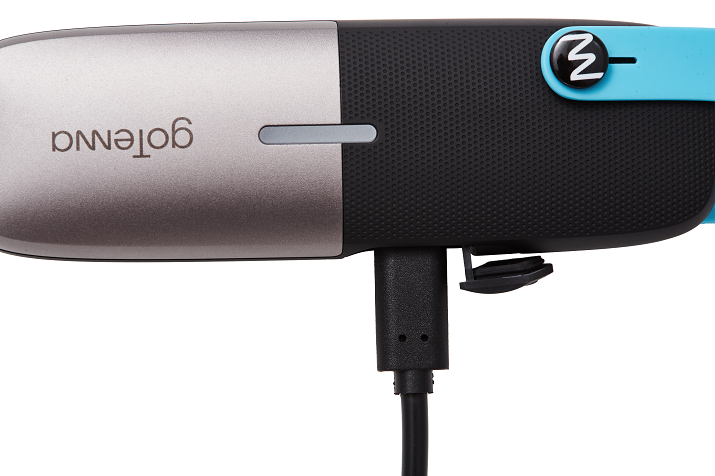 The goTenna device.
5. Even though you’ve just unveiled Mesh, is the company already working on new products and technologies?
Right now, we’re focusing exclusively on getting goTenna Mesh into as many hands as possible, but we do have a line of products for professional users - industrial, public safety, and military - coming out early in 2017. Consumers won’t be able to buy them, so it’s an entirely different market, but given the demand our consumer products have seen from institutional customers already, we figured we’d address that market head-on in a more direct way. We’re doing that by making use of licensed spectrum and different rules that govern devices that operate on professional frequencies.
6. What role do you hope to play in communications technology? What changes do you hope to facilitate in the industry?
The goal of our company has always been to build a low-cost, low-power product that people can use to communicate regardless of cell towers, Wi-Fi or satellites. There is a whole movement of people - academics, hackers, technologists - who are thinking about how to scale communications. I think a totally bottom-up, people-powered network like what we’re offering with goTenna can be useful not just when you don’t have service, but to offload certain kinds of communication even when you’re on-grid.
In fact, just last week we also announced the first way in which our parallel off-grid goTenna network can interconnect with centralized connectivity by offering SMS network relay. The short-sighted way to think of goTenna is niche off-grid use, but of course, I take a long view: beyond providing a parallel, resilient, off-grid network, there’s no reason we can’t interconnect with other services to provide greater utility for everyone. I’d love to partner with carriers and ISPs and all the rest.
There are obvious implications for goTenna in emerging markets as well, which I hope we’re in a position to start piloting in 2018 or so. I hope goTenna is part of a growing stack of essential everyday communication technologies in the long-term, and I think that’s possible by continuing to focus on low-cost, low-power, reconfigurable, and easy-to-use hardware matched with our powerful wireless protocols.
7. What advice would you offer to someone just getting started and trying to launch a product?
Building a product that addresses a real market is crucial. Don’t let anyone tell you that taking bites of a lot of markets doesn’t make a business - I really appreciate that goTenna has lots of shots on goal, so to speak. Also, don’t lose sight of what your true minimum viable product (MVP) is.
8. Is there anything else you’d like to share about the new release?
I think you’ve about covered it! Would just like to re-iterate that goTenna Mesh just launched for pre-order and it’s an ideal device for concert goers, camping enthusiasts, recreational hikers, people on cruises, disaster relief volunteers, frequent travelers, sporting events attendees, or even emergency preppers. This is the first goTenna product that will be available outside the U.S. and will be sold for $179 per pair later this year but is available in limited quantities now at promotional preorder pricing (starting at $129/pair).
I’d also like to share that with this release, we have formed an exciting partnership with Telecom Without Borders (Télécoms Sans Frontières / “TSF”). At every reward level in this campaign, our customers can donate toward a group contribution that provides goTenna Mesh to this incredible nonprofit organization. In case you aren’t familiar, TSF is often first on the scene in places as wide-ranging as Syria and Haiti, from Nepal to Burkina Faso, setting up emergency communications for disaster response at the heart of crises, in refugee camps and emergency medical facilities. In addition, TSF works on development programs aimed at delivering communications technology to isolated communities as a way of preventing emergencies or mitigating their impact, as well as bridging inequalities inherent in the digital divide.
