
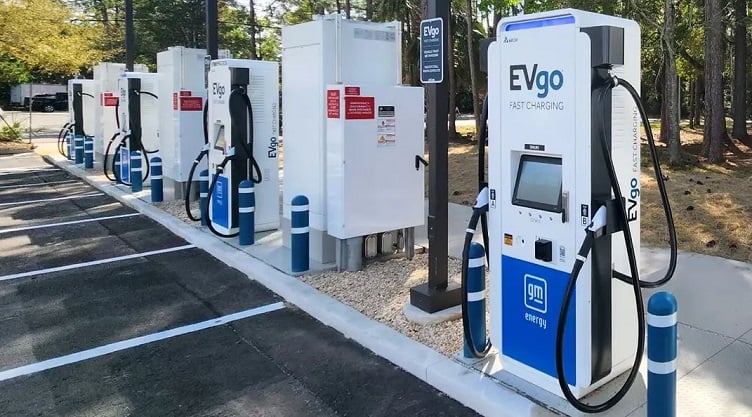
Electric vehicle (EV) infrastructure vendor EVgo Inc. is collaborating with Regency Centers Corp. to add more than 400 fast charging stalls to shopping centers at locations across the U.S.
Currently, EVgo operates over 150 stalls at Regency locations.
The new stalls will be placed at high-density markets like supermarkets, shopping centers and restaurants in cities throughout Colorado, Florida, Illinois, New Jersey, New York, Pennsylvania, Texas, Virginia and other states.
Each EV charging site will feature up to 24 high-power EVgo chargers, that the company said can deliver a full charge in as little as 15 minutes depending on the vehicle. The company said this is a good fit for grocery store locations as the average American spends about 23 minutes in a grocery store, two to three times a week.
"EV drivers are looking for convenient charging options where they already spend their time, like grocery-anchored shopping centers," said Scott Levitan, executive vice president of growth at EVgo. "Expanding our partnership with Regency will help us meet growing customer demand while making public fast charging more accessible in the places people shop, dine and connect with their communities."
Rapid expansion
According to the International Energy Agency (IEA), global electric sales are expected to rise in 2026 to 23 million, up from 20 million in 2025. This will account for close to 30% of all cars sold worldwide this year. However, global electric car sales fell 8% in the first quarter of 2026, driven mainly by weaker demand in the U.S. and China.
While the U.S. market for EVs is chilly, EV infrastructure expansion is continuing to rise rapidly. In August, EVgo along with Pilot and General Motors announced they had deployed 300 stall locations in 40 U.S. states.
The growth is primarily happening through private investments as government investment has stalled under the Trump administration.
With the government pulling its funding from the EV infrastructure build out, private companies are now free to focus on placing EV chargers where they believe they are needed most. This means putting them in metropolitan areas where they can service more customers rather than installing them in rural areas with less demand.
Rural areas may be one of the last areas to get a significant EV charger infrastructure if the government policies remain in place, according to experts.
