
Modern manufacturing industries face increasing pressure to produce a wider variety of products, respond quickly to changing customer demands, maintain high quality standards and remain cost-competitive. Traditional automation systems, while highly productive, often lack the flexibility required in today's dynamic manufacturing environment. Collaborative robots have emerged as a promising solution to this challenge. Unlike conventional industrial robots that operate in isolated workspaces, cobots are designed to work safely alongside human operators, combining the precision, consistency and repeatability of automation with the flexibility, adaptability and problem-solving capabilities of humans.
Cobots facilitate effective collaboration between humans and robots, helping manufacturers to achieve the key goals of Industry 4.0 and modern production systems. They are indispensable instruments for boosting productivity, while facilitating human-centered manufacturing environments, owing to their simple programmability, reconfigurability and integration into current production lines. As a result, nowadays, more and more production systems are adopting cobots to increase flexibility, reduce costs, improve responsiveness and enable the connected and smart manufacturing processes, which are required in the current competitive market.
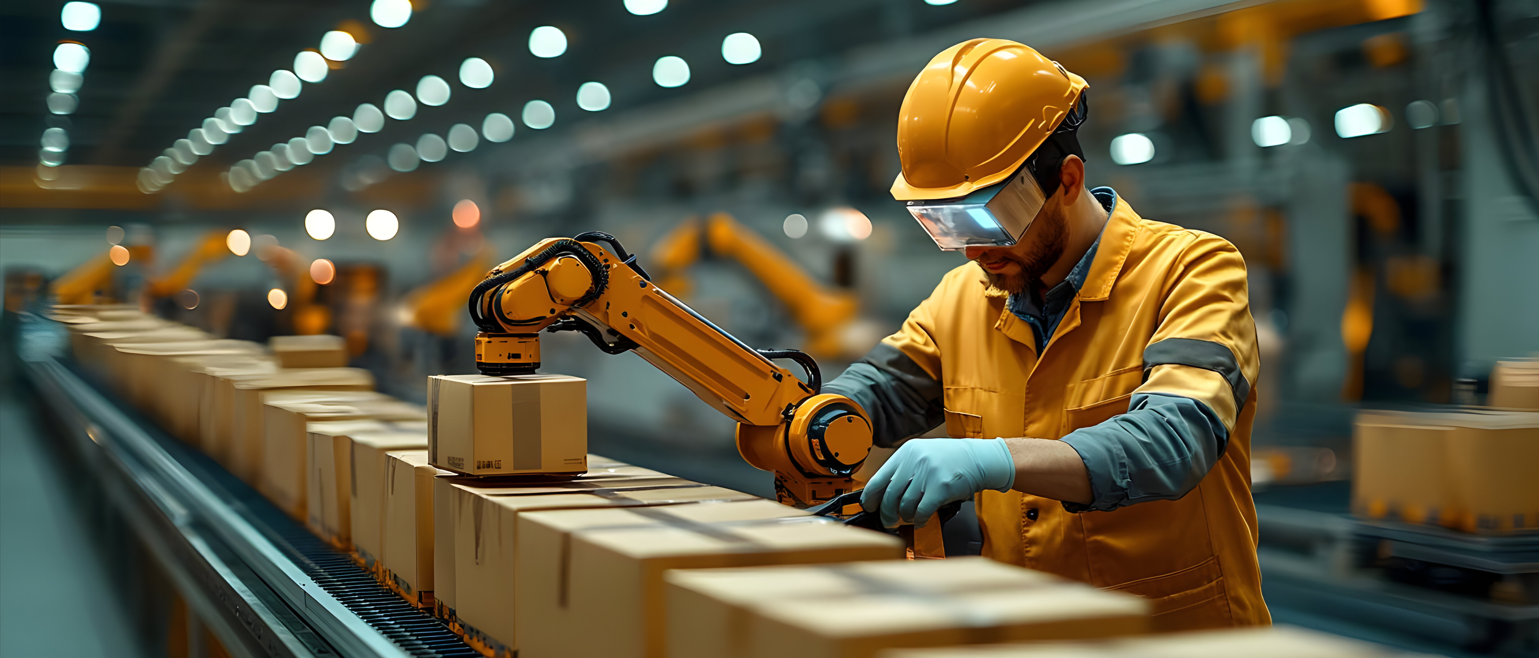 Source: HaJung/Adobe Stock
To meet these expectations, factories will need to be smarter, more flexible, more connected. These characteristics are called modern production system features. The five major features can be listed as: flexibility, cost orientation, reconfigurability, interconnection and agility.
Flexibility: Responding to changing needs
Perhaps the most important characteristic of a modern production system is flexibility. Imagine a factory that produces only one kind of product. If tastes change, that plant may not survive. The modern factory must therefore be able to quickly adapt.
There are two kinds of flexibility. The first is volume flexibility, which is the ability of the factory to scale up or down production as per demand. For example, if orders suddenly double, the factory should be able to step up output without major disruption.
The second is mix flexibility or the ability to produce different products or product variants on the same production line. For example, a smartphone manufacturer may have to produce several models with different features. A flexible system can be switched between these products efficiently.
Collaborative robots are especially suitable here, because they are easy to reprogram and can help workers with a multitude of tasks. Unlike traditional industrial robots, which are usually dedicated to a single repetitive operation, cobots are adaptable to changing production requirements.
Cost-oriented production: How to stay competitive
Even a highly sophisticated factory has to be economically viable. Modern production systems should focus on cost reduction while maintaining quality and productivity. But today’s cost-cutting is not just about paying workers less or building faster. Instead, manufacturers are trying to optimize the whole system. Including:
• Less waste material
• Decrease machine downtime.
• Enhance employee productivity.
• Improve product quality.
• Decrease absenteeism and injuries in the workplace.
Although collaborative robots may require an upfront investment, if they reduce worker fatigue, increase productivity and reduce errors, they can help lower total production costs in the long term. Thus, modern factories may aim to balance economic performance and the well-being of workers, rather than simply maximizing profits.
Reconfigurability: Preparing for change
Modern markets change rapidly. New products appear every year, customer preferences evolve and companies frequently update their product lines. Because of this, factories need the ability to reconfigure themselves quickly.
Reconfigurability is the ability to adjust production capacity and functionality in response to changing requirements. Take an automobile plant. Today it may be making one type of car but next year it may need to make a different model with new features. If you have a reconfigurable system of production, you don’t need to rebuild the whole factory.
Reconfigurability is aided by collaborative robots, which are generally easier to move, reprogram and integrate into new production processes than traditional industrial robots. This makes them valuable tools in situations where products change often.
Interconnection: The basis of Industry 4.0
Interconnection is one of the key features of Industry 4.0. In traditional factories, machines often operated by themselves. But modern factories require constant communication between machines, sensors, software systems and human workers.
For example, a sensor might detect that a machine is overheating and send information to a control system immediately. The control system can then notify maintenance personnel before a failure occurs. Similarly, a collaborative robot can access information from production databases and change its actions accordingly.
The benefits of interconnection are:
• Production processes real-time monitoring
• Faster decision making
•Better coordination of resources
•Enhanced quality control
•Predictive upkeep
In other words, interconnection allows the whole factory to act like one intelligent system, not just a group of machines.
Agility: Responding quickly to opportunities
Flexibility is about the ability to adapt. Agility is about the speed of adaptation. Agility means to be able to react fast to changing customer demands while keeping cost of production and quality low.
Imagine a company that receives a large order for a custom product that it did not expect. An agile production system can quickly reconfigure resources, re-schedule production and deliver the product with minimum delay.
Modern customers want more and more agility because they expect:
• Quicker delivery times
• Made to order products
• Regular product updates
• High quality, competitive price
Factories that are not responsive could lose customers to more agile competitors.
Conclusion
A truly modern factory is not only automated but flexible enough to respond to changing demands, cost effective enough to be competitive, reconfigurable enough to accommodate new products, interconnected enough to facilitate intelligent decision making and agile enough to respond quickly to market changes.
Most importantly, these goals cannot be accomplished by technology alone. Today's manufacturing still depends heavily on human workers. Therefore, collaborative robots should be designed to support human factors such as ergonomics, mental workload, trust, acceptance and usability, as well as to improve productivity. A factory can only become truly “smart” when people and technology work together effectively.
