
Researchers at the University of Gothenburg have built an inchworm-inspired soft robot that could be used in future planetary missions to navigate harsh and unpredictable terrain.
With fewer electronics and lower power demands, the inchworm-inspired robot was developed under a project that is backed by the European Space Agency (ESA).
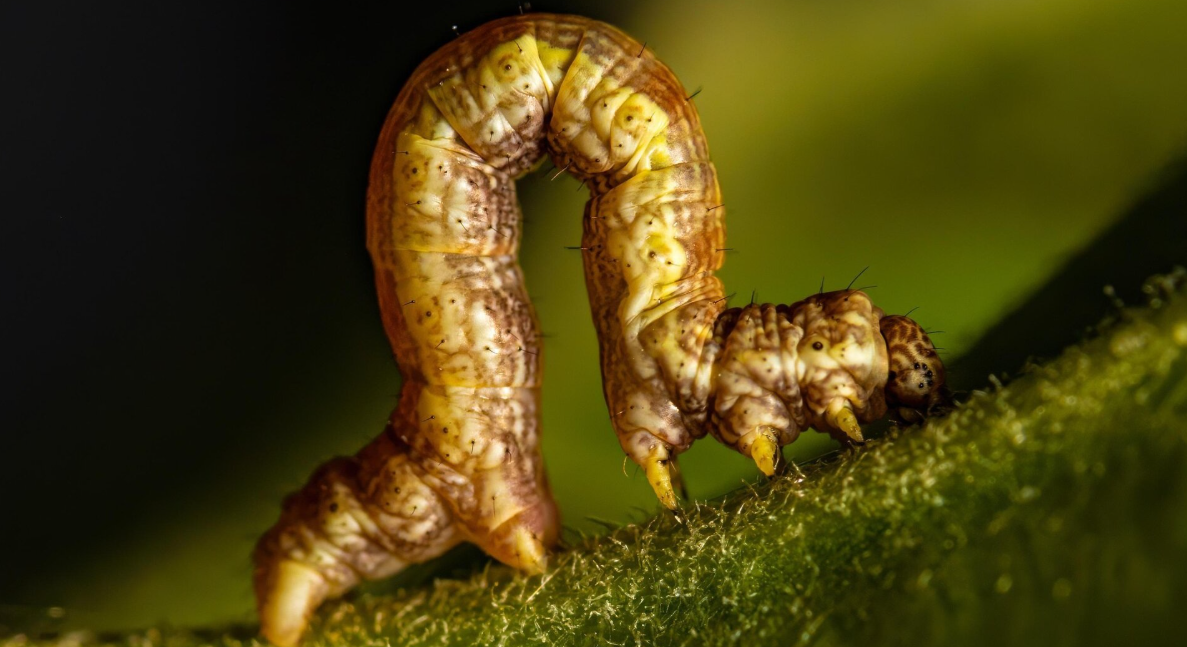 Source: ESA
According to its developers, the robot uses artificial muscles in lieu of traditional motors and rigid joints. This design could one day enable robots to travel through the rocky, uneven environments on Mars or the Moon while also surviving radiation exposure and mechanical damage. Importantly, this design would enable the robot to maintain functionality even after being partially cut or punctured.
The inchworm-inspired soft robot, unlike conventional planetary rovers, was designed around a rolled dielectric elastomer actuator (RDEA), which is a flexible artificial muscle that expands and contracts when voltage is applied. This movement enables the robot to crawl forward in a motion much like an inchworm.
The team suggests that this approach limits mechanical complexity while also improving adaptability on irregular surfaces where rigid robots would typically struggle.
Using compliant electrodes made from single-walled carbon nanotubes (SWCNTs), the actuators can reportedly tolerate damage while also offering partial shielding against Martian radiation.
During trials, the material endured 10 MeV alpha and proton radiation exposure while also operating at low voltages, thereby reducing power demands and minimizing failure risks during extended missions.
“The core challenge we were trying to solve was achieving multidirectionality in soft robots without the need for complex electronics or multiple actuators,” the team explained. “The inchworm became a model due to its simple yet effective design — its locomotion is controlled mainly by contraction and extension of its body, which makes it a well-suited source of inspiration for a robot that needs to adapt to the surface on which it moves.”
The team suggests that this technology could eventually support future space exploration systems that need to continue operating, even after sustaining damage.
Additionally, the researchers found that the inchworm-inspired robot could steer itself by interacting with grooves etched into the test surface. Specifically, the robot hooked its legs into the grooves on 3D-printed substrates, which caused it to align with the groove direction while it moved.
When the team tested different groove angles that ranged from 0◦ to 30◦, they discovered that the robot adjusted its direction with greater strength as the groove angle increased. This enabled the robot to perform left and right turns without additional actuators or onboard steering electronics.
The team explained that the current setup still works in controlled laboratory conditions and is not yet ready for real planetary terrain. The next phase includes testing the robot under thermal cycling and radiation exposure while integrating lightweight sensing systems.
The project, titled “Soft Annelid-Inspired Robot with Peristaltic Gait using Low Voltage Fault-Tolerant Artificial Muscles for Planetary Exploration,” was funded by the ESA.
