
Engineers from the University of Sheffield have developed micro-robots capable of inspecting water pipes, diagnosing cracks and fixing them autonomously, thereby reducing leaks and avoiding expensive excavation work.
According to its developers, these robots, dubbed Pipebots, promise to improve how water infrastructure is managed while also saving roughly 3 billion liters of water that is lost each day in England and Wales due to leaky pipes in aging underground infrastructure.
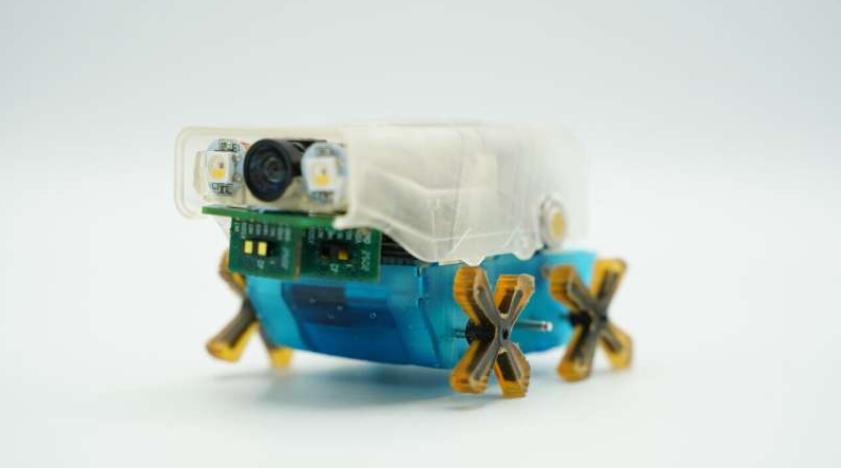 Source: University of Sheffield
Typically, human workers are tasked with identifying the source of leaks by digging and locating their position within a maze of pipes. Such a task can take days of searching, thus resulting in high costs and road closures thereby affecting nearby businesses and residents.
To automate this task, researchers from the University of Sheffield's School of Mechanical, Aerospace and Civil Engineering, working in conjunction with teams from Birmingham University, Bristol University and Leeds University, developed miniature robots featuring new sensors capable of autonomously traveling through pipes and locating defects.
Among those miniature robots is one that measures 40 mm wide and that is equipped with tiny, high-spec acoustic sensors and cameras that allow it to navigate and detect faults.
The researchers explained that a Pipebot swarm can be positioned in a deployment hub and then lowered by an engineer into a water pipe through a hydrant. Once deployed, the tiny robots explore the area, scan for faults and report data back to the engineer.
Because the Pipebots are intelligent, they will avoid restricted areas, like customer connections, and they are designed to collaboratively clear areas quickly and efficiently. The robots are also equipped with all-terrain legs that enable the Pipebots to navigate through challenging paths they could potentially encounter while underground. The Pipebots can also communicate with each other within a short range, and work together to perform tasks and problem-solve.
Beyond water pipes, the Pipebots are also capable of navigating other environments, such as sewers, gas pipes and sites that are both inaccessible and dangerous to humans.
For more information on Pipebots, watch the accompanying video that appears courtesy of University of Sheffield.
