
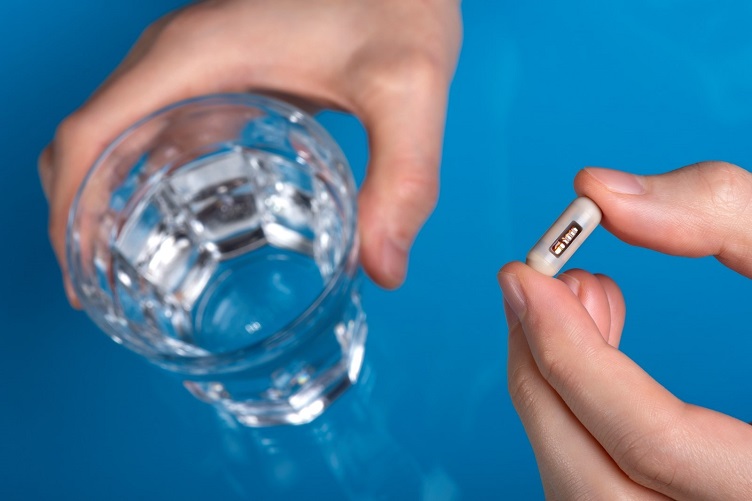
Research hub Imec has demonstrated an ingestible sensor that provides data for gut health that is three times smaller than current capsule endoscopies and claims to be the first to provide redox balance measurements.
The ingestible pill can provide data into:
- Intestinal inflammation
- Gut microbiome
- Overall gut health
Imec said the prototype sensor is a major leap in non-invasive monitoring for a healthy gut and for management of gastrointestinal diseases.
Why it matters
According to Imec, traditional methods for monitoring gut health — endoscopy and colonoscopy — do not provide a comprehensive view of the entire GI tract and are extremely unpleasant procedures.
Capsule endoscopies — used currently for diagnosing gastrointestinal disorders like Crohn’s disease — also require unpleasant bowel preparation. Additionally, these current capsule solutions lack sensors to measure the chemical environment, Imec said.
The prototype sensor is comprehensive and non-invasive for monitoring through vivo measurements. The sensor measures 2.1 centimeters (cm) in length and 0.75 cm in diameter. The sensor capsule is designed to measure in the gastrointestinal tract:
- Redox balance
- pH
- Temperature
“Our ingestible sensor technology was successfully evaluated in healthy volunteers in a study conducted with Wageningen University & Research, providing the first-in-human measurements of redox balance along the gut,” said Aniek Even, researcher at Imec. “By providing real-time data on redox balance, the sensor can help identify oxidative stress, a marker for inflammation, and offer new insights into the gut microbiome and its role in overall health. Our small and easy-to-use device could revolutionize the way we diagnose and manage gastrointestinal diseases, including inflammatory bowel disease and gastrointestinal cancers.”
Additionally, the sensor can take measurements every 20 seconds over a period ranging from 24 hours to a week, depending on the need.
The next steps
Imec said it plans to evaluate the sensor in patient populations with follow-up trials in a collaboration with Radboud University Medical Center. The focus of the trials will be on patients with cancer or chronic inflammation.
Imec will also conduct trials with other universities and clinical centers.
