
One doesn’t generally think about global warming in the context of electronic testing — although, as an existential crisis, the topic is poised for near-future impact on basically everything that it hasn’t touched already. That’s why it’s heartening to see the electronic industry’s efforts at stepping up to the solving challenge.
One recent example is the integration of a solid-state data recorder (SSDR) from Mercury Systems, a developer of mission-critical systems for aerospace and defense, into MethaneSAT, a methane-monitoring satellite being developed by a subsidiary of the nonprofit Environmental Defense Fund. MethaneSAT will allow nations and companies to identify, manage and reduce methane emissions and help slow the rate at which the Earth is warming.
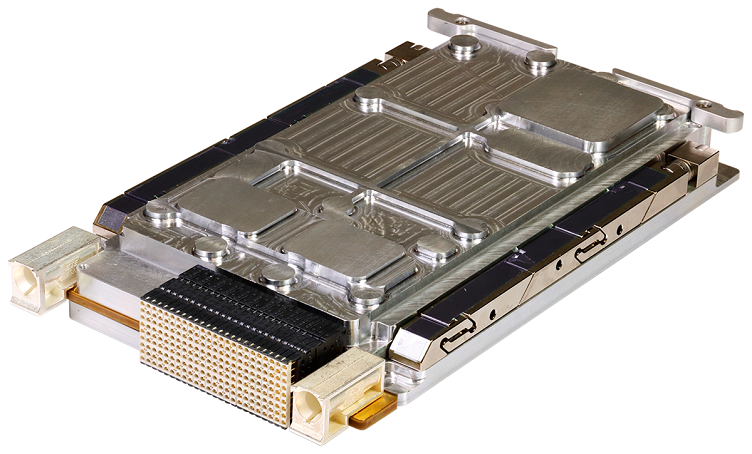
Mercury’s data storage technology was selected by Ball Aerospace for the satellite for its ability to operate in the harsh, radiation-intense environment of space. Mercury’s RH3440 3U VPX will be incorporated into Ball’s MethaneSAT spectrometer for critical data gathering. In addition to being radiation-tolerant, the digital recorder is optimized for size, weight and power (SWaP). To compensate for the fact that data will be gathered at a much higher rate than can be telemetered, the device also employs a “store-and-forward” feature that will allow delayed data transmission to ground stations while maintaining data integrity through proprietary defect mitigation and a powerful error correction code (ECC).
According to Mercury, the RH3440 is the world’s first commercially available, high-density SSDR in a compact 3U form factor.
