
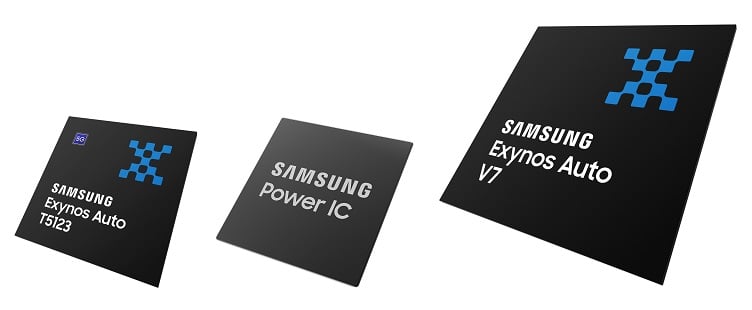
Samsung Electronics, one of the largest semiconductor vendors in the world, has unveiled what it claims is the first dedicated 5G connectivity chip for the automotive market.
Called the Exynos Auto T5123, the chip is a third-generation partnership project (3GPP) 15 telematics control unit designed to bring 5G connectivity in both standalone (SA) and non-standalone (NSA) modes to next generation vehicles.
NSA 5G technology, which has been the bulk of the 5G networks deployed worldwide, uses 4G infrastructure already in place and piggybacks on the 5G signal through this equipment. Because 4G infrastructure has been deployed globally, the non-standalone equipment is more plentiful than standalone 5G equipment currently installed worldwide. However, standalone infrastructure is growing in deployment.
Standalone 5G uses new infrastructure put in place specifically to run 5G networks allowing smart devices and other potential use cases to take advantage of the high download speed, high bandwidth and low latency that the technology affords.
The Exynos Auto T5123 chip delivers information to the vehicle in real-time via high-speed download of up to 5.1 gigabits per second (Gbps) and allows passengers to enjoy new services such as high-definition content streaming and video calls on the go.
The chip supports PCI Express interface and low-power LPDDR4x mobile dynamic random access memory (DRAM) as well as two Cortex-A55 CPU cores and a built-in global navigation satellite system (GNSS) to minimize the use of external ICs and reduce product development time.
Infotainment and power management
Samsung has also unveiled two other logic chips for the automotive markets including the Exynos Auto V7, designed for in-vehicle infotainment systems and the S2VPS01 power management IC for automotive systems that is ASIL-B certified.
The Exynos Auto V7 integrated eight 1.5 gigahertz Arm Cortex-A76 CPU cores and 11 Arm Mali G76 GPU cores. The chip supports up to four displays and 12 camera inputs that provide information to assist drivers and passengers. The imaging system provides bad pixel correction, dynamic range compression and geometric distortion correction for noiseless and distortion-free images for features such as surround view and parking assistance.
The chip comes with three HiFi 4 audio processors for better sounding songs, movies and games. It includes 32 GB of memory and a bandwidth of up to 68.3 GB/s.
The S2VPS01 PMIC features an automotive safety integrity level (ASIL) ranged from A to D, with D being the highest level. The PMIC regulates and rectifies the flow of electrical power, allowing reliable in-vehicle infotainment system performance. The chip is comprised of triple/dual-phase buck converters and integrates a low-dropout regulator and real-time clock.
