
The first wave of 5G, the next generation of wireless communications, came mostly in 2019 with non-standalone networks piggybacking on existing 4G networks.
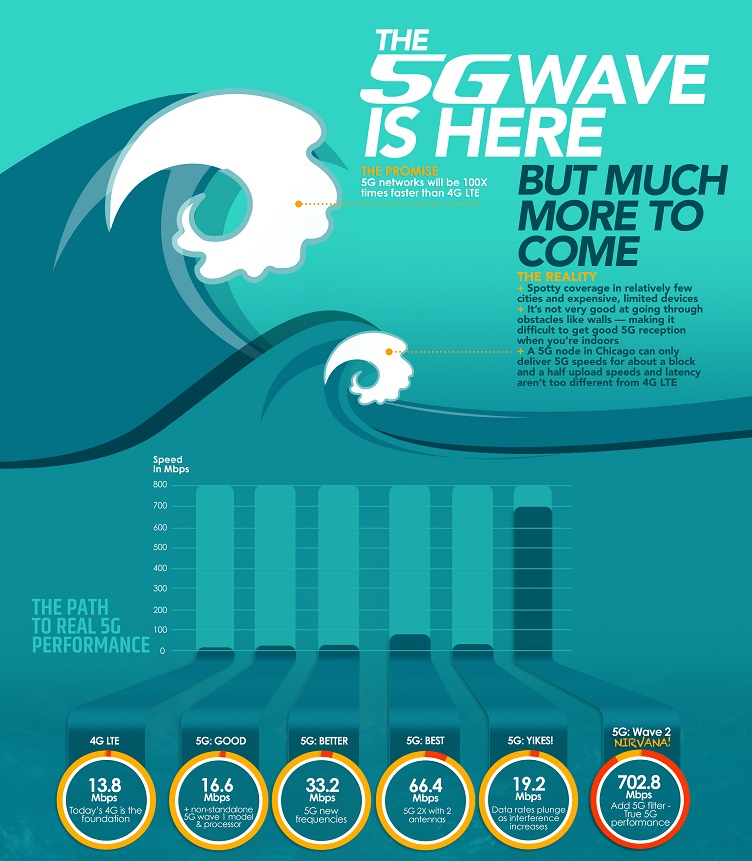
According to Resonant, a radio frequency front-end provider, the first wave offered speeds of about 16 Mbps but when 3 GHz and higher 5G frequencies become available, performance can potentially increase to more than 30 Mbps and can double again to more than 60 Mbps on mobile devices with multiple antennas.
However, the performance will not be sustainable due to more users joining the network and causing performance drops to just 19 Mbps. One way to solve this issue is with a 5G radio frequency filter that can deliver more than 700 Mbps at 3 GHz and higher 5G bandwidths.
“5G has many use cases, but by far the most important is video and streaming media, which requires the maximum throughput,” said George Holmes, chairman and CEO at Resonant.
A movie file download using early 5G might take as much as 20 minutes, but with the second wave of bandwidth the same movie download would take just 34 seconds, Resonant said.
