
Key takeaways:
- The system will bring accelerated computing to every layer of the network.
- The solution will support future AI-centric applications.
- The solution will also prepare a path to AI-native 6G.
Supermicro Computer is collaborating with Nokia and Nvidia to deploy artificial intelligence radio access networks (AI-RAN) from distributed cell sites to centralized network hubs.
The AI-RAN solution will bring accelerated computing to every layer of the network to deploy AI services, increase infrastructure efficiency and prepare for AI-native 6G. The solution is slated to be available in the first half of 2027.
The goal is to bring compute power closer to the access network, allowing radio and AI workloads to run on shared infrastructure. This will support applications like:
- Voice AI
- Vision AI
- Physical AI
- Autonomous network operations
The AI-RAN system combines Nokia’s RAN and network devices with Nvidia’s Aerial RAN Computer platform, supported by Supermicro’s AI-enabled infrastructure.
“AI-RAN is redefining networks for AI, turning mobile infrastructure into a shared foundation for connectivity, AI-for-RAN, AI-on-RAN, and broader distributed AI services,” said Charles Liang, president and CEO at Supermicro.
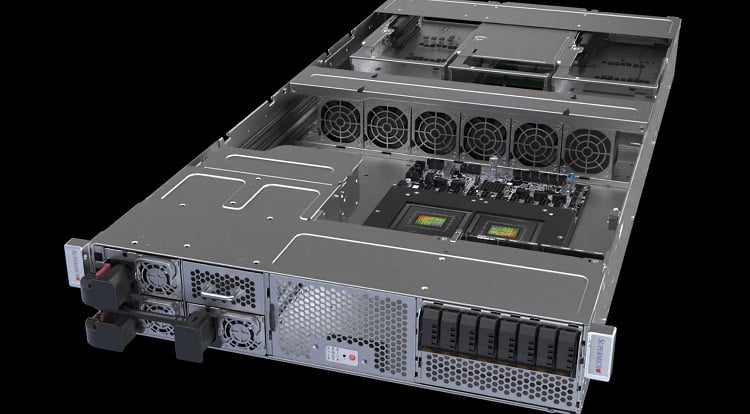 The system developed by Super Micro Computer, Nvidia and Nokia for AI-RAN deployments. Source: Super Micro Computer
According to the industry organization AI-RAN Alliance, AI-for-RAN leverages AI to optimize performance from the radio signal processing to network operations and automation. Ultimately, this will allow for faster speeds, better coverage, lower energy use and higher use of radio resources.
AI-on-RAN, meanwhile, is deployed directly on mobile network infrastructure for applications at the network edge. This helps to bring AI capabilities closer to the user, the AI-RAN Alliance said.
According to Supermicro, the solution will provide a modular configuration for deployment from cell sites to mobile switching office (MSO) and aggregation locations. Nvidia’s ConnectX technology provides high-speed, software-enabled networking to give a flexible solution for low-latency AI applications and a software-defined path toward 6G networks.
