
5G is not just an evolutionary step. In fact, it is way more than this. Since there is ever-increasing demand for continuous connectivity, 5G serves as an opportunity to help create a network that is agile and purpose-built. The network is customized according to the different needs or requirements of citizens and the economy as well.
One of the biggest opportunities for 5G operators is the deployment of 5G to sectors that are beyond connectivity like the finance, travel, retail and health industries. The collaboration of those and other sectors with 5G helps to deliver new and modern services to all businesses, industries and clients. Additionally, 5G can be a catalyst to develop the digital ambitions and targets of these industries. As such, 5G is expected to digitize different economies and societies, affecting all the aspects and sectors of life including mobile banking.
The future of mobile banking with 5G
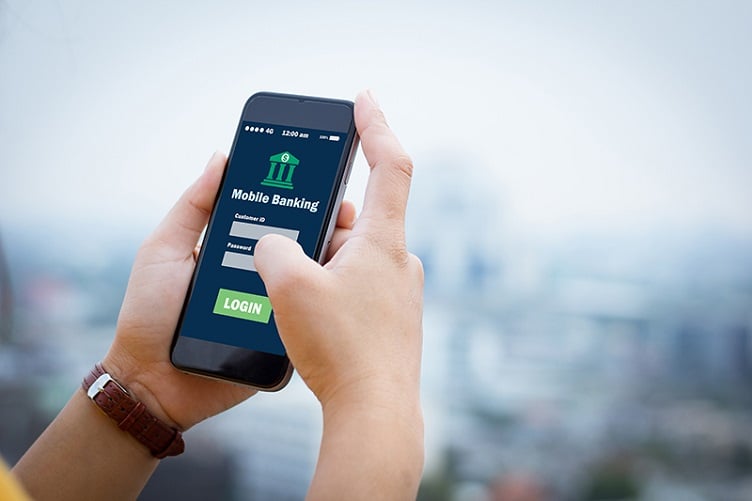
Wireless mobile communication is rapidly growing through advancements in the field of information and communication. Stakeholders along with the rest of society will also benefit from 5G's rapid growth in the field of information and communication. Particularly, in mobile banking, 5G will play a significant role, making mobile banking seamless for customers and service providers.
Mobile banking is considered the future of banking services, helping customers gain easy access to their bank accounts. It allows users to perform transactions using their smart mobile phones, regardless of bank hours and location. It includes services ranging from financial transactions to nonfinancial transactions, including the payment of utility bills. An ideal mobile banking system features:
- The capacity to incorporate changes in services, including the ability to update, add or delete any services without impacting the performance or framework of the service model.
- Services available to users 24/7.
- An interface that is simple, explanatory and friendly enough so that everyone can use it.
- A very good response time.
- A zero rate of error.
- The ability to restrict unauthorized access or prevent the access of user data by any unregistered client.
Impact of 5G in mobile banking
Some of the most important advantages of 5G in the field of mobile banking include:
Reduction in video lag — The real-time video chats and consultations of customers with bankers will be much easier and more flexible by the amalgamation of 5G, regardless of the mode of communication, such as on a cell phone, in the bank or at an ATM.
Improvements in ATM — With the use of a 5G network connection, ATM placement would be much more flexible.
Mobile pop-up branches — 5G technology also facilitates the full-powered branches of the mobile pop-up. Pop-up branches would be able to handle the queries and requests in the same way as other regular brands.
Improved banking capabilities — 5G networks would be responsible for the increased capabilities of banking in wearable devices. It is also said that there would be a uniform experience for the clients between the smartphone, wearable and connected car as soon as 5G moves toward ubiquity. This will lead to complete reliance on digital payments.
Enhanced personalization — 5G technology promotes personalization. The task of gathering real-time information will be enabled by the combination of 5G, artificial intelligence (AI) and big data. This will pave the way to personalized banking services.
Cloud for mobile banking — There will be a shift in mobile banking toward the cloud using 5G. With 5G, most of the processing would be done in the cloud instead of the mobile phone. At some point, this will free users from mobile banking apps as well.
Supercharged IoT — The internet of things (IoT) will be enhanced by 5G networks.
Fraud detection — 5G technology will help users better detect fraud. Geolocation, transaction and different data would be analyzed instantly with 5G's greater speed. This will also reduce the chance of false positives.
Authentication — Authentication will be addressed by 5G technology. It would work on multimodal biometrics, for instance, two fingerprints or voice recognition. So, only authentic clients will get access to the system.
Confidentiality — 5G networks would also make it impossible for unknown users to decrypt messages.
Integrity — 5G will ensure that the data can never be altered or in case of alteration, it would be identified by the receiver and requests for re-transmission.
Ideal non-repudiation — Sent or received messages cannot be denied by both sender and receiver.
