
Addressing the trend toward miniaturization and digitization in medical technology, AT&S has introduced its latest miniature printed circuit boards (PCBs). These components are considered suitable for use in medical therapy and devices such as hearing aids, neurostimulators and pacemakers for monitoring vital signs, and 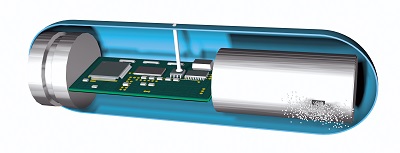 Source: AT&Sfor diagnosis and imaging. The company is one of the few PCB manufacturers that is certified to EN ISO 13485, the standard for medical devices.
The miniaturization of medical assemblies require extremely small interconnect solutions and very small PCB dimensions -- with corresponding challenges. Conductor track widths and distances are currently only 50 μm -- and getting smaller -- and electrical connections of the individual layers are realized using minute "stacked vias." Designs with 150 μm pad size and 50 μm annular ring are now being produced.
HDI circuits are used for the control and adjusting unit of prostheses and, in the prostheses themselves, flexible PCBs are used to implement the dynamic movement. Highly flexible base material with rolled copper is used to ensure the required bending cycles and the low bending radii. Furthermore, the durability of these heavily stressed parts is further increased by special surfaces (carbon print).
In addition to miniaturization and high quality requirements in medical technology, the development of new biocompatible materials also presents a challenge. AT&S is researching materials for use directly in the body.
