
Researchers have found that new leadless pacemakers have fewer short- and mid-term complications than traditional ones.
Conventional pacemakers are placed in the body through surgery. They are placed under the skin in a patient’s chest, with wires or leads that stretch from the shoulder vein to the heart valve. Often these wires are the source of many complications after surgery.
Leadless pacemakers don’t have wires and are 10 percent smaller than the traditional pacemakers. They can be placed directly on the heart with a catheter through a vein in the patient’s leg. Leadless pacemakers were first introduced in 2014 and were officially approved by the FDA in 2016.
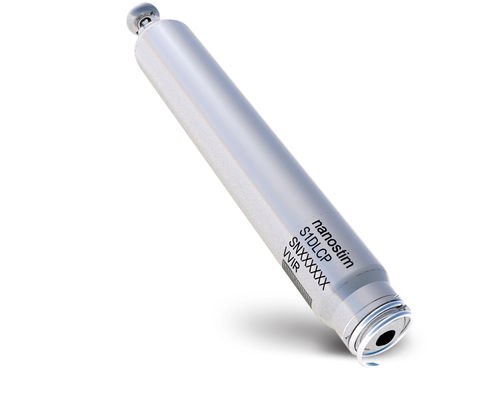 The Nanoslim leadless pacemaker. (Source: St. Jude Medical/Nanoslim)
A study on the short- and mid-term complications with the leadless pacemaker versus traditional pacemakers was recently conducted. Two trials were carried out: 718 patients received Nanostim leadless pacemakers as part of a Leadless II trial, and 1,436 patients received traditional pacemakers as part of a Truven Health Market Scan.
In the end, 5.8 percent of leadless pacemaker patients had complications versus the 9.4 percent of traditional pacemaker patients who had complications.
Leadless pacemakers completely eliminated lead and pocket complications, like an infection, that traditional patients experienced. Of the traditional pacemaker patients, 3.62 percent of patients had lead complications, 0.42 percent had pocket complications and 1.74 percent experienced some kind of infection. The study found that there were no significant differences between leadless and traditional pacemakers when it comes to vascular complications, electrode dislodgement and generator complications.
The leadless pacemakers were not completely superior to traditional pacemakers. Leadless pacemaker patients were more likely to develop pericardial effusion, with 1.53 percent developing this ailment, while only 0.35 percent of traditional patients experienced the issue. Pericardial effusion is uncommon but it still requires corrective surgery.
Further studies were conducted one month after surgery to 18 months after surgery. Researchers found that leadless patients had overall fewer complications, with only 0.56 percent experiencing complications, versus the 4.94 percent of traditional pacemaker recipients. Many issues that traditional patients experienced were completely absent in the lead-free patients.
"The data from this study is encouraging, and we expect complications from leadless pacemakers to continue to decline as the technology improves and physicians gain experience implanting these devices," said Daniel Cantillon, M.D., research director for cardiac electrophysiology and pacing at Cleveland Clinic and lead author of the study. "While this research shows benefit for leadless pacing, we must keep in mind that the field is still too young to compare the long-term results of this technology, the implications of which will not be fully understood for at least another decade."
